
If you’re looking for safe alternatives to tanning beds, science supports options like self-tanning lotions, mousses, and sprays that deliver a natural glow without UV exposure. Professional spray tans with DHA provide quick, even results, while at-home products offer customization and convenience. You can also boost your skin’s radiance naturally by eating foods rich in carotenoids and staying well-hydrated. Keep exploring for more effective ways to achieve that sun-kissed look safely.
Key Takeaways
- Self-tanning products and spray tans provide safe, UV-free alternatives with natural-looking results supported by scientific understanding of DHA reactions.
- Indoor tanning beds significantly increase skin cancer risk; science strongly recommends avoiding UV-based tanning methods.
- Natural skin glow can be supported through diet, hydration, and antioxidants, offering a risk-free enhancement.
- Proper exfoliation and application techniques improve the longevity and appearance of at-home tanning products.
- Scientific consensus emphasizes that UV-free methods like self-tanners and spray tans are safer alternatives to tanning beds.

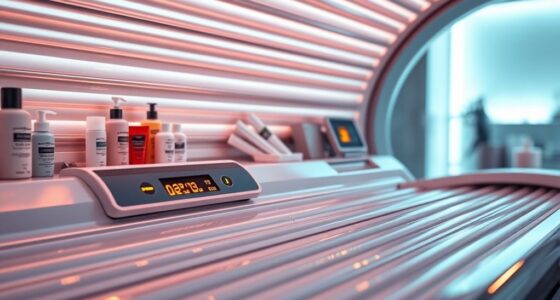
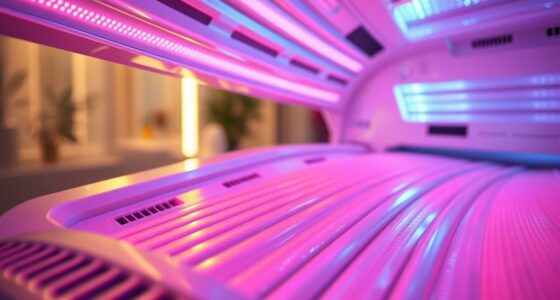
Are you looking for safe ways to achieve a sun-kissed glow without resorting to tanning beds? You’re not alone. Many people want the warmth and radiance of a tan but are wary of the health risks associated with indoor tanning and UV exposure. Tanning beds often promise quick results, but they expose your skin to concentrated ultraviolet rays, increasing your risk of skin cancer, premature aging, and other skin damage. Thankfully, there are effective alternatives grounded in science that can help you get that bronzed look without risking your health.
One of the most popular and safest options is using self-tanning products like lotions, mousses, and sprays. These products work by applying a colorant to your skin that reacts with the outer layer of dead skin cells, producing a natural-looking tan without any UV exposure. Scientific studies confirm that these products don’t increase your risk of skin cancer because they don’t involve ultraviolet rays. They’re also easy to use, customizable, and come in various shades to match your desired level of glow. Just remember, for the best results, exfoliate your skin beforehand to ensure an even application and let the product dry completely before dressing.
Self-tanning products give a natural glow without UV exposure; exfoliate first for best results.
Another science-backed alternative is spray tanning, which is often performed in salons by professionals. These treatments involve applying a tanning solution that contains dihydroxyacetone (DHA), a color additive that reacts with your skin’s amino acids to produce a brown pigment. Since spray tanning doesn’t involve UV exposure, it’s considered a safe method for achieving a quick, uniform tan. The results typically last several days to a week, and many products now include moisturizers and skin-nourishing ingredients to help maintain your skin’s health.
If you prefer at-home options, consider using tanning mousses or gels that you can apply yourself. These products often contain bronzers for immediate color and DHA for longer-lasting results. Follow the instructions carefully, and use gloves or applicator mitts to prevent staining your palms. Regular moisturizer can extend the life of your tan and keep your skin healthy.
For those who want a more natural approach, increasing your intake of foods rich in carotenoids—like carrots, sweet potatoes, and spinach—may give your skin a subtle, healthy glow over time. While not a replacement for a tan, it’s a way to enhance your skin’s appearance with minimal risk. Additionally, scientifically supported skincare routines that include antioxidants and proper hydration can improve your skin’s overall health and radiance, complementing your efforts to achieve a luminous look.

Jergens Natural Glow +Firming Self Tanner Body Lotion, Fair to Medium Skin Tone, Sunless Tanning Moisturizer with Collagen and Elastin. Helps to Visibly Reduce Cellulite, 7.5 Fl Oz
SELF TANNER BODY LOTION – Create a flawless light bronze tan with gradual, natural-looking color while nourishing and…
As an affiliate, we earn on qualifying purchases.
As an affiliate, we earn on qualifying purchases.
Frequently Asked Questions
Are There Natural Ways to Boost Vitamin D Without Tanning?
Yes, you can boost your vitamin D naturally without tanning. You should aim for regular sun exposure, about 10-30 minutes a few times a week, depending on your skin type and location. Natural supplementation through foods like fatty fish, egg yolks, and fortified products also helps. Remember, balancing sun exposure with protection reduces skin damage risks while maintaining adequate vitamin D levels effectively.
How Long Do Spray Tans Typically Last?
On average, spray tans last about 5 to 7 days, though this can vary based on your skin type and skincare routine. You’ll notice the tan fade timeline begins around day 4, with noticeable fading by day 7. To extend spray tan longevity, moisturize daily and avoid exfoliating. Keep in mind, 80% of the tan fades within the first week, so touch-ups might be needed for longer-lasting color.
Can Indoor Tanning Alternatives Cause Skin Damage?
Indoor tanning alternatives like spray tans and lotions generally don’t cause skin damage or increase your risk of skin cancer because they don’t involve UV exposure. Unlike tanning beds, which boost melanin production through harmful radiation, these alternatives work without damaging your skin. However, always follow product instructions and choose reputable brands to avoid skin irritation or allergic reactions. Remember, avoiding UV exposure is the safest way to protect your skin.
Are There Safe Self-Tanning Products for Sensitive Skin?
A word to the wise: better safe than sorry. Yes, you can find safe self-tanning products for sensitive skin. Look for formulas that are free of harsh chemicals and avoid those with chemical sunscreens, which can irritate skin sensitivities. Opt for products labeled hypoallergenic or designed specifically for sensitive skin, and always do a patch test first. This way, you enjoy a sun-kissed glow without risking skin damage.
What Are the Risks of Using Uv-Free Tanning Devices?
Using UV-free tanning devices with advanced skin safety features minimizes your risks, but they’re not completely risk-free. These devices often use UV-free technology like spray tans or LED alternatives, reducing skin damage and cancer concerns. However, some products can cause allergic reactions or uneven color. Always follow manufacturer instructions and consult a dermatologist if you have sensitive skin or concerns about skin safety. Proper use helps make certain of a safe, healthy glow.

Commercial Spray Tan Machine Kit – Includes Disposable Spray Tan Supplies, Pop Up Tent, 3 Solution Cups, and HVLP Tanning Machine by Bronze Tan
Comprehensive Tanning Kit: The Bronze Tan Spray Tanning Essentials Kit is your all-in-one package for professional spray tanning,…
As an affiliate, we earn on qualifying purchases.
As an affiliate, we earn on qualifying purchases.
Conclusion
While some believe tanning beds are the only way to achieve a sun-kissed glow, science shows safer options exist. Sunless tanning products and controlled UV exposure give you the look you want without the risks. Embrace these alternatives, and you’ll protect your skin’s health while still feeling confident. So, next time you’re tempted by a tanning bed, remember: smarter, safer choices are out there that deliver the same beautiful results.

St Moriz Professional Medium Self Tanner Mousse – Sunless Instant Self Tanning Foam for a Deep, Natural Looking Fake Tan – With Aloe Vera & Vitamin E (6.76 fl oz)
PROFESSIONAL MEDIUM TANNING MOUSSE: Say hello to a gorgeous, natural-looking tan all-year-round. St. Moriz Professional Medium Self-Tanning Mousse…
As an affiliate, we earn on qualifying purchases.
As an affiliate, we earn on qualifying purchases.

Pro Tan, Get Buffed, Pre-Tan Body Scrub, Skin Balancing Exfoliator, Balance Skin pH, 8 oz.
Pre-Tan Body Scrub: ormulated with natural exfoliators, plant extracts, and vitamins that are exclusively designed to maximize and…
As an affiliate, we earn on qualifying purchases.
As an affiliate, we earn on qualifying purchases.