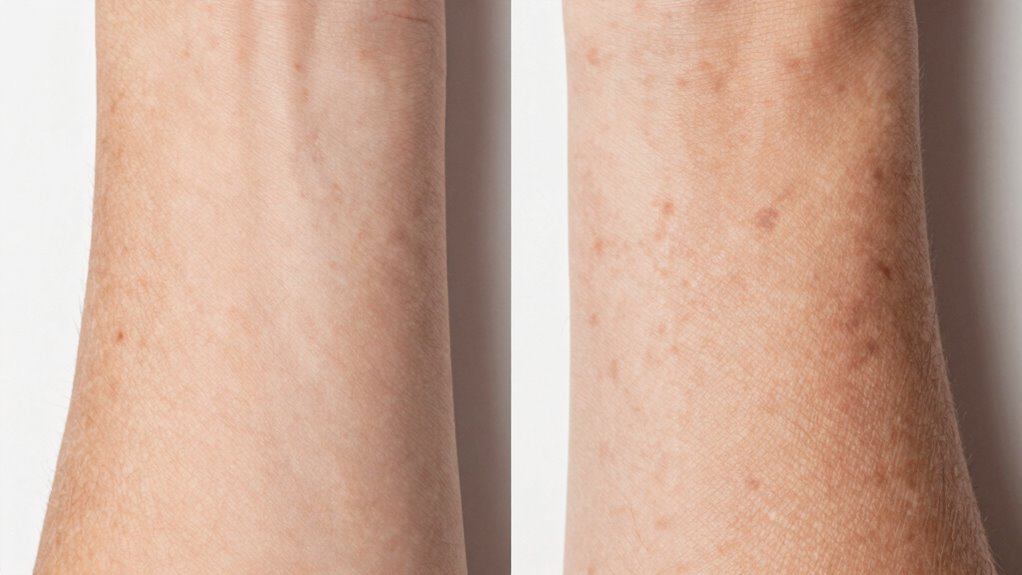

Prolonged UV exposure damages your skin’s collagen and elastin fibers, causing it to lose firmness and develop wrinkles, fine lines, and sagging over time. It can also lead to dark spots, uneven pigmentation, and sun spots, signaling ongoing damage. UV rays impair your skin’s natural repair process, leading to dullness and loss of elasticity. To protect yourself and maintain youthful skin, understanding these changes is essential—keep exploring to discover how to best defend against them.

Get beauty and skincare favorites delivered free with Prime
- Fast, free delivery on millions of items
- Prime Video, Amazon Music and more included
- Member-only deals all year
Key Takeaways
- UV rays penetrate skin layers, damaging collagen and elastin fibers, leading to loss of firmness and the formation of wrinkles.
- Continuous exposure causes pigmentation changes like dark spots and uneven skin tone due to increased melanin production.
- UV damage impairs the skin’s natural repair processes, resulting in dullness, sagging, and enlarged pores over time.
- Long-term UV exposure accelerates skin aging, increases age spots, and diminishes skin resilience and regenerative ability.
- Regular sun protection helps prevent visible damage and maintains skin’s youthful appearance and structural integrity.
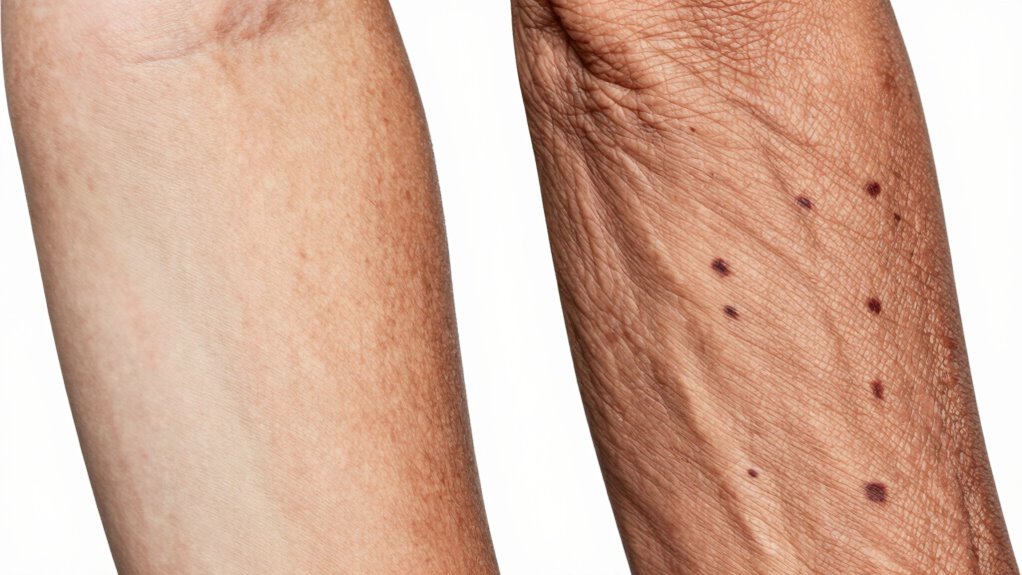
Have you ever wondered how prolonged exposure to ultraviolet (UV) rays gradually impacts your skin? The truth is, every time you spend time in the sun without proper sun protection, you’re setting off a slow process that accelerates skin aging and damages your skin’s structure. UV rays penetrate deep into your skin layers, breaking down collagen and elastin fibers that keep your skin firm and smooth. Over time, this damage becomes visible as wrinkles, fine lines, and sagging, making your skin look older than it actually is. Sun protection is essential because it acts as a shield, blocking or reducing the UV rays that cause these harmful changes. Without it, your skin becomes more vulnerable to premature aging and other long-term effects.
Prolonged UV exposure accelerates skin aging by damaging collagen and elastin, leading to wrinkles and sagging over time.
As UV exposure continues, you may notice dark spots, uneven skin tone, and pigmentation changes. These occur because UV rays stimulate excess melanin production, leading to what’s commonly called age spots or sun spots. These spots not only affect your skin’s appearance but also signal ongoing damage that can increase your risk of skin cancers. The more you expose your skin to the sun without protection, the more these spots accumulate, creating a patchy, uneven complexion. Using broad-spectrum sunscreen daily, wearing protective clothing, and seeking shade can significantly reduce these effects. Sun protection isn’t just about avoiding burns—it’s a vital step in preventing the gradual, invisible damage that accelerates skin aging.
Over the years, UV-induced damage also impacts your skin’s ability to repair itself. The natural regenerative processes slow down, making your skin less resilient and more prone to visible signs of aging. You might notice dullness, loss of elasticity, and enlarged pores, which all contribute to an aged appearance. Continuous UV exposure depletes essential nutrients in your skin, such as antioxidants, which normally help fight free radicals and repair damage. This imbalance leads to further deterioration of your skin’s health and appearance over time. Additionally, effective traceability of requirements can help in understanding and managing the cumulative effects of UV damage on skin health. Recent studies suggest that early intervention can be crucial in preventing long-term skin issues. Incorporating regular skin assessments can also help detect early signs of damage and prevent further deterioration. Moreover, understanding the long-term effects of UV exposure emphasizes the importance of consistent sun protection. Protecting your skin from UV rays also involves understanding how UV rays damage collagen, which is essential for maintaining skin firmness. To combat this, incorporating daily sun protection into your routine is crucial. Not only does it help maintain your skin’s youthful look longer, but it also preserves its overall health and vitality.
As an affiliate, we earn on qualifying purchases.
Frequently Asked Questions
Does UV Exposure Affect Skin Texture or Elasticity Long-Term?
Yes, UV exposure affects your skin’s texture and elasticity long-term. It causes skin thinning by reducing skin thickness and accelerates collagen breakdown, which weakens the skin’s support structure. Over time, this leads to sagging, wrinkles, and uneven texture. You might notice your skin becoming less firm and more susceptible to damage. Protecting your skin from UV rays helps preserve its elasticity and maintain a smoother, healthier appearance.
Can UV Exposure Cause Permanent Skin Color Changes?
Yes, UV exposure can cause permanent skin color changes. Imagine you spend a summer at the beach without sunscreen, and years later, you notice dark patches or uneven skin tone—this is UV-induced pigmentation leading to skin discoloration. Over time, repeated UV damage triggers melanin overproduction, resulting in lasting pigmentation spots. These changes can be stubborn and often require treatments like laser therapy or pigmentation creams to improve.
How Does UV Exposure Impact Skin Hydration Levels?
UV exposure causes your skin to lose hydration, leading to dehydration and dryness. It damages your moisture barrier, making it less effective at retaining water. As a result, your skin feels tight, rough, and flaky. To protect your hydration levels, use broad-spectrum sunscreen, moisturize regularly, and avoid prolonged sun exposure. Maintaining your moisture barrier helps keep your skin hydrated, healthy, and resilient against UV damage.
Are Some Skin Types More Prone to UV Damage Than Others?
Think of your skin as a fortress—some are more vulnerable than others. Your skin type greatly influences UV susceptibility; fair skin offers less protection, making it more prone to UV damage, while darker skin contains more melanin, providing natural defense. If you have lighter skin, you’re at higher risk of sunburn, premature aging, and skin cancer. Protecting your skin with sunscreen and seeking shade is essential, especially if you’re more susceptible.
Does UV Exposure Influence the Development of Skin Allergies or Sensitivities?
Yes, UV exposure can influence the development of skin allergies or sensitivities. You might notice UV-related allergies, like sun urticaria, where your skin reacts with redness or hives after sun exposure. Continuous or intense UV exposure can also trigger sensitivity development, making your skin more reactive to sunlight or other environmental factors. Protecting your skin with sunscreen and avoiding prolonged sun exposure helps reduce the risk of UV-related allergies and sensitivities.
Conclusion
Remember, a little sun today can lead to wrinkles tomorrow. While UV exposure can give you that warm glow, it also accelerates skin aging and causes damage. Protect your skin with sunscreen, seek shade, and wear protective clothing. Think of your skin as a valuable investment—care for it now, and it’ll thank you later. As the saying goes, “An ounce of prevention is worth a pound of cure,” so stay proactive about your skin’s health.
Halloween Picks
halloween
As an affiliate, we earn on qualifying purchases.