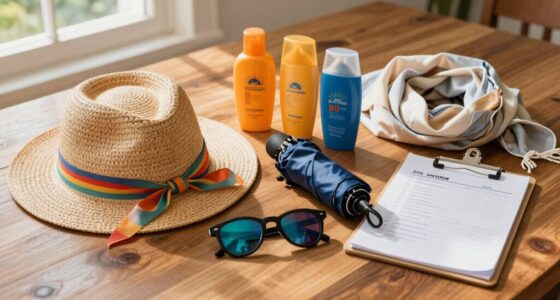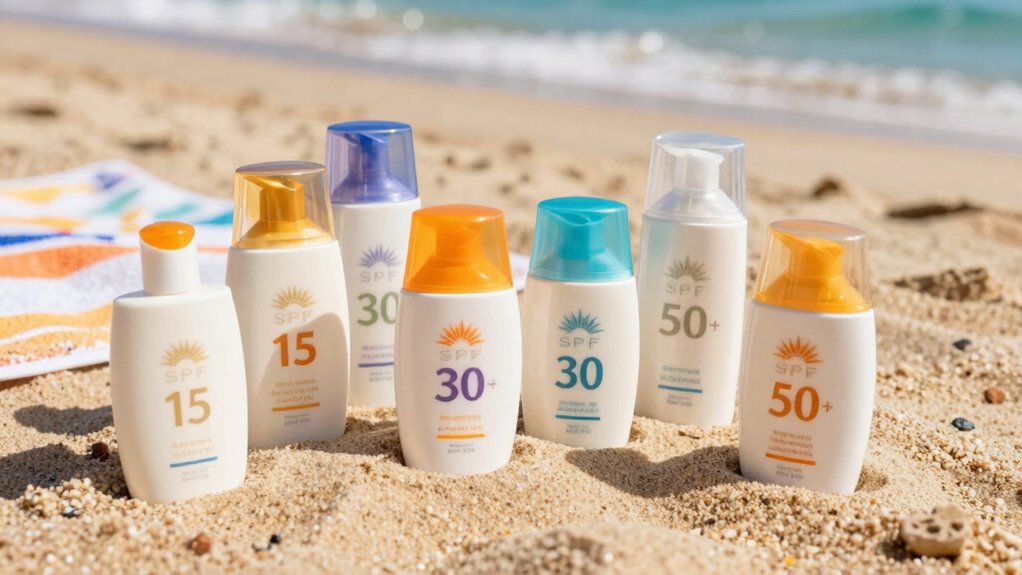

SPF numbers show how much longer you can stay in the sun before burning, compared to no protection. For example, SPF 30 lets you stay roughly 30 times longer without burning. But higher numbers don’t mean twice or three times the protection. SPF 15 blocks about 93% of UVB rays, while SPF 50 blocks around 98%. The difference between SPF 30 and 50 is small, so choosing the right SPF depends on your skin and activities. If you want to learn more, keep exploring these tips.

Get beauty and skincare favorites delivered free — and shop member deals
- Fast, free delivery on millions of items
- Access to Prime Big Deal Days deals on October 6–7
- Prime Video, Amazon Music and more included
Key Takeaways
- SPF indicates how much longer you can stay in the sun without burning compared to no protection.
- SPF 15 blocks about 93% of UVB rays; SPF 30 blocks about 97%; SPF 50 about 98%.
- Higher SPF offers minimal additional protection beyond SPF 50; proper application is more important.
- SPF does not block 100% of UV rays; reapplication every two hours is essential.
- SPF numbers help choose protection based on skin type and activity, but proper use is crucial.
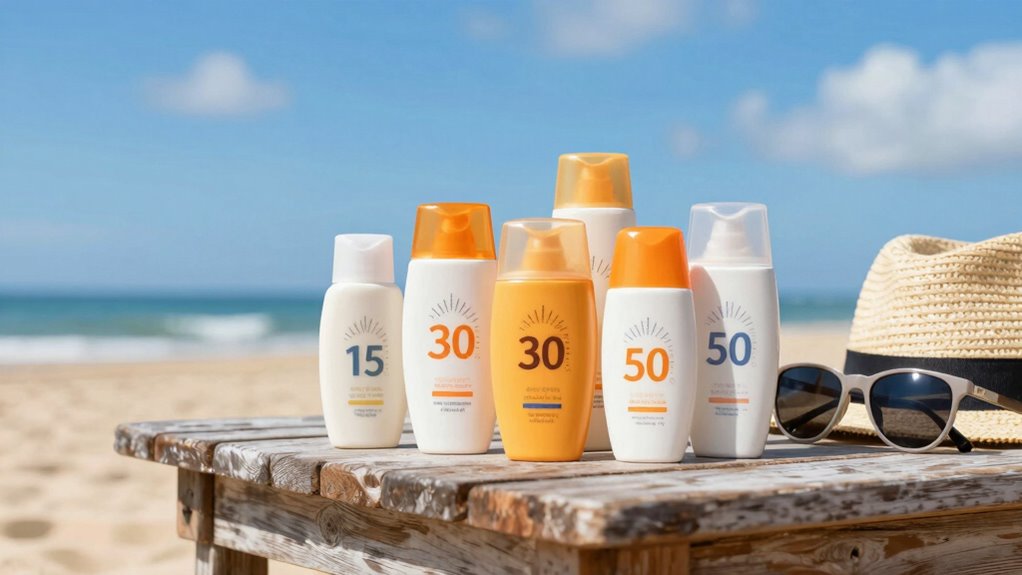
Ever wondered what those SPF numbers on your sunscreen really mean? It’s a common question, and understanding the true meaning behind SPF can help you make smarter choices for everyday sun protection. Many people fall prey to sun protection myths, believing that higher SPF always equals better protection or that applying more sunscreen is unnecessary. In reality, SPF (Sun Protection Factor) indicates how long your skin can be exposed to UVB rays before it starts to burn compared to no sunscreen. For example, an SPF 30 theoretically allows you to stay in the sun 30 times longer without burning than you would without protection. However, this doesn’t mean you can spend an entire day in the sun without reapplying. Proper SPF application tips emphasize that sunscreen should be generously and evenly applied, about a shot glass full for your body and a teaspoon for your face. Reapplication every two hours, or immediately after swimming or sweating, is essential for maintaining effective sun protection.
Many sun protection myths suggest that once you’ve applied sunscreen, you’re immune to UV damage for hours. That’s false. Sunscreen breaks down over time, especially if exposed to heat, water, or friction. Even high SPF products can’t block 100% of UV rays, so it’s important to seek shade, wear protective clothing, and avoid peak sun hours. When choosing an SPF, keep in mind that SPF 15 blocks about 93% of UVB rays, SPF 30 blocks about 97%, and SPF 50 blocks roughly 98%. The incremental difference between SPF 30 and SPF 50 isn’t substantial, so your choice should depend on your skin type, activity level, and sun exposure duration. Understanding UVB protection and how it relates to SPF can further help you select the appropriate sun safety measures for your needs. Additionally, knowing how sunscreen ingredients work can assist in choosing products that suit sensitive skin or specific needs. Incorporating sun safety practices like seeking shade and wearing protective gear can significantly enhance your overall protection.
Additionally, understanding proper application techniques can significantly enhance your sun protection efforts. Applying the right amount of sunscreen is one of the most important SPF application tips. Many people underestimate how much product they need, leading to less effective protection. If you don’t apply enough, your SPF’s effectiveness diminishes notably. It’s also wise to layer your sun protection routine with physical barriers like hats and sunglasses, especially if you’re outside for extended periods. Research shows that sunscreen efficacy can be compromised by improper storage or application, so paying attention to these details is crucial. Remember, the goal isn’t just to pick a high SPF but to use it correctly and consistently. By debunking sun protection myths and following proper SPF application tips, you can enjoy the sunshine safely without risking unnecessary skin damage.
As an affiliate, we earn on qualifying purchases.
Frequently Asked Questions
Can SPF Protect Against All Types of UV Rays?
SPF mainly protects against UVB rays, which cause sunburn, but it doesn’t guard against all UV spectrum types like UVA rays. You need wide-ranging sunscreen to shield your skin from both UVB and UVA rays, which penetrate deeper and contribute to aging and skin damage. Remember, SPF measures skin absorption of UVB, so even high SPF doesn’t mean full protection from the entire spectrum. Always choose wide-ranging options for extensive protection.
Does Higher SPF Mean Longer Sun Exposure Without Reapplication?
You might think higher SPF means you can stay in the sun longer without reapplication, but that’s a sun protection myth. Studies show SPF 30 blocks about 97% of UVB rays, while SPF 50 blocks 98%, so the difference isn’t huge. Many SPF misconceptions exist, and higher SPF doesn’t double your sun exposure time. Reapplying every two hours remains essential, regardless of SPF, to truly protect your skin.
Is SPF Equally Effective on All Skin Types?
SPF isn’t equally effective on all skin types, especially considering skin sensitivity and UV penetration. If your skin is more sensitive, you might need a higher SPF to protect against increased UV penetration, which can cause damage. People with darker skin tones may find lower SPFs effective, but all skin types still benefit from broad-spectrum protection. Always choose an SPF suited for your skin sensitivity for ideal defense against UV rays.
How Does SPF Affect Tanning Versus Sun Protection?
Think of SPF as your shield in a sun-drenched battlefield. While it blocks harmful rays, it doesn’t stop tanning myths from fooling you into thinking you’re invincible. SPF affects sun protection by reducing skin damage, but it doesn’t necessarily prevent tanning, which is a sign of your skin reacting to UV exposure. To truly protect your skin, combine SPF with shade and clothing, not just rely on a number.
Can SPF Be Used in Water or During Sweating?
Yes, SPF can be used in water or during sweating if it’s labeled as water-resistant or sweat-proof. Water-resistant sunscreens maintain their SPF protection for a certain period, usually 40 or 80 minutes, even when you’re swimming or sweating. However, reapply it after swimming, towel drying, or heavy sweating to guarantee continuous sun protection. Always check the label for specific water resistance and reapplication instructions.
Conclusion
Understanding SPF numbers helps you choose the right sunscreen for daily protection. Remember, SPF 30 filters about 97% of UVB rays, while SPF 50 blocks around 98%. Despite the small difference, wearing even a higher SPF can considerably reduce your skin damage risk. Did you know that skin cancer is the most common form of cancer worldwide? So, applying the right SPF consistently is a simple step you can take to protect your skin for years to come.
Fall Picks
fall essentials
As an affiliate, we earn on qualifying purchases.