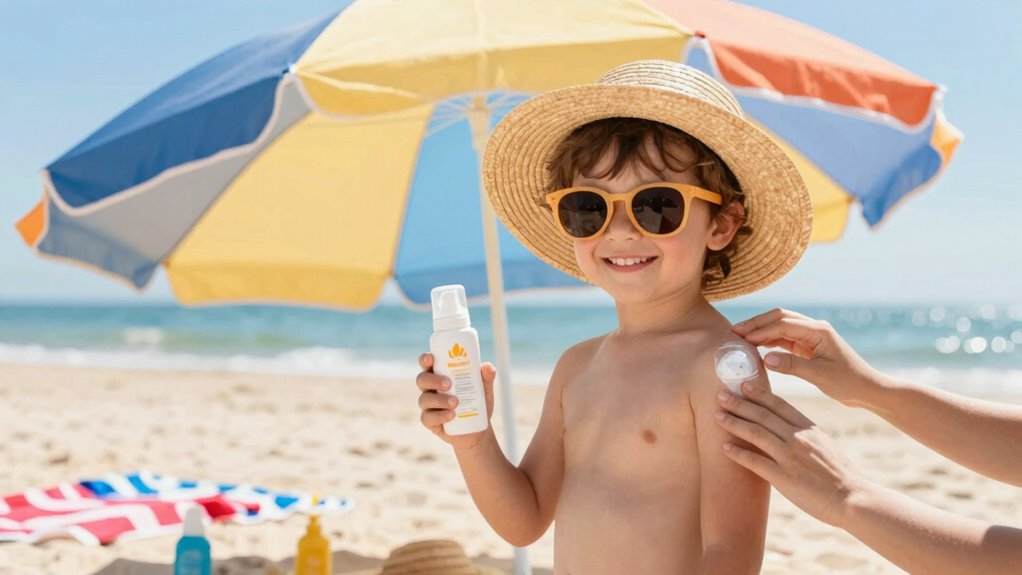

You can teach kids smart sun habits by focusing on protecting their skin while keeping it fun and positive. Use colorful hats, sunglasses, and make sunscreen application a family activity. Show them that seeking shade and wearing protective clothing is cool and caring. Reinforce that these habits help prevent sunburn and skin damage, not because they’re scary but because they’re smart. If you keep emphasizing the benefits and make it simple, they’ll enjoy staying safe in the sun. Want to learn more?

Get beauty and skincare favorites delivered free with Prime
- Fast, free delivery on millions of items
- Prime Video, Amazon Music and more included
- Member-only deals all year
Key Takeaways
- Use positive language to highlight sun safety as a fun way to protect and care for their skin.
- Incorporate colorful, stylish protective gear to make sun protection appealing and enjoyable.
- Model protective behaviors like wearing hats and applying sunscreen to set a good example.
- Integrate sun safety into daily routines, emphasizing it as a normal, positive part of outdoor activities.
- Teach kids the science behind UV rays in a simple, engaging way to foster understanding and acceptance.
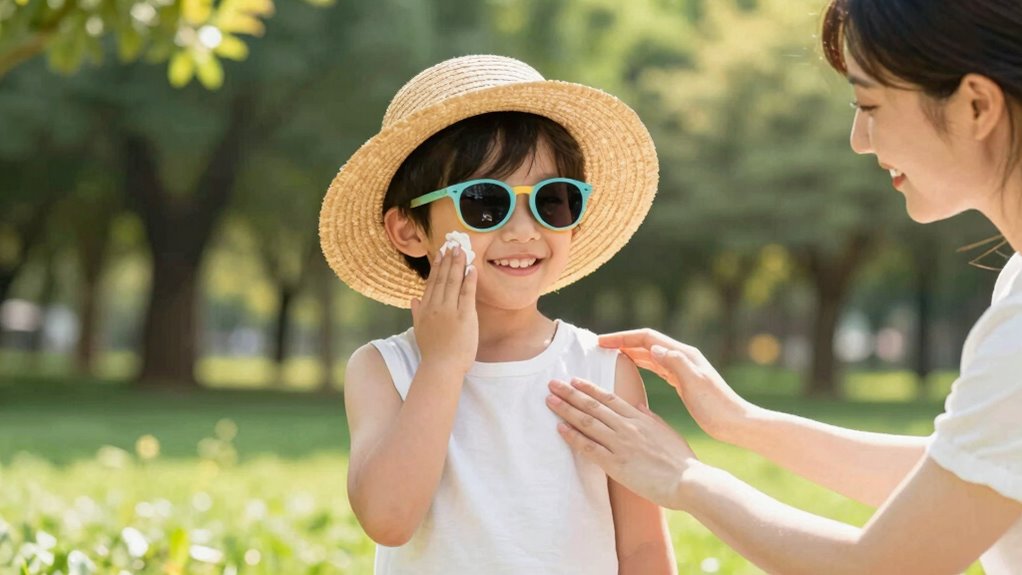
Teaching kids smart sun habits is essential, but it’s equally important to do so without instilling unnecessary fear of the sun. Instead of making sun exposure seem dangerous, focus on empowering them with knowledge about sun safety and skin protection. When you teach children why protecting their skin matters, you help them develop healthy habits that last a lifetime. Start by explaining that the sun gives us warmth and light, but too much direct exposure can harm their skin. Use simple language to help them understand that wearing protective gear and seeking shade are ways to enjoy the sun safely.
Teach kids sun safety with positivity, focusing on protection and fun habits to foster lifelong healthy skin care.
Encourage your kids to see sun safety as part of their routine, just like brushing their teeth. Emphasize the fun side of sun protection, like choosing a cool hat or colorful sunglasses, which can make the process enjoyable rather than a chore. When they understand that wearing sunscreen is an act of caring for their body, they’re more likely to accept it. Make sunscreen application a family activity, letting them pick their favorite scent or brand to foster a sense of control and involvement. Explain that applying broad-spectrum sunscreen, especially on exposed skin, helps block harmful UV rays and keeps their skin healthy.
Remind your kids that seeking shade during peak sun hours—usually between 10 a.m. and 4 p.m.—is a smart way to avoid overexposure. Encourage them to play under trees or in shaded areas during outdoor activities. Teaching them to wear protective clothing, like lightweight long sleeves and wide-brimmed hats, adds an extra layer of skin protection without making it seem like a burden. Reinforce that these habits are simple ways to enjoy outdoor play while keeping their skin safe. Additionally, incorporating landscaping elements like trees and shrubs can provide natural shade and enhance outdoor safety.
It’s also helpful to set a good example yourself. Kids learn a lot by watching their parents, so demonstrate sun safety by applying sunscreen, wearing hats, and seeking shade when you’re outside. Praise them when they remember to protect their skin, reinforcing positive behavior. Remember that UV protection strategies are based on scientific understanding of how the sun’s rays affect skin health, which can help children appreciate their importance. Moreover, explaining that sunscreen should be reapplied regularly, especially after swimming or sweating, helps them understand practical safety measures. Recognizing that scientific research supports these practices can make children more receptive to following them. When children understand the science behind UV rays, they are more likely to accept and follow sun safety practices. Keep the conversation light and fun, rather than scare tactics. When you focus on the benefits of sun safety—like staying comfortable and avoiding sunburns—they’ll naturally see it as a positive part of their routine.
As an affiliate, we earn on qualifying purchases.
Frequently Asked Questions
When Should Kids Start Wearing Sunscreen Regularly?
You should start applying sunscreen to your kids as early as 6 months old to promote good sun protection and skin health. Regular use is vital whenever they’re outdoors, especially during peak sunlight hours. By instilling these habits early, you help prevent sun damage and skin issues later in life. Make sunscreen a daily routine and choose broad-spectrum options to guarantee thorough sun protection for your little ones.
Are There Natural Sun Protection Methods for Children?
Think of natural sun protection like a gentle umbrella for your child. You can use natural remedies like zinc oxide or physical barriers such as UPF clothing to shield their skin. Shade strategies are also effective; seek out shady spots during peak sun hours, like trees or umbrellas. These methods help reduce exposure without instilling fear, ensuring your child stays safe and comfortable while enjoying outdoor activities.
How Can I Make Sun Safety Fun for Kids?
You can make sun safety fun by turning it into games like a sun safety scavenger hunt or relay race, encouraging kids to find protective clothing or sunscreen spots. Incorporate playful challenges that reward them for wearing hats or sunglasses. Use bright, colorful protective clothing and let children choose their favorites. When kids see sun safety as a game, they’ll adopt healthy habits happily and confidently.
What Are Signs of Sunburn in Young Children?
You’ll notice sunburn symptoms in young children as skin redness and warmth, often accompanied by tenderness. Their skin might look inflamed or blotchy, and they could complain about pain or itching. Sometimes, blisters develop on severely affected areas. Keep an eye out for peeling skin in the days after exposure. If you see these signs, it’s important to get them out of the sun, apply cool compresses, and use gentle moisturizer to soothe their skin.
How Does Vitamin D Affect Sun Exposure Recommendations?
Vitamin D synthesis depends on safe sun exposure, but you should balance it carefully. Too much sun increases burn risk, while too little can lead to deficiency. To maintain this sun exposure balance, encourage brief periods outside during early morning or late afternoon and consider dietary sources or supplements if needed. This way, your kids get enough vitamin D without risking skin damage, promoting healthy growth and immune function.
Conclusion
Just as the wise owl guards the night, you can shield your kids from the sun’s harsh rays with calm confidence. By teaching smart habits without fear, you help them build a lifelong respect for the sun’s power—like a brave hero learning to handle their magic. Remember, gentle guidance now sets the stage for a future where your kids shine bright and safe, embracing the sun’s warmth with wisdom, not worry.
Halloween Picks
halloween
As an affiliate, we earn on qualifying purchases.