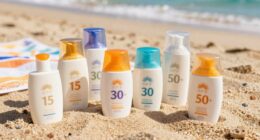
When you swim with sunscreen on, chemicals from your skin can wash into the pool water, causing cloudiness and encouraging algae growth. These substances react with chlorine, creating byproducts that strain your filtration system and can harm water quality. To keep your pool clear and safe, using water-resistant sunscreen and showering beforehand helps minimize this impact. If you want to learn more about how to protect your pool water, keep exploring the options available.
Key Takeaways
- Sunscreen chemicals wash off into pool water, reacting with chlorine to form harmful chlorinated organic compounds.
- These substances can cause water cloudiness, haze, and strain filtration systems, increasing maintenance needs.
- Chemical interactions from sunscreen ingredients can reduce water safety and promote algae growth if untreated.
- Using water-resistant sunscreens and showering beforehand can minimize chemical contamination in pools.
- Proper chemical balancing and cleaning are essential to counteract the negative effects of sunscreen on water quality.

When you swim in a pool, sunscreen can impact the water quality more than you might realize. While applying sunscreen is essential for UV protection, it introduces chemicals into the water that can alter its chemistry. Many sunscreens contain ingredients designed to absorb or reflect UV rays, but these compounds don’t stay on your skin—they wash off into the pool water. This process creates chemical interactions that can affect water clarity and balance, sometimes leading to increased maintenance costs or compromised water safety. The chemicals used in sunscreens, such as zinc oxide, titanium dioxide, or chemical UV filters, can react with pool disinfectants like chlorine, creating byproducts that may be harmful or cause cloudiness. These interactions can produce chlorinated organic compounds, which not only diminish water quality but may also pose health concerns for swimmers. Additionally, the accumulation of these substances over time can strain the pool’s filtration system, requiring more frequent cleaning and chemical adjustments. The impact of sunscreen on pool water isn’t limited to just chemical reactions. When these substances enter the water, they can accumulate on surfaces, filters, and in the water itself, making it more challenging to keep the pool properly sanitized. As the chemicals bind or settle, they can create a film or haze that reduces water clarity and increases the burden on filtration systems. This results in more frequent need for shocking or chemical balancing to maintain safe, clean water. It’s also worth noting that some ingredients in sunscreens tend to bind with organic matter, which can promote algae growth if not properly managed. Over time, these chemical interactions can lead to more frequent cleaning and higher operational costs for pool owners. To minimize these effects, you might consider applying waterproof or water-resistant sunscreens that are less likely to wash off, or taking extra steps like showering before swimming to remove excess products. Wearing protective clothing or hats can also reduce your reliance on sunscreen during pool visits, thereby limiting chemical contributions to the water. Being mindful of the type and amount of sunscreen you use helps preserve water quality and keeps the pool environment safer for everyone. Ultimately, understanding how your sunscreen interacts with pool chemicals can guide you toward more eco-friendly and water-conscious choices. By taking proactive measures, you help ensure the water remains clear, safe, and enjoyable for all swimmers, while also reducing the environmental impact of chemical interactions that stem from sunscreen use. Choosing eco-friendly products can further support sustainable pool maintenance practices.

Neutrogena Beach Defense Sunscreen Spray SPF 70 – Broad Spectrum Sun Protection for Face & Body, Water-Resistant Sunscreen Formula, Lightweight & Fast-Absorbing, 6.5 fl. oz. (184 mL)
Powerful sun protection: Neutrogena Beach Defense Sunscreen Spray delivers broad-spectrum SPF 70 to help shield your face and…
As an affiliate, we earn on qualifying purchases.
As an affiliate, we earn on qualifying purchases.
Frequently Asked Questions
Does Sunscreen Affect Pool Filter Efficiency?
Yes, sunscreen can affect pool filter efficiency. When you swim, sunscreen particles often wash off and enter the water, disrupting pool maintenance and altering water chemistry. These oils and chemicals can clog filters and reduce their effectiveness, making it harder to keep your pool clean. To maintain ideal filter performance, you should encourage swimmers to apply sunscreen properly and shower before entering the pool, helping preserve filter life and water quality.
Are Mineral Sunscreens Safer for Pool Water?
Yes, mineral sunscreens are generally safer for pool water because they contain natural ingredients like zinc oxide and titanium dioxide, which reduce chemical contamination. Unlike chemical sunscreens, they don’t dissolve into the water and cause issues with filtration or water quality. By choosing mineral sunscreens, you help keep the pool cleaner and safer for swimmers, while also minimizing environmental impact.
How Often Should I Apply Sunscreen to Minimize Impact?
You should reapply sunscreen every two hours to minimize its impact on pool water quality. Notably, most people don’t reapply often enough—about 40% forget or delay. To protect your skin and reduce contamination, layer sunscreen properly and reapply frequently, especially after swimming or sweating. This consistent reapplication frequency helps maintain effective sun protection while keeping pool water cleaner.
Can Sunscreen Chemicals Cause Algae Growth?
Sunscreen chemicals can cause algae growth through chemical reactions that promote nutrient buildup, leading to water contamination. When these chemicals enter your pool, they alter the water chemistry, providing a food source for algae. To prevent this, you should regularly clean your pool and consider using sunscreens with mineral-based ingredients like zinc oxide or titanium dioxide, which are less likely to cause water contamination and algae growth.
What’s the Best Way to Remove Sunscreen Residues From Pool Surfaces?
Think of your pool surface as a mirror reflecting cleanliness; to remove sunscreen residue buildup, you need thorough surface cleaning. Use a gentle, non-abrasive pool surface cleaner and scrub with a soft brush to break down residues. Regularly brushing and vacuuming the pool helps prevent buildup, keeping your water clear and inviting. This simple routine guarantees your pool remains pristine, free from the hidden residues that threaten its sparkling clarity.

Clorox® Pool&Spa™ Swimming Pool Super Water Clarifier, Creates Crystal Clear Pool Water, 1 Quart (Pack of 1)
Super Water Clarifier: Clorox Pool&Spa Swimming Pool Super Water Clarifier is a concentrated solution that clears dull, hazy,…
As an affiliate, we earn on qualifying purchases.
As an affiliate, we earn on qualifying purchases.
Conclusion
As you enjoy the shimmering pool, remember that sunscreen is both your shield and a silent artist painting the water’s surface. It’s like adding a delicate brushstroke to a masterpiece—you want protection without marring the beauty beneath. By choosing eco-friendly options and rinsing off beforehand, you help preserve this liquid canvas for everyone. Your mindful actions keep the pool’s crystal clarity alive, ensuring the water remains a sparkling mirror reflecting summer’s joy and nature’s harmony.

Pool Filter Cleaning System and Cleaner Stand Solid Aluminum Shaft- Compatible with 3,4,and 6 Inch Filter Cartridges,Dual Use Stand Design for Vertical & Horizontal
Multi size adaptation: Pool/spa filters with inner diameters of 3, 4, and 6 inches can be used, and…
As an affiliate, we earn on qualifying purchases.
As an affiliate, we earn on qualifying purchases.

Daci Women Blue Leaves Two Piece Rash Guard Long Sleeve Swimsuits UV UPF 50+ Swim Shirt Bathing Suit with Boyshort Bottom L
2 Piece Rash Guard Women: This crew neck long sleeve swim shirt features green palm leaf prints and…
As an affiliate, we earn on qualifying purchases.
As an affiliate, we earn on qualifying purchases.