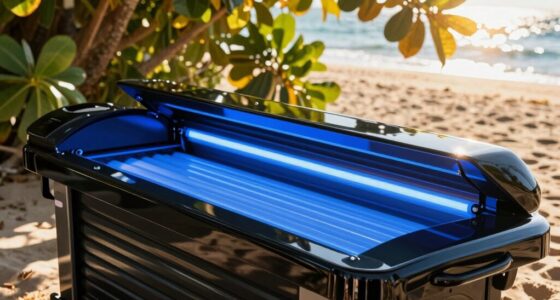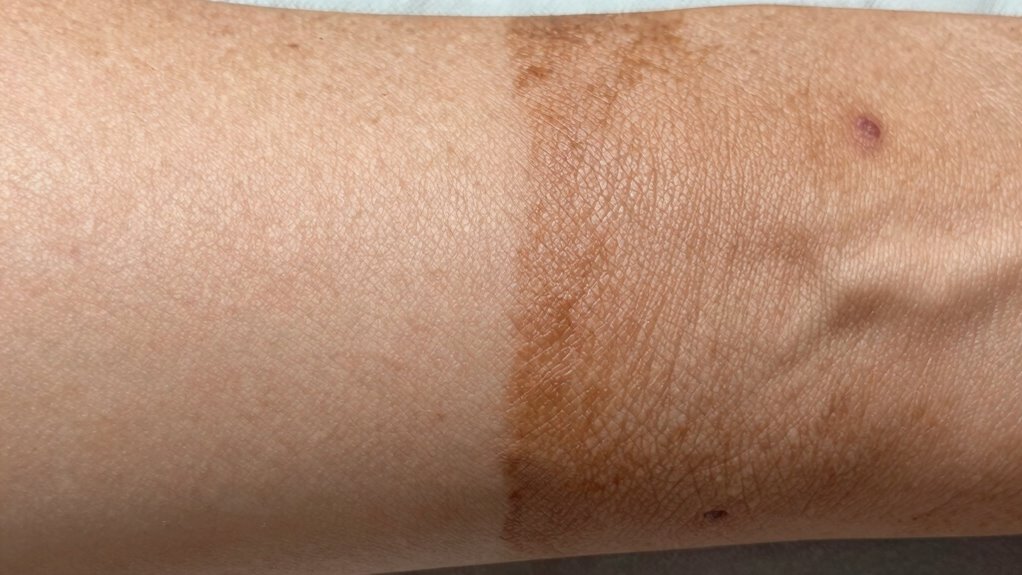

Long-term indoor tanning damages your skin’s structure, leading to premature aging and a dull, uneven appearance. Repeated UV exposure breaks down collagen and elastin, causing sagging, wrinkles, and loss of elasticity. It also accelerates skin discoloration, age spots, and rough texture. Over time, your skin’s ability to repair diminishes, increasing the risk of skin cancer. To understand how these changes develop and how to protect yourself, keep exploring this important topic.

Get beauty and skincare favorites delivered free — and shop member deals
- Fast, free delivery on millions of items
- Access to Prime Big Deal Days deals on October 6–7
- Prime Video, Amazon Music and more included
Key Takeaways
- Repeated UV exposure damages collagen and elastin, leading to decreased skin firmness and elasticity.
- Long-term tanning accelerates skin aging, causing wrinkles, fine lines, age spots, and dullness.
- Cumulative UV damage impairs the skin’s cellular repair ability, resulting in uneven tone and hyperpigmentation.
- Prolonged indoor tanning increases the risk of skin cancers, including melanoma, basal, and squamous cell carcinoma.
- Long-term UV damage weakens the skin’s barrier, causing dryness, irritation, and a rough, aged skin texture.

Indoor tanning is a popular way for many people to achieve a bronzed look, but it can considerably impact your skin’s quality. When you spend time in tanning beds, your skin is exposed to artificial ultraviolet (UV) rays, which can alter how your skin ages and how it functions. One of the initial effects you might notice is an increase in vitamin D synthesis. UV rays stimulate your skin to produce vitamin D, which is essential for bone health and immune function. However, this benefit comes with a significant trade-off: the same UV exposure accelerates skin aging processes, leading to long-term damage.
Furthermore, the repeated UV exposure from indoor tanning damages the collagen and elastin fibers in your skin. Collagen provides structure and firmness, while elastin allows your skin to bounce back after stretching. As these fibers break down, your skin begins to lose its elasticity, resulting in sagging and the development of fine lines and wrinkles. This process isn’t immediate but accumulates with prolonged tanning habits, making your skin look older than your actual age. The damage also causes uneven skin tone and hyperpigmentation, which can be difficult to reverse. UV-induced skin damage can also impair your skin’s natural regenerative processes, leading to persistent changes in texture.
Repeated UV exposure damages collagen and elastin, causing sagging, wrinkles, uneven tone, and hyperpigmentation.
You might think that indoor tanning gives you a quick fix for a tan, but it actually speeds up the skin aging processes. The UV rays penetrate deep into your skin, causing DNA damage at the cellular level. Over time, this damage increases your risk of developing skin cancers, including melanoma, basal cell carcinoma, and squamous cell carcinoma. The more often you tan indoors, the higher your cumulative UV exposure becomes, amplifying these risks. Additionally, this damage weakens your skin’s natural barrier, making it more susceptible to dryness, irritation, and other skin conditions. Indoor tanning-related skin damage can also contribute to long-term changes in skin texture and appearance.
While you may initially notice a temporary darkening of your skin after tanning, the long-term consequences are far more damaging. Your skin’s ability to repair itself diminishes as you age, and UV damage becomes embedded in your skin’s cellular structure. This leads to premature aging signs such as age spots, rough texture, and a dull complexion. Moreover, the loss of collagen and elastin accelerates the formation of wrinkles and fine lines, which can make you appear older than you feel. Understanding skin damage from UV rays highlights the importance of protecting your skin to maintain its long-term health and appearance. Additionally, protective measures such as avoiding tanning beds and using sun protection are crucial in preventing further damage.
As an affiliate, we earn on qualifying purchases.
Frequently Asked Questions
Can Indoor Tanning Be Reversed Over Time?
Yes, indoor tanning effects can be reversed over time, but it depends on the extent of damage. If you stop tanning, your skin can gradually recover, reducing skin pigment changes and signs of tanning addiction. However, deep skin damage from prolonged exposure may take years to heal, and some changes could be permanent. Protecting your skin now and avoiding tanning helps prevent further damage and supports natural recovery.
Are Certain Skin Types More Affected by Indoor Tanning?
Yes, certain skin types are more affected by indoor tanning. If you have sensitive skin, you’re more prone to irritation, redness, and long-term damage. Tanning pigmentation can become uneven or darker, especially if your skin reacts strongly to UV exposure. People with fair or sensitive skin should be extra cautious, as they’re more likely to experience adverse effects from indoor tanning, which can accelerate aging and increase skin cancer risk.
Does Indoor Tanning Impact Skin Aging Differently Than Sun Exposure?
Indoor tanning accelerates skin aging more than natural sun exposure because it involves controlled UV radiation that damages collagen and elastin. This process worsens wrinkles, sagging, and age spots. While tanning boosts Vitamin D synthesis temporarily, it increases free radicals that harm skin cells. Melanin production may be stimulated, but the long-term damage outweighs benefits. Protect your skin by avoiding indoor tanning and embracing safer sun habits.
How Does Indoor Tanning Influence Skin Hydration Levels?
Indoor tanning decreases your skin’s hydration levels and reduces overall skin moisture. The UV rays from tanning beds damage your skin’s barrier, causing water loss and dryness. Over time, this leads to dull, less elastic skin. To protect your skin, it’s best to avoid frequent indoor tanning sessions. Keep your skin hydrated by using moisturizers and staying well-hydrated internally, which helps maintain better skin moisture and overall skin health.
Are There Safe Indoor Tanning Alternatives for Skin Coloring?
Think of safe indoor tanning alternatives as a gentle sunrise—brightening your skin without the harsh rays. You can opt for natural alternatives like spray tans or self-tanning lotions, which give you that sun-kissed glow. Skin-safe products are designed to avoid damage and keep your skin healthy. These options let you enjoy a bronzed look while protecting your skin’s long-term robustness, much like a soft dawn replacing a burning midday sun.
Conclusion
Remember, you are what you repeatedly do. Indoor tanning may give you a golden glow now, but it can lead to premature aging, wrinkles, and skin damage over time. The effects accumulate silently, so it’s best to think twice before reaching for that tanning bed. Protect your skin like treasure—because healthy skin is a lifelong investment. Choose radiant health over fleeting beauty, and let your natural glow shine brighter than any artificial tan.
Halloween Picks
halloween
As an affiliate, we earn on qualifying purchases.