
TL;DR

Get beauty and skincare favorites delivered free with Prime
- Fast, free delivery on millions of items
- Prime Video, Amazon Music and more included
- Member-only deals all year
Self-tanning lotions use ingredients such as DHA to temporarily darken the skin’s outer layer, creating a tanned appearance without the UV exposure involved in sunbathing or indoor tanning. Apply a thin, even layer to clean, dry skin, use less on dry joints, and follow the product’s rinse instructions. The color is cosmetic, not sunscreen, so keep using sun protection.
A bottle of self-tanning lotion can add a bronze glow without asking you to lie in the sun or step into a tanning bed. That color comes from a surface-level reaction, not from your skin making more melanin, so a fresh tan does not protect you from sunburn.
Once you know how self-tanning lotions work, the process feels less like a beauty gamble and more like painting a wall: prep the surface, use a light hand, and watch the edges. This guide covers what creates the color, how to apply it evenly, what safety points matter, and how to keep your routine realistic when the tan starts to fade.
DHA creates temporary color in the skin’s outer layer; it does not increase melanin or act as sunscreen.
Patch test a new formula, and avoid applying self-tanner to broken or irritated skin.
Exfoliate dry patches, apply a thin layer to clean, dry skin, and use less on elbows, knees, ankles, hands, and feet.
Follow the product’s specific drying and rinse instructions; express formulas do not all use the same timing.
Moisturize as the color fades, and use gentle exfoliation rather than harsh scrubbing on uneven areas.
How Self-Tanning Lotions Create a Temporary Bronze
Self-tanning lotions temporarily darken the outermost layer of skin by using ingredients such as dihydroxyacetone, or DHA. DHA reacts with amino acids in the skin’s surface layer and forms brown pigments called melanoidins. The color usually develops over several hours, then fades as those surface cells shed.
That reaction is different from a UV tan. Sunbathing or indoor tanning exposes skin to ultraviolet radiation; a lotion creates a cosmetic color without that exposure involved in tanning. Think of it as a tint sitting on the top pages of a notebook: it changes how the surface looks, not what lies underneath. Because the reaction happens at the surface, the color is temporary and cannot build the kind of melanin response associated with UV exposure.
Some formulas also use erythrulose, another tanning ingredient that may develop more gradually, or include moisturizers and a tinted color guide. A color guide can help you see where you have applied lotion, much like food coloring in cake batter, but the guide shade is not always the final result. This distinction matters when choosing a shade: the color you see immediately may be the guide, while the DHA-driven color takes time to appear. Judging too early can lead you to apply more and end up darker than intended.
For example, if you apply a lotion in the evening, your skin may look deeper by morning even though you have not spent time in the sun. The result varies with the formula, how you apply it, and your skin’s natural shedding pattern. It is temporary color, not a change in melanin production, so it does not create lasting protection or prevent UV damage.
As an affiliate, we earn on qualifying purchases.
Why a Self-Tan Never Replaces Sunscreen
Self-tanning lotions do not provide meaningful protection from UV rays unless the product separately contains sunscreen. A cosmetic tan can make skin look sun-kissed, but it does not work like a shield or reliably prevent sunburn. Check the label for a sunscreen active ingredient and sun protection factor rather than judging by the color. The visible bronze is a surface pigment effect, not evidence that your skin has become less vulnerable to UV exposure.
This distinction matters on an ordinary day outdoors. If you apply self-tanner before a weekend walk, you still need broad-spectrum sunscreen, sun-protective clothing, and shade when appropriate. Put sunscreen on according to its label; the self-tanner’s bronzed finish does not change that routine. Keeping the two steps separate prevents the appearance of a tan from becoming a reason to spend longer in the sun or skip protection.
Many people choose lotion precisely to get a tanned appearance without UV tanning. That choice avoids the intentional UV exposure involved in sunbathing or indoor tanning, but it does not make every product risk-free: some users experience irritation or an allergic reaction to DHA, fragrance, or another ingredient. In other words, avoiding UV tanning is a meaningful benefit, while checking how your own skin responds remains important.
A practical example: someone with a fresh, even tan might assume they can skip sunscreen at a garden party. They cannot. Treat self-tanner as makeup for the body—a color effect—not as sun protection. If a formula irritates your skin, stop using it rather than trying to cover the discomfort with another layer.
How to Apply Lotion for a More Even Result
For a more even self-tan, prepare dry areas, apply thin layers, and follow the product label. Unevenness often comes from lotion collecting where skin is rough or bending, not from a mysterious flaw in the formula. Knees, ankles, elbows, hands, and feet usually need a lighter touch than the broad areas of your legs or arms. These spots can absorb or hold color unevenly because their skin is drier, thicker, or creased, so treating every area with the same amount often produces a patchier result.
- Patch test first. Try a small amount on a discreet area and watch for irritation, especially if you have sensitive skin. This adds time, but it can reveal a reaction before you cover a large area.
- Exfoliate and dry. Smooth away flaky patches before application; pay extra attention to elbows and ankles. Exfoliating helps reduce rough spots that can catch color, while applying to fully dry skin helps prevent dilution or streaking.
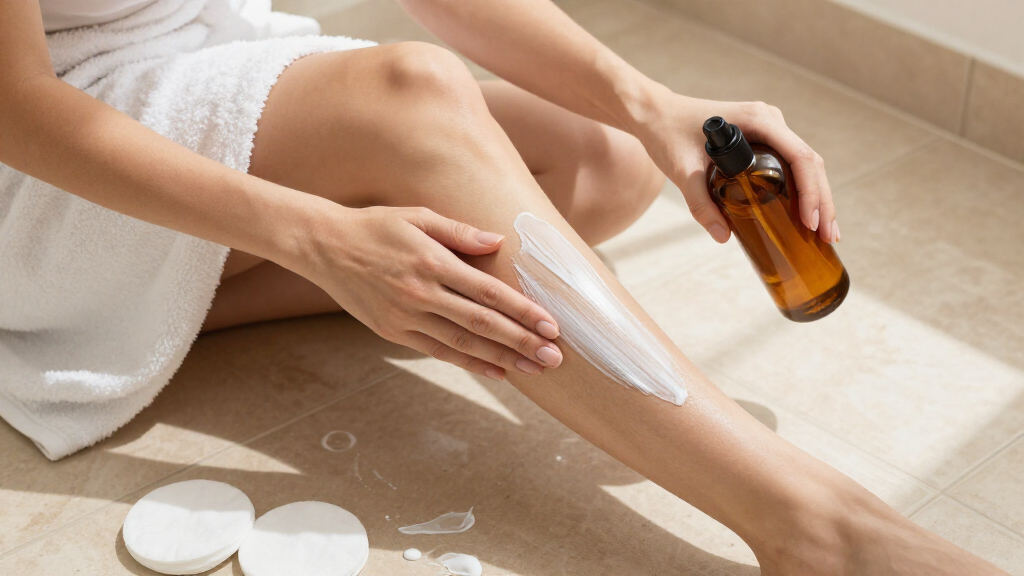
- Apply a thin, even layer. Work over clean, dry skin. An applicator mitt can help distribute lotion and protect your palms. A thin layer is easier to blend and adjust; using more at once may deepen color unevenly rather than making the result uniformly darker.
- Use less on joints and hands. Blend leftover product lightly over these areas instead of adding a full fresh pump. This balances the coverage without leaving concentrated color in creases or around nails.
- Let it dry and follow rinse directions. Wear loose clothing while it dries, and wash your hands if you did not use a mitt. Rubbing or transferring product before it sets can create marks, while rinsing too early or too late may change the result depending on the formula.
Picture getting ready for a wedding: applying a thick coat just before putting on tight jeans can leave streaks on your legs and color on your clothes. A light application the night before, with enough drying time, gives you a chance to notice how the shade develops before the event. Avoid broken or irritated skin, and keep the lotion away from your eyes, lips, and other mucous membranes.
Choose a Formula That Fits Your Routine
The best formula for you depends on how quickly you want color, how easily you can apply it, and what your skin tolerates. Gradual-build lotions can offer more control over the shade, while express formulas have different rinse times that you must follow. A color guide may show missed patches as you work, though it can temporarily mark towels or clothing. These options involve tradeoffs: more control can take repeated applications, while a quicker routine depends on getting the timing right.
| Formula style | What it offers | What to watch for |
|---|---|---|
| Gradual-build lotion | Color develops over repeated applications, giving you room to adjust. | It takes more than one application to reach a deeper shade. |
| Express formula | Designed for a shorter wait before rinsing. | Rinse timing varies by product; read the label rather than guessing. |
| Tinted color-guide lotion | A visible guide can help you spot areas you missed. | The guide color may stain fabric and may not match the final tan. |
| Fragrance-free option | May suit someone who prefers to avoid added fragrance. | Fragrance-free does not guarantee that every ingredient will suit your skin. |
Imagine you want a subtle color for a Tuesday work event, not a dramatic weekend tan. A gradual lotion gives you a chance to stop when the shade feels right, but you need to allow time for repeated applications and evaluate the developing result between them. An express product may fit a tighter schedule, yet its shorter rinse window leaves less room for guesswork. Product trends also include lotions marketed for dry or sensitive skin and formulas combining DHA with erythrulose, but marketing language such as “natural” or “clean” does not prove a product is safer or more effective. Choose based on the instructions, your tolerance, and the routine you can realistically follow.
Keep the Color Smooth as It Fades
A self-tan fades as the skin’s outer cells naturally shed, often over a few days. The exact timing depends on the product, your skin, bathing, and how quickly those surface cells turn over. Regular moisturizing can help the fade look more even, while very dry patches may hold color differently and appear darker. This is why the finish can become less uniform over time even if the initial application looked smooth: skin does not shed at precisely the same rate everywhere.
For instance, a streak around an ankle may stand out after several showers because that area is dry and bends against socks and shoes. Rather than scrubbing hard with a rough mitt, use gentle exfoliation and moisturizer to help the uneven patch fade. Aggressive scrubbing can irritate skin and turn a cosmetic problem into a sore one; a slower fade is usually a better tradeoff than damaging the skin to remove color quickly.
Color can also cling to elbows, knees, and knuckles, so use less product there next time. If your tan looks too deep, remember that the color is temporary; it will gradually fade as skin sheds. A lighter shade and thinner layer can be a more useful adjustment than piling on another product immediately, which may add color unevenly and make the problem harder to manage.
Clothing and bedding deserve a little planning, too. Let the lotion dry before getting dressed, and choose loose, darker clothing while it develops if the label allows. A white towel can pick up temporary color, so using an older towel on application night may save you an awkward laundry surprise. The color guide, if the formula has one, may transfer even when the developing tan has not fully appeared.
Use Self-Tanner With Simple Safety Checks
Use self-tanning lotion only as directed and stop if it causes a rash or significant discomfort. DHA products are made for external skin application; do not swallow them or deliberately inhale them. Lotion avoids much of the eye, nose, mouth, and lung exposure that spray or mist application can create, but you should still keep it away from sensitive areas. The format changes the kind of exposure to consider; it does not remove the need to follow directions.
Patch testing is a sensible first step if you have reacted to cosmetics before. Apply a small amount to a discreet patch of skin and check how it feels and looks before using it widely. Do not apply self-tanner to broken or irritated skin, and keep it away from your eyes, lips, and mucous membranes. A patch test cannot guarantee that a reaction will never occur, but it can help identify a problem before widespread application.
If you are pregnant or have a health concern that affects your skin, ask a healthcare professional for personal advice. Topical lotion generally involves less inhalation exposure than a spray, but research on some specific circumstances is limited. People with pre-existing skin conditions can also check with a qualified professional before trying a new product.
A useful real-life check is to read the ingredient list before buying, especially if fragrance has triggered irritation for you in the past. Claims like “for sensitive skin” can help you narrow choices, but they do not guarantee a reaction-free experience because people can respond to different ingredients. If redness, itching, or substantial discomfort develops, wash the product off if the label permits and stop using it.
Frequently Asked Questions
Does self-tanner protect me from the sun?
No. A cosmetic tan from self-tanner is not sunscreen and does not provide meaningful UV protection. Use broad-spectrum sunscreen and other sun-protective measures outdoors.
How long does self-tanner last?
The color often lasts for a few days, but timing varies with the product, application, bathing, and your skin’s natural shedding. Moisturizing can help the fade look more even.
How soon can I shower after applying self-tanner?
Follow the product label. Some formulas need several hours to develop, while express products have different rinse times. Guessing can affect the final color.
Can I use self-tanner on my face?
Choose a product labeled for facial use, patch test first, and keep it away from your eyes and lips. Not every body lotion is intended for facial skin.
Why did my self-tan turn streaky or orange?
Common causes include applying too much, uneven coverage, dry patches, choosing a shade that is too deep, or rinsing at the wrong time. Try a lighter shade and a thinner, more even layer next time.
Can I put sunscreen over self-tanner?
Yes. Apply sunscreen as directed on its label. Self-tanner does not replace sunscreen, even when the finished color looks deep.
How can I remove self-tanner from an uneven patch?
The color fades as skin naturally sheds. Gentle exfoliation and moisturizer may help the patch fade, but avoid aggressive scrubbing, which can irritate your skin.
Conclusion
Use self-tanning lotion for the color, not for protection. Prep your skin, apply a thin layer, and give the formula the drying and rinse time its label calls for. If your skin reacts, stop rather than pushing through.
Keep sunscreen in your outdoor routine, whether your tan came from a bottle or a sunny afternoon. A bronze glow can be temporary; your sun-safety habits should not be.
Halloween Picks
halloween
As an affiliate, we earn on qualifying purchases.