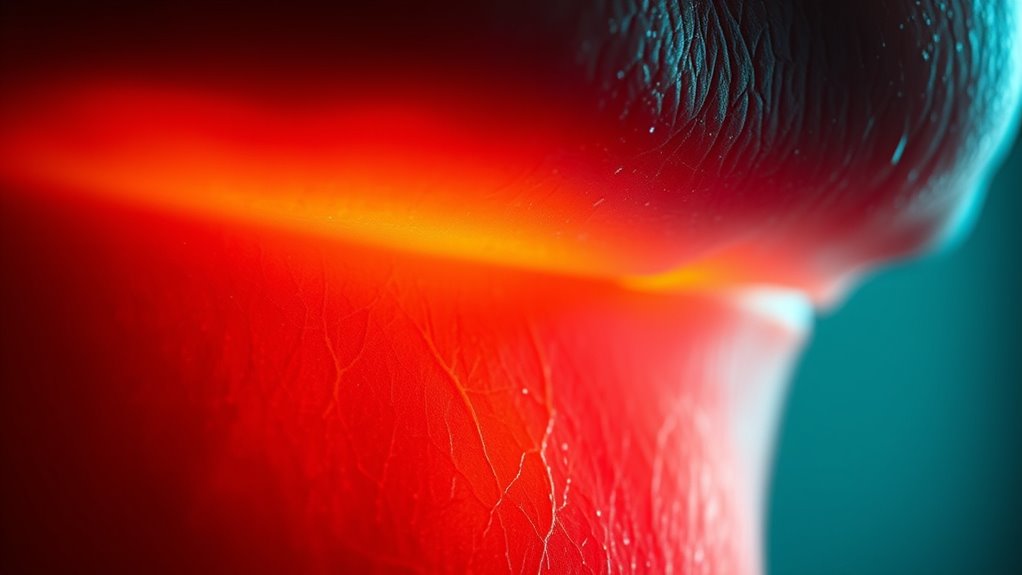

UVA rays penetrate deep into your skin, speeding up aging signs like wrinkles by breaking down collagen and elastin, while UVB rays mainly affect the outer layer, causing redness, pain, and burns. UVB exposure increases your risk of skin cancer and causes immediate damage, especially during peak hours. If you want to protect your skin long-term, it’s important to understand how both rays work and how to guard against them—as you’ll discover more below.
Key Takeaways
- UVA penetrates deep into skin, causing aging signs and breaking down collagen and elastin.
- UVB affects the outer skin layer, leading to redness, pain, and sunburns.
- UVA stimulates melanin production, resulting in tanning, but also accelerates skin aging.
- UVB is the main cause of sunburns and increases skin cancer risk.
- Protecting against both UVA and UVB reduces skin damage and promotes long-term skin health.
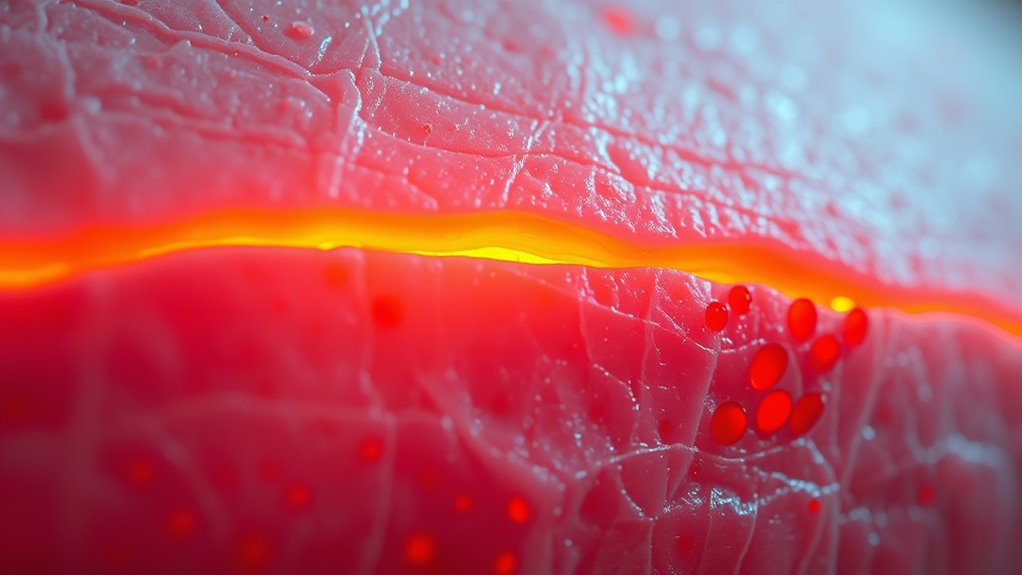
Have you ever wondered what the difference is between UVA and UVB rays? Understanding how each type interacts with your skin can help you protect yourself better and make smarter choices about sun exposure. UVA rays penetrate deep into your skin’s layers, and they’re primarily responsible for the tanning effects you see after a day in the sun. When UVA rays hit your skin, they stimulate the production of melanin, which darkens the skin and creates that immediate tan. However, this tanning process isn’t just about appearance; it’s also a sign that your skin is responding to damage. While a tan might seem like a healthy glow, it actually indicates your skin has been stressed by UV exposure. Over time, this stress accelerates skin aging, leading to wrinkles, fine lines, and loss of skin elasticity. UVA rays contribute profoundly to these signs of premature aging because they cause the breakdown of collagen and elastin fibers in your skin. The more UVA rays you’re exposed to, the faster your skin shows signs of aging, making it imperative to use broad-spectrum sunscreens that protect against both UVA and UVB rays.
UVB rays, on the other hand, are the primary cause of sunburns and play a key role in the development of skin cancer. They mainly affect the outer layer of your skin, the epidermis, leading to redness, pain, and peeling. Unlike UVA rays, UVB rays are less penetrating but are more intense during peak sunlight hours. They are also responsible for triggering your skin’s production of vitamin D, which is essential for bone health and immune function. While UVB exposure contributes less to immediate tanning effects, excessive UVB radiation can cause considerable damage, making it important to limit exposure during peak hours and wear protective clothing. Both UVA and UVB rays can damage your skin, but the way they do so varies. UVA rays gradually weaken your skin’s structure, leading to visible signs of aging, while UVB rays cause more immediate damage like burns and redness. To keep your skin healthy and youthful, always apply broad-spectrum sunscreen, seek shade during the hottest parts of the day, and wear protective clothing. Remember, protecting yourself from both UVA and UVB rays helps prevent long-term skin damage and keeps your skin looking its best for years to come.

Neutrogena Ultra Sheer Body Mist Sunscreen Spray, Broad Spectrum SPF 70, Lightweight Spray Sunscreen, Non-Greasy & Water Resistant, Oil-Free & Non-Comedogenic UVA/UVB, 5 oz, Pack of 3
Package includes Three, 5 ounce cans of Neutrogena Ultra Sheer Body Mist Sunscreen Spray with Broad Spectrum SPF…
As an affiliate, we earn on qualifying purchases.
As an affiliate, we earn on qualifying purchases.
Frequently Asked Questions
How Do UVA and UVB Rays Differ in Their Penetration Depth?
UVA rays penetrate deeper into your skin, reaching the dermis, while UVB rays stay mostly in the outer layer. This difference affects UV penetration, with UVA contributing more to skin aging and long-term damage, and UVB causing sunburns. Both can cause skin damage, but UVA’s deeper reach makes it more associated with premature aging and wrinkles. Protect your skin by blocking both UVA and UVB rays.
Can UVA Rays Cause Skin Aging Even Without Sunburn?
Imagine your skin as a delicate garden, slowly withering without visible signs. UVA rays are like silent winds that age your skin over time, causing skin aging even without sunburn. They penetrate deep, damaging collagen and elasticity. To protect your skin garden, use broad-spectrum sun protection daily. This helps prevent invisible damage and keeps your skin youthful, vibrant, and resilient for years to come.
Are Tanning Beds More Harmful Due to UVA Exposure?
Tanning beds are more harmful because they emit high levels of UVA, increasing UVA exposure risks. These dangers include skin aging and higher skin cancer chances. Since UVA penetrates deep into your skin, it damages collagen and causes premature wrinkles, even without a tan. Using tanning beds regularly amplifies these risks, making them a dangerous choice for your skin health. Always opt for safer alternatives like sunless tanning products.
How Do UV Rays Affect People With Darker Skin Tones?
You have more melanin protection and skin pigmentation, so UV rays affect you less severely. Your darker skin filters out more UV radiation, reducing the risk of burns and some skin damage. However, UV rays can still cause harm, like skin aging and increased skin cancer risk, so it is crucial to wear sunscreen and limit sun exposure. Your melanin offers some defense, but precautions are still necessary for protection.
What Are the Long-Term Effects of UV Exposure on Skin Health?
UV exposure is like a slow-burning fire that damages your skin over time. Long-term, it raises your risk of skin cancer and causes premature aging, making your skin look older than it should. Continuous exposure breaks down collagen and damages DNA, leading to wrinkles, age spots, and even more serious issues. Protecting your skin now can save you from these lasting effects later on.
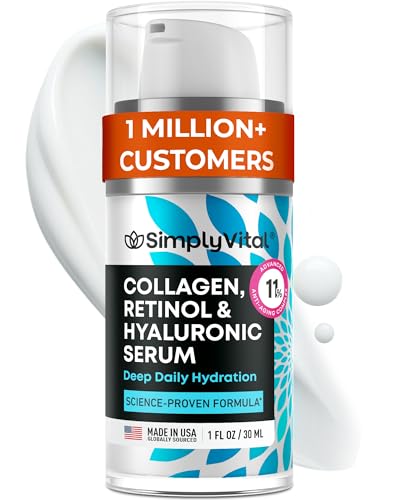
SimplyVital Collagen, Retinol & Hyaluronic Acid Serum – Anti-Aging Moisturizer for Face, Neck & Décolleté – Made in USA, Deep Moisturizing Skin Care Complex – Hydrating Facial Serum for Women, 1 fl.oz
Hydrating Daily Serum – Enhance your routine with this lightweight hyaluronic acid serum for face, enriched with collagen…
As an affiliate, we earn on qualifying purchases.
As an affiliate, we earn on qualifying purchases.
Conclusion
So, next time you’re basking in the sun, remember—UVA sneaks past your defenses, aging your skin with a slow, silent wear. UVB might give you that quick tan, but it also leaves burns and damage behind. Ironically, chasing that perfect glow can backfire, leaving you with premature wrinkles or skin issues. So, enjoy the sun wisely—because what seems harmless now might just be your skin’s biggest regret later. Stay protected, and don’t let UVs steal your glow.

IUGA Rash Guard for Women UPF 50+ SPF UV Protection Long Sleeve Workout Tops with Pockets Dry Fit Hiking Swim Shirt
UPF 50+ for Sun Protection: Want to enjoy the outdoors without being damaged by UV rays? Putting on…
As an affiliate, we earn on qualifying purchases.
As an affiliate, we earn on qualifying purchases.

Burt's Bees Mothers Day Gifts, After Sun Lotion with Hydrating Aloe Vera & Coconut Oil – Summer Essentials, Sunburn Relief, Natural After Sun Soother, 6 oz
BURT’S BEES AFTER SUN LOTION: Burt’s Bees aloe and coconut oil after sun soother is a non-greasy and…
As an affiliate, we earn on qualifying purchases.
As an affiliate, we earn on qualifying purchases.