Many believe that a tan hides skin imperfections, but that’s a myth. In fact, tanning can make blemishes like scars, redness, and spots more noticeable once the skin begins to fade. A superficial tan doesn’t conceal flaws; it often emphasizes them. Instead of relying on a tan, using skincare and sun protection helps improve your skin’s appearance naturally. Keep exploring to discover healthier ways to achieve better skin beauty without the risks of tanning.
Key Takeaways
- Tans can make skin imperfections more noticeable once the tan fades.
- Increased melanin from tanning highlights scars, spots, and redness, not conceals them.
- Superficial tanning emphasizes flaws instead of hiding them.
- Relying on a tan for concealment is a common misconception; skincare is more effective.
- Protecting skin from UV damage preserves skin health and prevents new imperfections.
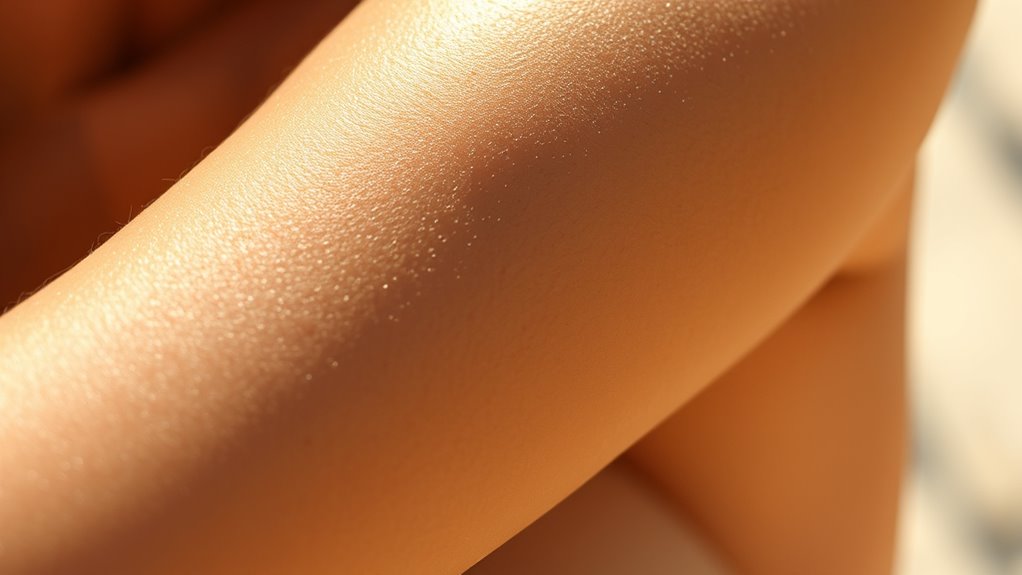
Many people believe that getting a tan can hide skin imperfections, but in reality, a tan often makes them more noticeable. When you’re tempted to reach for the sun to cover up blemishes, remember that exposing your skin to harmful UV rays can cause more damage than good. Instead of relying on a tan, focus on proper sun protection to keep your skin healthy and radiant. Sunscreen acts as a barrier, shielding your skin from ultraviolet rays that worsen scars, uneven pigmentation, and other imperfections. By consistently applying broad-spectrum sunscreen, you prevent further damage and maintain your skin’s natural glow, which is far more attractive and healthier than a superficial tan.
It’s a common misconception that a tan provides a natural camouflage for skin issues. What actually happens is that the increased melanin in your skin makes imperfections more apparent once the tan fades. A deep or uneven tan can highlight scars, spots, or redness, making them stand out more than if your skin was in its natural tone. Instead of relying on tanning as a quick fix, you should prioritize skincare routines that improve your skin’s texture and tone. Using products with ingredients like vitamin C, niacinamide, or retinoids can help diminish the appearance of imperfections over time, leading to a clearer, more even complexion that doesn’t need the cover-up of a tan.
Beyond the myth, it’s essential to understand that sun protection is key to maintaining a healthy skin glow. Sun damage accelerates aging, causes dark spots, and can even lead to serious conditions like skin cancer. Protecting your skin from the sun helps preserve its natural vibrancy and prevents the formation of new imperfections. When you use sunscreen daily, wear protective clothing, and seek shade during peak hours, you’re actively caring for your skin’s health and appearance. This proactive approach ensures your skin remains luminous and smooth, without the temporary and damaging effects of tanning.
Additionally, understanding the effects of UV rays on skin health underscores the importance of sun safety, further emphasizing why a tan is not a long-term solution for skin imperfections. Ultimately, embracing your natural skin tone and practicing good sun protection habits give you a genuine, lasting skin glow. Instead of chasing a fleeting tan that can emphasize flaws, invest in skincare and sun safety routines that enhance your skin’s health from within. You’ll find that your true beauty shines through when you protect your skin, prevent damage, and nurture its natural radiance. Remember, a healthy glow is much more attractive and sustainable than a superficial tan that fades and leaves imperfections more visible.

EltaMD UV Clear Face Sunscreen SPF 46, Oil-Free Sunscreen with Zinc Oxide, Dermatologist Recommended
CLEAR SUNSCREEN FOR FACE: This lightweight face sunscreen with transparent Zinc Oxide provides broad spectrum SPF 46 protection…
As an affiliate, we earn on qualifying purchases.
As an affiliate, we earn on qualifying purchases.
Frequently Asked Questions
Does a Tan Actually Improve Skin Appearance Long-Term?
A tan doesn’t improve your skin tone or address aesthetic concerns long-term. In fact, it can make imperfections more noticeable once the tan fades. Tanning damages your skin, leading to premature aging and increased risk of skin issues. Instead, focus on a consistent skincare routine and sun protection to enhance your natural skin tone. This approach offers lasting benefits without the risks associated with tanning.
Can Tanning Cause Premature Skin Aging?
Tanning definitely causes premature skin aging. Tanning myths often suggest that a tan protects your skin, but in reality, exposure to UV rays damages collagen and elastin. This accelerates skin aging, leading to wrinkles, age spots, and loss of elasticity. You should avoid tanning beds and excessive sun exposure to protect your skin’s health. Embracing your natural skin tone is the best way to prevent premature aging and keep your skin youthful.
Are There Safer Alternatives to Tanning for Hiding Imperfections?
Imagine turning imperfections into invisibility with safer options. Sunless tanning offers instant color without UV damage, giving you a natural glow. Skin camouflage techniques, like specialized makeup or concealers, effectively hide blemishes and uneven tones. These alternatives are safer than tanning beds or prolonged sun exposure, protecting your skin’s youthfulness. Embrace these options to enhance your confidence without risking premature aging or skin damage.
How Does Skin Type Affect the Appearance of Imperfections After Tanning?
Your skin type markedly influences how imperfections appear after tanning. If you have a fair skin tone, imperfections like redness or uneven texture become more visible when tanned, as contrast increases. Conversely, those with deeper skin tones may notice fewer imperfections because the richer color can mask unevenness better. To minimize imperfection visibility, choose safe alternatives like makeup or skincare, rather than tanning, which can accentuate flaws depending on your skin type.
What Are the Health Risks Associated With Tanning?
Think of UV exposure as a reckless artist, painting your skin with risky strokes. Tanning heightens skin pigmentation, but it also increases your chances of skin cancer, premature aging, and sunburns. The more you tan, the more you invite damage from harmful UV rays, which can weaken your skin’s health over time. Protect yourself, because a beautiful glow isn’t worth risking your long-term health and skin’s wellness.

The Ordinary Ascorbyl Glucoside Solution 12%, Vitamin C Serum for Even Skin Tone and Antioxidant Protection, 1 Fl Oz
BRIGHTENING VITAMIN C SERUM: Targets signs of aging by brightening and visibly evening out skin tone, and provides…
As an affiliate, we earn on qualifying purchases.
As an affiliate, we earn on qualifying purchases.
Conclusion
So, next time you think a tan disguises flaws, think again. While a darker hue might temporarily mask imperfections, it doesn’t fix underlying skin issues or give you a healthy glow. In fact, excessive tanning can cause more harm than good, accelerating aging and damage. True confidence comes from caring for your skin and embracing your natural beauty. Remember, a tan isn’t a secret weapon—it’s just a temporary cover-up with potential risks.

CeraVe PM Facial Moisturizing Lotion, Night Cream with Hyaluronic Acid and Niacinamide, Ultra-Lightweight, Oil-Free Moisturizer for Face, 3 Ounce
This product is non-sealed
As an affiliate, we earn on qualifying purchases.
As an affiliate, we earn on qualifying purchases.

La Roche-Posay Effaclar Adapalene Gel 0.1% Acne Treatment, Retinoid Cream, Acne Medication Gel for Blackheads & Whiteheads, Oil Free, Helps Clear and Prevent Blemishes & Clogged Pores
This once daily acne treatment for face with adapalene gel 0.1% helps clear and prevent blackheads, whiteheads, acne…
As an affiliate, we earn on qualifying purchases.
As an affiliate, we earn on qualifying purchases.