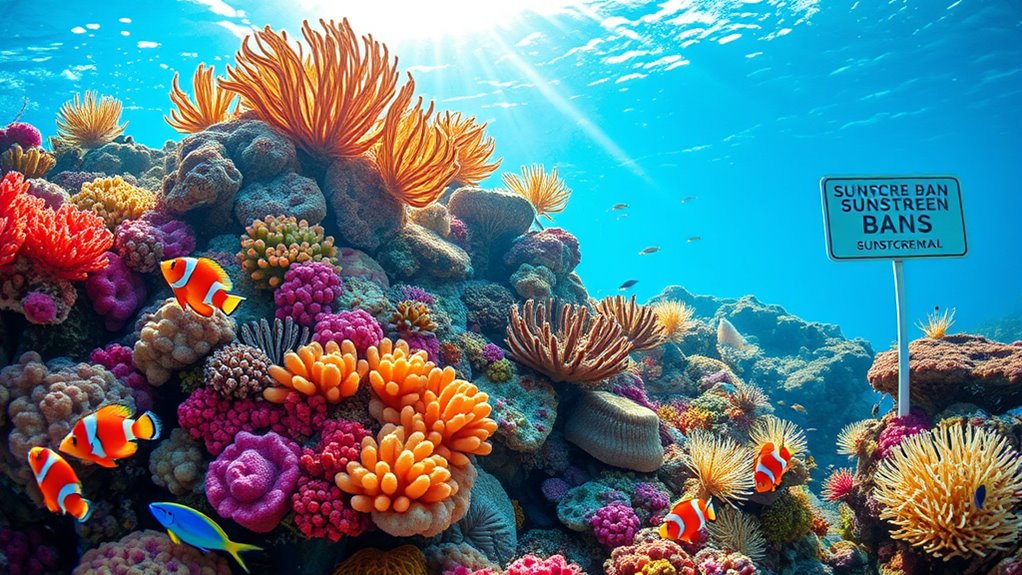

Banning chemical sunscreens helps protect coral reefs from harmful ingredients like oxybenzone and octinoxate, which can cause bleaching and disrupt marine life. When you choose reef-safe options, typically mineral-based sunscreens, you reduce chemical runoff into oceans and support reef recovery. Many regions are implementing such bans to preserve these fragile ecosystems. By understanding these initiatives, you’ll discover how your sunscreen choices can make a meaningful difference for marine conservation.
Key Takeaways
- Sunscreen bans target chemical ingredients like oxybenzone to reduce their toxic impact on coral reefs.
- Chemical additives in conventional sunscreens cause coral bleaching and impair reproduction in marine ecosystems.
- Mineral-based, reef-safe sunscreens help protect coral reefs by preventing harmful chemical runoff.
- Implementing sunscreen regulations supports reef conservation and promotes sustainable tourism practices.
- Choosing reef-safe sunscreens contributes to healthier oceans and the preservation of marine biodiversity.
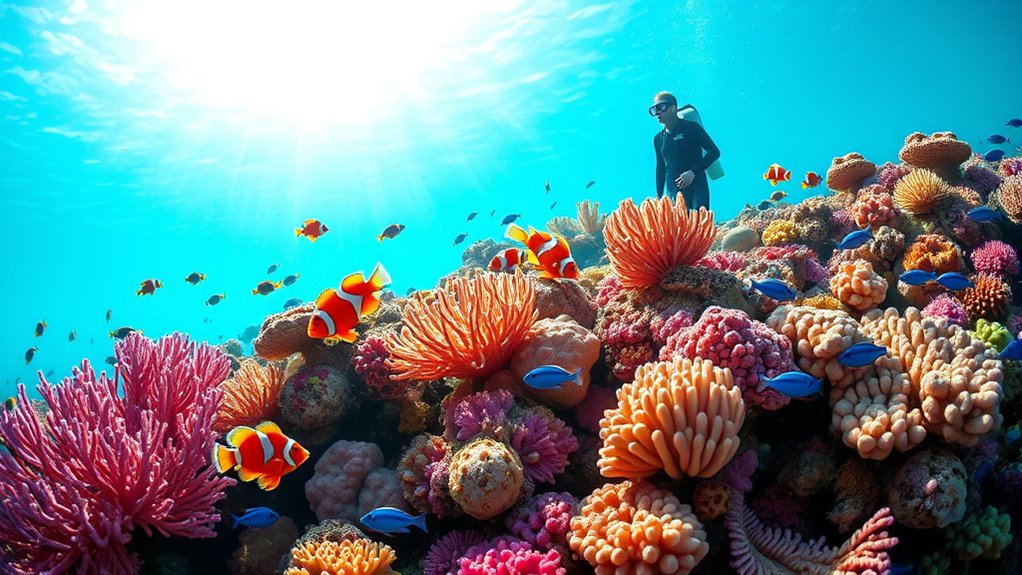
As concerns about declining coral reefs grow, many coastal regions are implementing sunscreen bans to protect these essential ecosystems. You might wonder why sunscreen, a product meant to shield you from harmful UV rays, could threaten the vibrant underwater world. The answer lies in chemical additives found in many conventional sunscreens. Ingredients like oxybenzone, octinoxate, and other chemical compounds are known to be toxic to marine life. When you swim or snorkel in areas where these sunscreens are heavily used, these harmful chemicals wash off your skin and enter the water, posing a serious threat to coral health. Recognizing this, authorities are taking proactive steps, such as banning certain chemical additives in sunscreens, to enhance reef protection.
Many regions ban chemical sunscreens to protect coral reefs from toxic additives like oxybenzone and octinoxate.
You might think that sunscreen is just a personal safety product, but its impact extends far beyond your skin. Scientific studies have shown that chemical additives can cause coral bleaching, impair coral reproduction, and disrupt the delicate balance of marine ecosystems. These chemicals act as endocrine disruptors, affecting the growth and development of coral larvae. Over time, this weakens the resilience of reefs, making them more susceptible to disease and environmental stressors. By banning sunscreens with these harmful ingredients, coastal communities aim to reduce the chemical load in their waters and give coral reefs a fighting chance to recover and thrive. Additionally, the use of reef-safe sunscreens supports sustainable tourism and marine conservation efforts.
Choosing reef-safe sunscreens becomes a vital step in reef protection. Look for products labeled as “mineral-based” or “reef-friendly,” which typically contain active ingredients like zinc oxide or titanium dioxide. These minerals form a physical barrier on your skin and don’t leach harmful chemicals into the water. When you opt for reef-safe sunscreens, you’re actively participating in reef protection efforts. You help minimize the chemical runoff that damages coral tissues and disrupts marine life. Many beaches and marine protected areas now encourage or mandate the use of such sunscreens, emphasizing the importance of individual choices in safeguarding our oceans.
In essence, your choice of sunscreen can make a tangible difference for coral reefs. By understanding the impact of chemical additives and supporting reef protection initiatives, you become part of a larger movement to preserve marine biodiversity. The shift to non-toxic, mineral-based sunscreens is a simple yet impactful way to reduce your ecological footprint. As more regions implement sunscreen bans targeting harmful chemical additives, your awareness and actions can help foster healthier oceans. Protecting coral reefs isn’t just about saving a beautiful underwater landscape; it’s about ensuring the health of our planet’s future.

Blue Lizard Sensitive Mineral SPF 50 Sunscreen Lotion, 100% Mineral Sunscreen, UVA/UVB Protection, Infused with organic Aloe Vera, Soothes and Hydrates, 5 fl oz
POWERFUL MINERAL SUNSCREEN – Protect sensitive skin from the sun’s harmful rays with Blue Lizard Sensitive Mineral SPF…
As an affiliate, we earn on qualifying purchases.
As an affiliate, we earn on qualifying purchases.
Frequently Asked Questions
Are Natural Sunscreens Safer for Reefs Than Chemical Ones?
Yes, natural sunscreens with mineral filters are generally safer for reefs than chemical ones. Mineral filters like zinc oxide and titanium dioxide create a physical barrier that reflects UV rays, reducing potential harm to marine life. You can protect your skin while supporting reef safety by choosing mineral-based sunscreens. Avoid chemical filters, which can leach into the water and damage coral ecosystems, ensuring your beach day doesn’t come at the cost of the environment.
How Do Bans Impact Local Tourism and Economies?
Sunscreen bans can considerably impact your local tourism and economy by reducing tourism revenue, especially if visitors seek destinations where sunscreen use is restricted. The sunscreen industry faces losses as demand drops, affecting jobs and local businesses. However, these bans can also attract eco-conscious travelers who support sustainable practices. Ultimately, balancing environmental goals with economic interests requires clear communication and promoting eco-friendly alternatives to ensure both reefs and local livelihoods benefit.
What Alternatives Exist for Sunscreen in Reef Areas?
Imagine lounging on a sunlit beach, feeling the warmth while protecting your skin without harming the reef. You can choose reef-safe sunscreen with natural, mineral-based ingredients like zinc oxide or titanium dioxide for effective sun protection. These alternatives form a physical barrier, ensuring you stay safe from UV rays while preserving marine life. By opting for reef-safe ingredients, you enjoy your day outdoors responsibly and help safeguard vibrant coral ecosystems.
Do All Sunscreens Harm Coral Reefs Equally?
Not all sunscreens harm coral reefs equally. Some ingredients, like oxybenzone and octocrylene, can weaken reef resilience and cause coral bleaching. However, mineral-based sunscreens with zinc oxide or titanium dioxide are generally safer for reefs. You can protect your skin and the environment by choosing reef-friendly sunscreens, which help maintain reef resilience and minimize damage to delicate coral ecosystems.
How Effective Are Sunscreen Bans in Protecting Coral Health?
You might think a sunscreen ban can’t make a big difference, but it actually boosts coral resilience by reducing harmful chemicals. These bans improve overall reef health, allowing corals to better withstand stressors like climate change. While sunscreen efficacy varies, limiting chemical exposure helps protect delicate ecosystems. So, your support for such bans actively contributes to healthier corals, promoting long-term reef vitality and preserving marine biodiversity.

Blue Lizard SENSITIVE Mineral Sunscreen with Zinc Oxide, SPF 50+, Water Resistant, UVA/UVB Protection with Smart Cap Technology – Fragrance Free, 3 oz. Tube
POWERFUL MINERAL SUNSCREEN – Protect sensitive skin from the sun’s harmful rays with Blue Lizard Sensitive Mineral SPF…
As an affiliate, we earn on qualifying purchases.
As an affiliate, we earn on qualifying purchases.
Conclusion
By banning harmful sunscreens, you’re planting seeds of hope in the ocean’s garden. Each choice you make acts like a gentle ripple, nourishing coral reefs and giving them a chance to thrive once again. Think of yourself as a guardian of this underwater world, wielding your voice and actions as a shield. Together, you and the reefs can rewrite their story—turning the tide from harm to harmony, one conscious decision at a time.

SPF 45 Mineral Sunscreen with Non-Nano Zinc Oxide for Face and Body – 2.5 Fl oz, Non-Greasy, Reef Safe Biodegradable Sunscreen, Travel Size, Water Resistant, Protection Against UVA & UVB
SUPERIOR UVA/UVB PROTECTION: Happy Ocean SPF 45 Mineral Sunscreen forms a physical barrier, shielding your skin from harmful…
As an affiliate, we earn on qualifying purchases.
As an affiliate, we earn on qualifying purchases.

Stilip Organic Beef Tallow Sunscreen-SPF 50 with Zinc Oxide,Non-Toxic 2-in-1 Moisturizer & Mineral Sunblock | Reef Safe, Chemical-Free,Lightweight, Clean Formula for Sensitive Skin Natural Sunscreen.
🌿 Non-Toxic & Skin-Safe:Made with organic tallow and non-nano zinc oxide, this non-toxic sunscreen is free from synthetic…
As an affiliate, we earn on qualifying purchases.
As an affiliate, we earn on qualifying purchases.