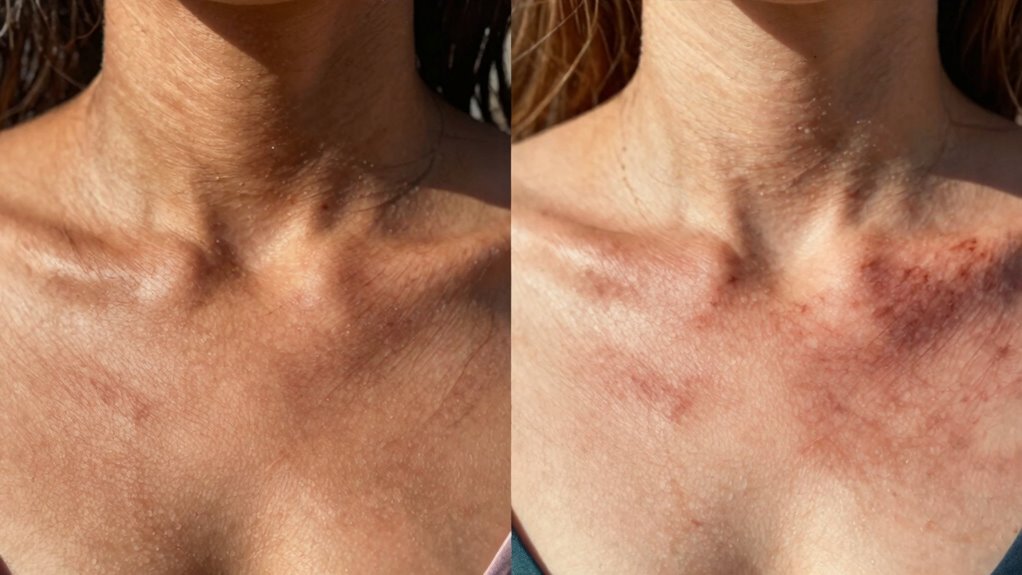

UV exposure impacts darker and lighter skin tones differently. Lighter skin responds quickly with visible tanning and produces melanin rapidly to protect deeper layers, but is more prone to sun damage and skin cancer. Darker skin already has more melanin, offering natural UV protection and causing less noticeable tone changes. However, excessive UV can still cause damage, hyperpigmentation, and aging. To understand how your skin reacts and protect it properly, keep exploring these differences further.

Get beauty and skincare favorites delivered free with Prime
- Fast, free delivery on millions of items
- Prime Video, Amazon Music and more included
- Member-only deals all year
Key Takeaways
- UV exposure triggers rapid melanin production in lighter skin, resulting in visible tanning, while darker skin shows minimal tone change.
- Darker skin’s higher baseline melanin offers natural UV protection, reducing visible tanning but not preventing UV damage.
- Both skin types can develop hyperpigmentation or skin damage from excessive UV exposure, regardless of tone change.
- Light skin is more prone to sunburn and skin cancers due to lower melanin levels, while darker skin, though less prone, still risks damage.
- Proper sun protection is essential for all skin tones to prevent premature aging and skin-related health issues.
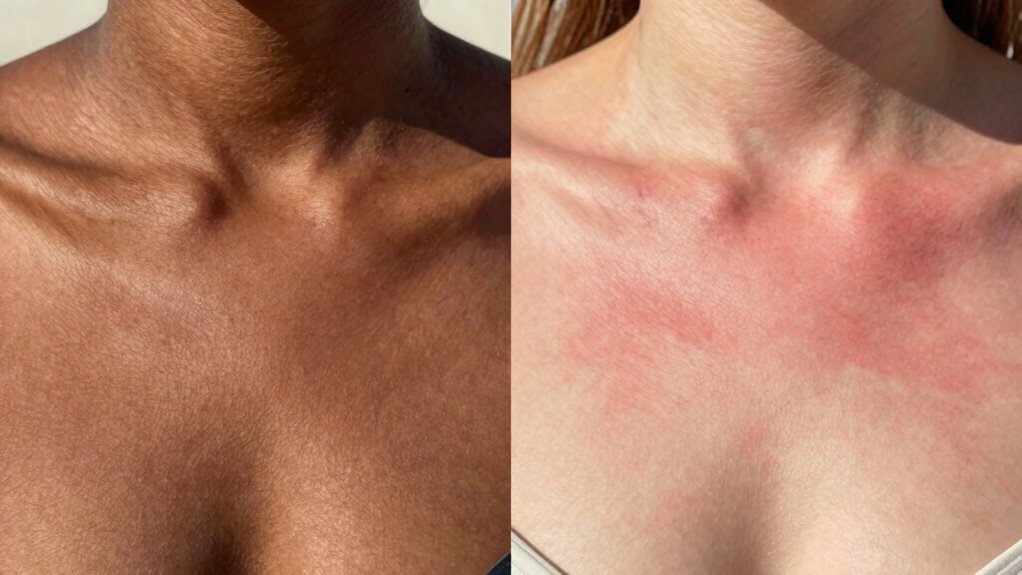
Ultraviolet (UV) exposure from the sun or tanning beds can markedly influence your skin tone over time. When you spend time in the sun, your body responds by producing vitamin D, a process known as vitamin D synthesis. This essential nutrient helps regulate calcium levels and supports bone health, but it also plays a role in how your skin reacts to UV rays. The more UV exposure you get, the more your skin tries to adapt by increasing melanin production. Melanin is the pigment responsible for your skin color, and its response varies depending on your natural skin tone.
If you have lighter skin, your melanocytes—the cells that produce melanin—react quickly to UV exposure. They produce melanin rapidly to protect deeper layers of your skin from damage. This results in a visible darkening, or tanning, which is your body’s way of shielding itself from further harm. Over time, repeated exposure can lead to a more persistent change in your skin tone, but it also increases your risk for sun damage and skin cancers. For lighter skin tones, the response is often more pronounced because your baseline melanin levels are lower, making the change in pigmentation more noticeable.
In contrast, if your skin is darker, your melanocytes already produce more melanin, providing a natural shield against UV rays. When exposed to UV radiation, your melanin response is less dramatic because your skin is inherently better equipped to handle UV exposure without significant changes in tone. However, even darker skin can experience hyperpigmentation, dark spots, or uneven tone with excessive sun exposure. While your skin might not lighten or darken as much as lighter skin, prolonged UV exposure still damages your skin cells and accelerates aging.
It’s important to recognize that UV exposure influences not only pigmentation but also the overall health of your skin. Excessive sun exposure can cause sunburn, premature aging, and increase the risk of skin cancer regardless of your natural skin tone. Protecting your skin with sunscreen, clothing, or seeking shade is essential. Balancing your need for vitamin D synthesis with skin protection is imperative; moderate sun exposure can help your body produce enough vitamin D without causing significant damage. Ultimately, understanding your skin’s melanin response helps you make smarter choices about sun exposure to maintain healthy, balanced skin tones over time.
broad spectrum sunscreen for dark skin
As an affiliate, we earn on qualifying purchases.
As an affiliate, we earn on qualifying purchases.
Frequently Asked Questions
How Does UV Exposure Influence Vitamin D Synthesis in Different Skin Tones?
UV exposure boosts your vitamin D synthesis, but how your skin barrier and tone influence this process varies. Lighter skin allows UV rays to penetrate more easily, leading to quicker vitamin D production. Darker skin has more melanin, which acts as a natural barrier, slowing vitamin D synthesis despite UV exposure. You might need longer sun exposure to achieve the same vitamin D levels, but always balance this with protecting your skin.
Are Darker-Skinned Individuals More Prone to UV Damage Than Lighter-Skinned Individuals?
You’re less prone to UV damage if you have darker skin pigmentation because higher melanin levels provide increased UV sensitivity protection. This pigment acts as a natural barrier, absorbing harmful rays and reducing the risk of sunburn and skin damage. However, despite this protection, it’s still essential for you to practice sun safety, as prolonged exposure can still cause skin issues over time.
Can UV Exposure Cause Permanent Changes in Skin Pigmentation?
Yes, UV exposure can cause permanent pigmentation changes, especially if your skin is repeatedly exposed without protection. You might notice dark spots, uneven patches, or increased skin sensitivity over time. These changes happen because UV rays stimulate melanin production or damage skin cells, leading to lasting alterations in your skin’s pigmentation. To prevent this, always use sunscreen and limit prolonged exposure, protecting your skin from irreversible pigmentation issues.
How Does Skin Repair Differ Between Darker and Lighter Skin After UV Damage?
Darker skin repairs faster than lighter skin because of a stronger melanin response, which helps shield cells from UV damage. You’ll notice quicker skin renewal in darker tones, as melanin absorbs UV rays and reduces harm. Lighter skin, with less melanin, takes longer to recover, relying more on cell turnover to repair damage. Your skin’s ability to heal varies, influenced by melanin levels and the efficiency of its renewal process.
What Are the Long-Term Effects of UV Exposure on Skin Health Across Tones?
You might notice that prolonged UV radiation exposure accelerates skin aging, causing wrinkles and loss of elasticity over time. Darker skin tones tend to resist UV damage better, but they’re still vulnerable to long-term effects like age spots and pigmentation changes. Lighter skin tones, however, show visible signs sooner. Consistent UV exposure damages skin cells, increasing your risk for skin cancers and other long-term health issues, regardless of your skin tone.
Conclusion
So, don’t let the fear of uneven tanning or damage keep you from enjoying the sun. Whether you have darker or lighter skin, UV exposure impacts everyone differently, but proper protection is key. Wearing sunscreen, seeking shade, and limiting your time outside can help you enjoy sunny days safely. Remember, you don’t need to hide indoors—just be smart about your sun habits to keep your skin healthy and radiant, no matter your skin tone.
Halloween Picks
halloween
As an affiliate, we earn on qualifying purchases.