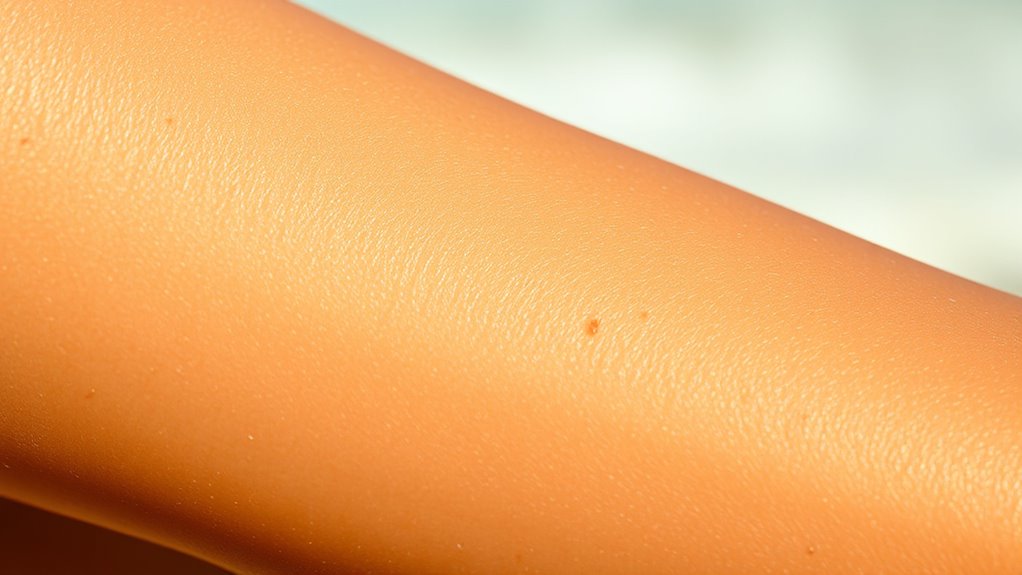

When you’re pregnant or using birth control, your hormone levels increase, which can make your skin more sensitive to the sun. This often leads to more pigmentation, dark patches, or melasma, especially with sun exposure. Your body’s hormonal shifts boost melanin production, making your tan or patches darker. To protect your skin and avoid unwanted pigmentation, it’s important to take extra sun precautions. If you want to understand how these changes specifically affect you, keep exploring this topic further.

Get beauty and skincare favorites delivered free with Prime
- Fast, free delivery on millions of items
- Prime Video, Amazon Music and more included
- Member-only deals all year
Key Takeaways
- Pregnancy and birth control increase hormones like estrogen and progesterone, boosting melanin production and darkening skin, including tanned areas.
- Elevated hormones make skin more sensitive to UV rays, raising the risk of sunburn and long-term damage.
- Sun exposure during hormonal changes can intensify pigmentation, leading to uneven skin tone or dark patches.
- Hormonal fluctuations can accelerate skin aging and increase the risk of pigmentation-related skin issues.
- Enhanced sun protection is essential to prevent pigmentation and skin damage when pregnant or using hormonal contraceptives.

Have you ever wondered how exposure to sunlight influences your hormones? When you spend time under the sun, your body doesn’t just produce vitamin D; it also triggers hormonal responses that can impact your skin. During pregnancy or while taking birth control, these hormonal shifts become even more significant, leading to noticeable changes like hormonal skin alterations and increased sun sensitivity. You might find that your skin reacts differently to sunlight than it did before, making sun protection more crucial.
Sun exposure affects hormones, causing skin changes and increased sensitivity, especially during pregnancy or when on birth control.
Hormonal skin changes during pregnancy are common. As your pregnancy progresses, your body produces higher levels of hormones such as estrogen and progesterone. These hormones influence melanin production, which can result in dark patches or melasma—those uneven, brownish spots on your face. These changes are directly linked to hormonal fluctuations, and exposure to sunlight can intensify them. When your skin is exposed, the increased melanin production can cause pigmentation to deepen, making these patches more prominent. It’s a clear example of how hormones and sun exposure interact, and why pregnant women often notice their skin becoming more sensitive and prone to discoloration.
Sun sensitivity during pregnancy is another vital factor to consider. Elevated hormone levels can make your skin more reactive to UV rays, increasing your risk of sunburn and long-term skin damage. This heightened sensitivity isn’t just about discomfort; it can also accelerate skin aging and increase the risk of skin cancers over time. Because your skin is more delicate, you might notice that you burn more quickly or that your skin becomes irritated more easily after sun exposure. This isn’t just a minor inconvenience—it’s a sign that you need to be extra vigilant about sun protection.
Birth control pills contain hormones that mimic those produced during pregnancy, which also influence your skin’s response to sunlight. Many women on hormonal contraceptives notice changes like increased pigmentation or a greater tendency to develop dark spots after sun exposure. These effects happen because the synthetic hormones in birth control pills can boost melanin production similarly to natural pregnancy hormones. As a result, your skin may become more prone to pigmentation changes and sun damage when you’re on birth control, especially if you don’t take proper precautions.
Understanding how hormones and sun exposure interact helps you take better care of your skin. Whether you’re pregnant or on birth control, being aware of increased sun sensitivity and hormonal skin changes can guide you to adopt more effective sun protection strategies. Wearing broad-spectrum sunscreen, seeking shade during peak hours, and wearing protective clothing become essential steps to keep your skin healthy and prevent unwanted pigmentation or damage. Recognizing these hormonal influences empowers you to enjoy the sunshine safely while safeguarding your skin’s health.
sunscreen for sensitive skin during pregnancy
As an affiliate, we earn on qualifying purchases.
As an affiliate, we earn on qualifying purchases.
Frequently Asked Questions
Can Hormones Increase the Risk of Sunburn?
Hormones can indeed increase your risk of sunburn, especially if you’re experiencing hormonal acne or changes in skin elasticity. When hormone levels fluctuate, your skin may become more sensitive to UV rays, making sunburn more likely. You might notice your skin reacting differently to sun exposure, which can lead to discomfort and damage. To protect yourself, wear broad-spectrum sunscreen and seek shade, especially during peak sunlight hours.
Do Hormonal Changes Affect Skin Sensitivity to UV Rays?
Like a sponge soaking up water, your hormonal skin becomes more sensitive to UV rays during hormonal changes. Yes, hormonal fluctuations can increase your UV sensitivity, making you more prone to sunburn and skin damage. When hormones shift, they influence melanin production and skin’s natural defenses, heightening your risk. So, it’s essential to wear sunscreen and limit sun exposure during periods of hormonal change to protect your skin effectively.
Can Pregnancy Hormones Cause Darker Pigmentation From Sun Exposure?
You might notice that pregnancy hormones can cause hormonal pigmentation, leading to darker spots or patches when exposed to sun. This is common during pregnancy when your skin reacts to hormonal changes, creating that pregnancy glow with increased pigmentation. So, yes, pregnancy hormones can intensify your skin’s response to sun exposure, making pigmentation more noticeable. Be sure to protect your skin with sunscreen to minimize these effects and maintain your glow.
Are There Safe Sun Practices While on Birth Control Pills?
Think of your skin as a delicate garden that needs careful tending. When you’re on birth control pills, hormonal skin changes can make your skin more sensitive to the sun. To stay safe, wear broad-spectrum sunscreen daily, seek shade during peak hours, and avoid tanning beds. Birth control side effects may heighten your sun sensitivity, so taking these precautions helps protect your skin’s health and keeps your glow radiant naturally.
How Do Hormonal Fluctuations Impact Long-Term Skin Tanning?
Hormonal fluctuations can considerably impact your skin pigmentation and how your tan develops over time. When your hormones are imbalanced, your skin may produce more melanin, leading to uneven pigmentation or darker spots. This can cause your tan to fade unevenly or appear patchy. To protect your skin long-term, always practice safe sun habits, wear sunscreen, and avoid excessive exposure, especially during hormonal changes that affect your skin’s response to sunlight.
Conclusion
Just like a delicate dance between the sun and your skin, hormones from pregnancy or birth control can change how you tan. They’re the unseen conductors, subtly guiding your body’s response to UV rays. So, remember, your hormonal balance is a quiet artist shaping your tan’s story. Stay mindful and protect your skin, because the harmony between hormones and sun isn’t just a fleeting moment—it’s a masterpiece in the making.
Halloween Picks
halloween
As an affiliate, we earn on qualifying purchases.