
Spray tanning is often seen as a safe way to get a bronzed look without UV damage, but it’s not completely risk-free. While it avoids skin aging and cancer risks linked to sun exposure, the chemicals involved, like DHA, may cause skin irritation or allergic reactions, especially with frequent use. Inhalation or improper application can also pose health concerns. To find out more about what you should consider, keep exploring the details behind spray tanning safety.
Key Takeaways
- Spray tanning eliminates UV exposure, reducing risks of skin aging and skin cancer.
- Chemical ingredients like DHA are generally safe but long-term effects are still being studied.
- Proper application and reputable salons minimize skin irritation and health risks.
- Chemical exposure from preservatives and dyes may pose health concerns over time.
- Spray tanning is not completely risk-free; precautions are essential for safe use.
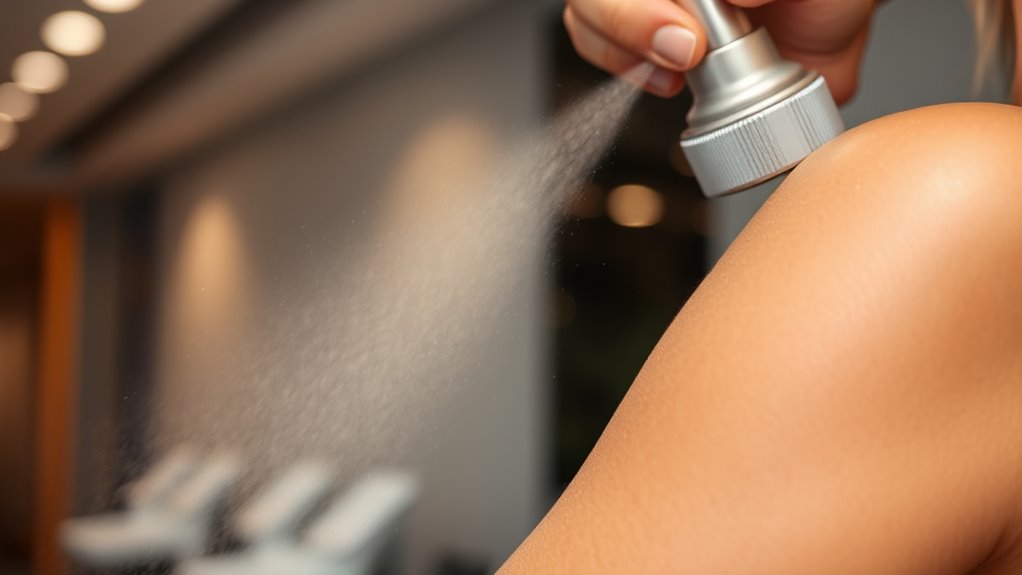
Many people believe that spray tanning is a completely safe way to achieve a sun-kissed glow, but the truth isn’t so clear-cut. While it offers a quick alternative to sunbathing or tanning beds, it doesn’t come without potential risks. One major concern is UV exposure, which is typically linked to traditional tanning methods like sunbathing and tanning beds. Unlike those methods, spray tanning doesn’t involve ultraviolet rays, so many assume it’s entirely risk-free. However, this is only part of the story. The ingredients used in spray tanning solutions, particularly dihydroxyacetone (DHA), react with the amino acids in your skin to produce the tan. This chemical reaction doesn’t involve UV rays directly, but it doesn’t eliminate all concerns about skin health.
When it comes to skin aging, UV exposure is a well-known factor that accelerates the process. Ultraviolet rays damage collagen and elastin fibers in your skin, leading to wrinkles, fine lines, and age spots over time. Because spray tanning doesn’t involve UV rays, many believe it helps you avoid these signs of skin aging. While that is true to some extent, it’s essential to recognize that other elements still impact your skin’s health. For example, frequent use of spray tans might cause skin irritation or allergic reactions, especially if you have sensitive skin. Additionally, some spray tanning products contain chemicals that, with long-term exposure, could potentially lead to skin damage or other health issues. Skin health can be affected by various factors beyond UV exposure alone.
Furthermore, although spray tanning doesn’t contribute to skin aging caused by UV rays, it doesn’t mean it’s completely risk-free. Certain ingredients, like preservatives and dyes, may pose health concerns if absorbed over many sessions. Also, improper application or inhalation of spray tanning fumes can cause respiratory irritation. It’s important to follow safety guidelines, such as wearing protective gear during application and choosing reputable salons that use safe products.
Frequently Asked Questions
Can Spray Tanning Cause Allergic Reactions?
You might wonder if spray tanning can cause allergic reactions. It’s possible, especially if you have skin irritation or allergic sensitivity to ingredients like DHA or fragrances in the spray. Some people experience redness, itching, or swelling. To stay safe, do a patch test beforehand and choose products labeled for sensitive skin. If you notice any adverse reactions, rinse immediately and consult a dermatologist.
Is There a Risk of Inhaling Harmful Chemicals During Application?
When you get a spray tan, there’s a chance you could inhale some chemicals during application, which might affect your respiratory health. To minimize this risk, guarantee the tanning professional uses proper ventilation and protective gear. Always follow safety guidelines, like avoiding inhaling fumes, and consider wearing a mask if you’re concerned. Being mindful of chemical inhalation helps protect your lungs while enjoying your tan.
How Often Can I Safely Get a Spray Tan?
You can safely get a spray tan every 7 to 14 days, but it’s important to listen to your skin. Overdoing it may increase your risk of sun damage and accelerate skin aging. Regular tanning without protection can harm your skin, so limit sessions and apply moisturizer afterward. Always choose a reputable salon with proper ventilation, and consider using spray tans as a temporary alternative to UV exposure to maintain healthier skin.
Are Spray Tans Suitable for Pregnant Women?
You might wonder if spray tans are suitable during pregnancy. Generally, spray tanning is considered safe for pregnancy since it doesn’t involve UV exposure. However, for pregnancy safety, you should consult your healthcare provider before trying it. Spray tans can enhance your tan longevity without harmful UV rays, but verify the products used are free from harmful chemicals. Always prioritize your health and comfort during pregnancy.
Do Spray Tans Offer Any Skin Protection Benefits?
Did you know that spray tans don’t provide sun protection or skin hydration benefits? While they give your skin a bronzed look, they don’t shield you from harmful UV rays like sunscreen does. If you want to protect your skin, rely on proper sun protection and keep your skin hydrated with moisturizer. Spray tans are purely aesthetic and don’t offer any health benefits related to sun safety or skin hydration.
Conclusion
While spray tanning can seem safe and simple, it’s wise to weigh the warnings and wonderings. Remember, risks remain, and precautions are key. Stay savvy, stay safe, and don’t dismiss the dangers. By being vigilant, you can enjoy a sunless glow without gambling with your health. So, stay smart, stay cautious, and make informed choices. Because when it comes to your skin, safety should always shine brighter than a spray tan.