
TL;DR
Open a free Amazon Business account
Business pricing, bulk buying and tax-exempt orders.
As an affiliate, we earn on qualifying purchases.
Research shows jaw muscles decline less rapidly than leg muscles with age, suggesting lifestyle influences aging muscle loss. Strength declines similarly in both muscle groups, but size loss differs.
A recent study by researchers at the University of Vienna finds that jaw muscles decline in size at about half the rate of leg muscles with age, highlighting potential lifestyle influences on muscle aging and the importance of continued activity.
The study involved 30 healthy women divided into three age groups: 18-30, 40-50, and 65-75, all of whom were active and without major dental issues. Researchers measured the size and strength of their quadriceps and masseter muscles using ultrasound, leg-extension tests, and bite force sensors.
The results showed that, on average, leg muscle size declined at approximately 1.02% per year, while jaw muscle size decreased at about 0.49% annually. Despite this, muscle strength declined at similar rates in both muscle groups, indicating a complex relationship between muscle size and function.
The discrepancy between size and strength decline may be due to differences in muscle fiber types and nerve connections, with leg muscles containing more fast-twitch fibers and being connected via the spinal cord, whereas jaw muscles are innervated directly by cranial nerves.
Why It Matters
This research suggests that lifestyle factors, such as physical activity, significantly influence muscle preservation with age. The slower decline in jaw muscle size indicates that continued use—like chewing—may help maintain muscle mass, which could inform strategies to combat age-related muscle loss and frailty.
Understanding these differences can help develop targeted interventions to preserve muscle function, potentially improving quality of life and reducing fall or injury risks among older adults.
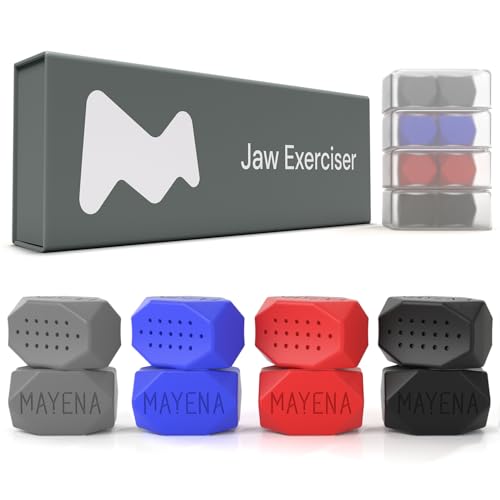
Mayena Jaw Exerciser Classic | 4 Set Silicone Jawline Exercisers
- 4-Level Progressive Set: Four silicone exercisers with increasing resistance
- Comfortable Bite Design: Even pressure distribution for comfort
- Strengthens Facial Muscles: Activates muscles for a defined jawline
As an affiliate, we earn on qualifying purchases.
As an affiliate, we earn on qualifying purchases.
Background
The study builds on previous research showing that aerobic fitness declines about 10% per decade after age 25, with trained athletes reducing that decline to around 5%. This aligns with the idea that a significant portion of muscle and fitness loss is due to reduced activity rather than aging alone.
Past studies have also noted that muscle strength and size do not always decline in tandem, partly because strength depends on neural factors. The current findings contribute to this understanding by comparing different muscle types and their aging patterns.
“Our findings suggest that muscles used regularly, like those involved in chewing, may be less susceptible to age-related decline in size, emphasizing the role of activity in healthy aging.”
— Gustavo Schaun, lead researcher
“The discrepancy between muscle size and strength decline highlights the importance of neural factors and activity levels in maintaining muscle function as we age.”
— Dr. Lisa Nguyen, aging specialist not involved in the study
What Remains Unclear
It remains unclear how long-term lifestyle changes, such as diet and specific exercises, influence the rate of muscle decline in different populations. The study’s cross-sectional design limits conclusions about individual aging trajectories, and further longitudinal research is needed to confirm causality.
What’s Next
Researchers plan to conduct longitudinal studies to track muscle changes over time within individuals. There is also interest in exploring targeted interventions, such as resistance training focused on jaw muscles, to assess their impact on aging muscle preservation.
Key Questions
Does chewing gum help maintain jaw muscle mass as we age?
While the study suggests that active use of jaw muscles may slow size decline, specific effects of chewing gum on long-term muscle preservation have not been conclusively studied and should be regarded as preliminary.
Can exercises targeting leg muscles slow down their decline?
Yes, resistance and strength training are known to help preserve muscle mass and function in the legs, which can mitigate age-related decline when practiced regularly.
Why do muscle size and strength decline at different rates?
Muscle strength depends not only on size but also on neural factors like nerve activation efficiency. Therefore, size loss and strength decline can follow different patterns, especially with aging.
Are older adults at risk of losing muscle in the jaw more than in the legs?
Current evidence indicates that jaw muscles decline more slowly in size, possibly due to continuous use. However, overall muscle loss in older adults varies based on activity levels and health status.
Pool season Picks
robotic pool cleaners
As an affiliate, we earn on qualifying purchases.