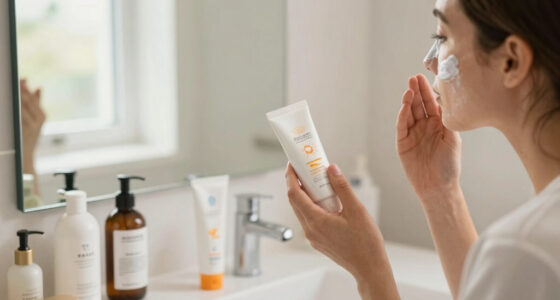
To use mineral and chemical sunscreens correctly, apply a generous amount—about a shot glass full for your whole body—15 minutes before sun exposure. Spread mineral sunscreens with your fingertips for even coverage, including tricky spots like ears and neck, and let it set. Reapply every two hours, especially if sweating or swimming, and don’t forget areas like your scalp and feet. Proper application and reapplication help shield you effectively—keep going to learn more tips for total sun protection.
Key Takeaways
- Apply mineral sunscreens with fingertips, spreading evenly over clean, dry skin, and wait a few minutes before sun exposure.
- Use about one ounce for full-body coverage, including often-missed areas like ears and neck.
- Reapply every two hours, or immediately after swimming, sweating, or towel drying, regardless of sunscreen type.
- Chemical sunscreens should be spread evenly to ensure proper absorption, and both types need thorough application.
- Enhance protection by seeking shade, wearing protective clothing, and reapplying sunscreen indoors near windows.
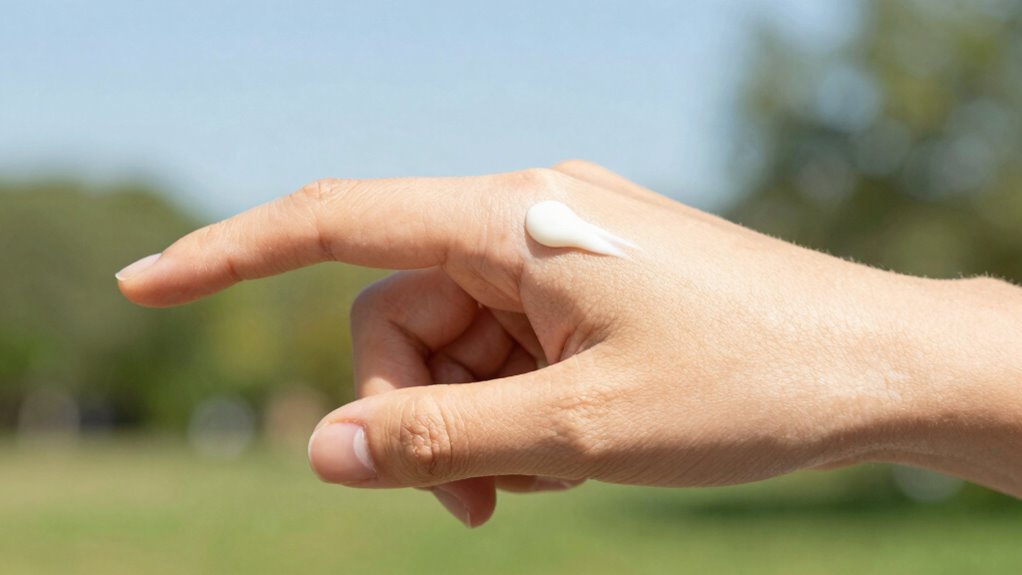
Applying sunscreen properly is essential to protect your skin from harmful UV rays, especially when spending time outdoors. To do this effectively, you need to understand the right application techniques and be aware of common mistakes that can undermine its effectiveness. First, make sure you apply sunscreen generously. Many people underestimate the amount needed, which leads to insufficient protection. For full-body coverage, about one ounce (a shot glass full) is recommended. Don’t skimp—applying too little leaves your skin exposed.
When using mineral or chemical sunscreens, the application techniques differ slightly, but the goal remains the same: uniform coverage. For mineral sunscreens, which contain physical blockers like zinc oxide or titanium dioxide, it’s best to start with clean, dry skin. Use your fingertips to evenly spread a generous layer, making sure to cover all exposed areas thoroughly. Chemical sunscreens, which absorb UV rays, should be applied similarly, ensuring they are spread evenly and absorbed into the skin. Whether mineral or chemical, wait a few minutes after applying before heading outside to allow the product to set. Additionally, natural sun protection methods like seeking shade or wearing protective clothing can enhance your overall sun safety.
Timing is vital. You should apply sunscreen about 15 minutes before sun exposure. Many people make the common mistake of putting it on right before going outdoors—during this time, the sunscreen may not have fully bonded with your skin, reducing its effectiveness. Reapply sunscreen every two hours, or more often if you’re sweating heavily or swimming. Research shows that consistent reapplication is crucial for prolonged protection. Remember, even water-resistant formulas aren’t completely waterproof, so reapplication is necessary after water exposure or towel drying. Proper techniques also involve applying sunscreen in a systematic manner, ensuring every part of the exposed skin is covered evenly.
A common mistake involves not covering all exposed areas. Often, people forget spots like the ears, neck, or the tops of the feet. Use enough sunscreen to cover these overlooked areas. Don’t forget to apply to areas like your scalp if you have thinning hair or parts that are exposed. A common error is applying sunscreen only once in the morning and neglecting to reapply later in the day. Even if you’re indoors, UV rays can penetrate windows, so if you’re near windows or sitting in sunlight, reapply regularly. Additionally, understanding UV radiation and its effects can help you better appreciate the importance of thorough sun protection.
Lastly, avoid mixing sunscreen with other skincare products or makeup without checking compatibility. This can interfere with the effectiveness of the sunscreen. By following proper application techniques and avoiding common mistakes, you’ll greatly improve your sun protection and reduce your risk of skin damage. Incorporating skin health practices such as regular skin checks can help in early detection of sun-related damage.

Cetaphil Sheer Mineral Liquid Sunscreen for Face, 100% Mineral UVA/UVB Filters, Zinc Oxide Broad Spectrum SPF 50 Formulated for Sensitive Skin, Unscented, 1.7 Fl Oz
CETAPHIL SHEER MINERAL FACE LIQUID SUNSCREEN SPF 50: Nourishes sensitive skin while providing hydrating, chemical free sun protection
As an affiliate, we earn on qualifying purchases.
As an affiliate, we earn on qualifying purchases.
Frequently Asked Questions
Can I Wear Sunscreen Under Makeup?
Yes, you can wear sunscreen under makeup. For the best makeup application tips, choose a lightweight, non-greasy sunscreen that’s compatible with your skin type. Let your sunscreen fully absorb before applying makeup to avoid slipping or uneven coverage. Chemical sunscreens often work well under makeup, but mineral sunscreens also offer good protection. Always allow sufficient drying time to guarantee your makeup stays smooth and fresh throughout the day.
How Often Should I Reapply Sunscreen?
You should reapply sunscreen every two hours to maintain effective protection, especially if you’re outdoors or sweating. It’s easy to forget, but knowing reapplication frequency is key to maximizing sunscreen longevity. If you swim or towel off, reapply immediately afterward. Even on cloudy days, reapplication helps. Keep this habit in mind to guarantee your skin stays protected all day, no matter your activity or weather conditions.
Is Sunscreen Effective on Cloudy Days?
Yes, sunscreen is effective on cloudy days because UV rays can penetrate through cloud coverage, leading to skin damage. Even when it’s overcast, UV penetration still occurs, so you should apply sunscreen generously and reapply regularly, especially if you’re outdoors for extended periods. Protecting your skin on cloudy days is just as important as on sunny days, ensuring you reduce the risk of UV-related skin issues.
Are Mineral Sunscreens Safe for Sensitive Skin?
Yes, mineral sunscreens are generally safe for sensitive skin. You’re less likely to experience allergy concerns because they contain fewer synthetic ingredients. Mineral sunscreens use active ingredients like zinc oxide or titanium dioxide, which are known for their ingredient safety. However, check the label for potential irritants, and do a patch test first. If you have severe allergies, consult a dermatologist to verify the product suits your skin.
Can I Use Expired Sunscreen?
You shouldn’t use expired sunscreen because its effectiveness diminishes over time due to changes in sunscreen stability. Check the expiration date on the bottle; if it’s past, the ingredients may no longer provide adequate protection. Using expired sunscreen can leave your skin vulnerable to UV damage. Always replace your sunscreen before the expiration date to guarantee maximum protection, especially during prolonged sun exposure.

Blue Lizard Sensitive Mineral SPF 50 Sunscreen Lotion, 100% Mineral Sunscreen, UVA/UVB Protection, Infused with organic Aloe Vera, Soothes and Hydrates, 5 fl oz
POWERFUL MINERAL SUNSCREEN – Protect sensitive skin from the sun’s harmful rays with Blue Lizard Sensitive Mineral SPF…
As an affiliate, we earn on qualifying purchases.
As an affiliate, we earn on qualifying purchases.
Conclusion
Remember, applying sunscreen is like planting a shield of protection around you—each layer a sturdy wall against the sun’s harsh rays. Whether mineral or chemical, your proper application acts as a guardian, guarding your skin’s future. Think of it as watering a delicate garden; consistent care guarantees vibrant, healthy growth. So, embrace this daily ritual, and let your skin bloom under the gentle watchfulness of your sunscreen’s embrace.

Neutrogena Beach Defense Sunscreen Lotion SPF 70 Broad Spectrum UVA UVB Protection Lightweight Water Resistant up to 80 Minutes Oil-Free Beach-Strength Sun Protection for Whole Family, 6.7 fl oz
SPF sun protection: Oil-free broad spectrum SPF 70 sunscreen lotion with Helioplex technology that delivers UVA/UVB protection from…
As an affiliate, we earn on qualifying purchases.
As an affiliate, we earn on qualifying purchases.

Cetaphil Sheer Mineral Sunscreen Stick for Face & Body, 0.5oz, 100% UVA/UVB Mineral Sunscreen: Zinc Oxide & Titanium Dioxide, Broad Spectrum SPF 50, For Sensitive Skin
CETAPHIL SHEER MINERAL SUNSCREEN STICK SPF 50: Nourishes sensitive skin while providing hydrating, chemical free sun protection
As an affiliate, we earn on qualifying purchases.
As an affiliate, we earn on qualifying purchases.