
Your tanned skin changes with the seasons because sun exposure, environmental conditions, and protective habits vary throughout the year. In summer, stronger UV rays stimulate melanin production, leading to a deeper, more even tan. In winter, lower UV levels cause fading and dullness, while dry air can make your skin look flaky. Wearing less sunscreen or more clothing also impacts your tan’s appearance. Keep exploring to learn how these factors influence your skin’s seasonal transformation.

Get beauty and skincare favorites delivered free with Prime
- Fast, free delivery on millions of items
- Prime Video, Amazon Music and more included
- Member-only deals all year
Key Takeaways
- Sun exposure and UV ray intensity vary seasonally, affecting melanin production and skin pigmentation.
- Cooler months with lower UV levels lead to decreased melanin, making tans fade or appear duller.
- Environmental factors like dry air and skin dryness can mask or alter the appearance of a tan.
- Changes in sun protection habits and clothing coverage influence the uniformity and longevity of tanning.
- Seasonal variations in sun angle and air quality impact UV absorption and skin’s overall appearance.
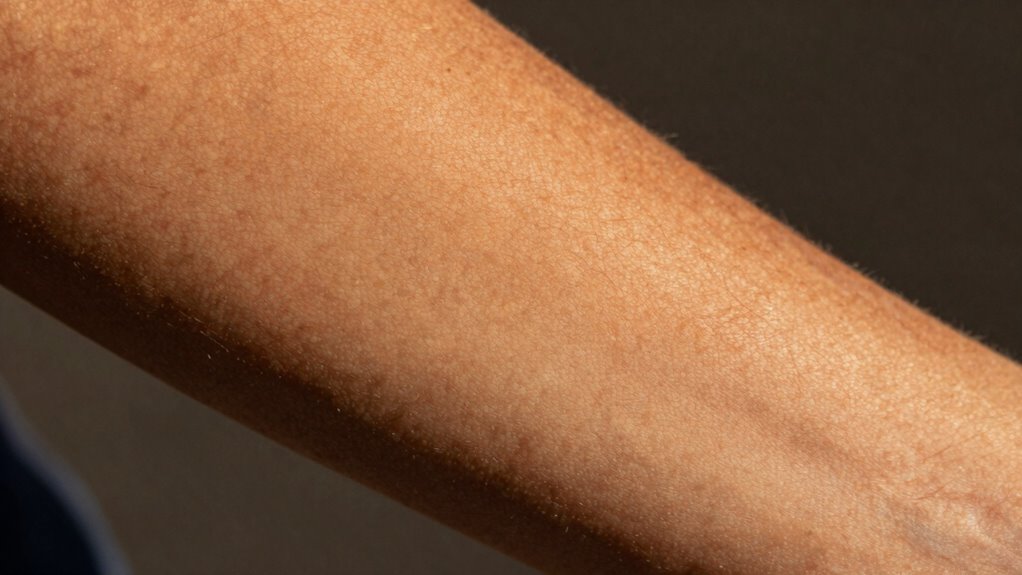
Have you ever noticed how your tan can look completely different from one season to the next? It’s a common experience, and many factors influence these changes. One major reason is the variation in sun exposure and the way your skin reacts to it throughout the year. During summer, you might have a deep, golden glow because you spend more time outdoors, soaking up the sun. But come winter, your skin’s pigmentation changes, often fading or becoming dull, which makes your tan appear less vibrant. These shifts aren’t just about the amount of sun you get—they’re also tied to how your body manages sun protection and seasonal pigmentation.
Your tan changes with seasons due to sun exposure, skin reactions, and protection habits.
When the seasons change, so does the intensity of UV rays reaching your skin. In summer, the sun’s rays are stronger, prompting your skin to produce more melanin to protect itself. This increased melanin results in a darker, more noticeable tan. However, in winter, the UV index drops, and your skin produces less melanin. As a result, your tan may fade or look patchy because your skin isn’t actively maintaining that darker hue. Sun protection also plays a role here. During colder months, many people wear more clothing and use sunscreen less often, which can lead to uneven tanning or skin damage that alters your overall skin tone.
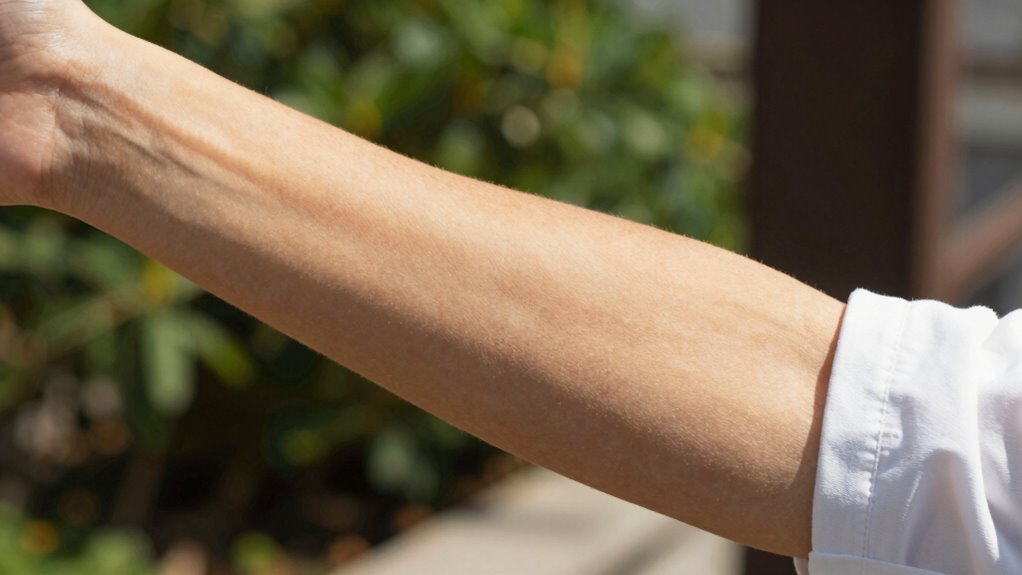
Seasonal pigmentation isn’t just about the natural tanning process; it also involves how your skin responds to the environment. For example, colder weather and dry air can cause your skin to become dull or flaky, masking any remaining tan. Additionally, the sun’s angle influences how your skin absorbs UV rays, which can lead to uneven pigmentation or spots that make your tan look different. You might notice that your summer tan appears more even and vibrant, while winter skin looks paler and less uniform. This fluctuation is a normal part of your skin’s adaptation to changing conditions, but it also highlights the importance of managing sun protection year-round. Moreover, understanding the role of seasonal pigmentation can help you develop better skincare habits to maintain a healthy glow throughout the year. Recognizing how environmental factors influence your skin’s appearance can further improve your skincare routine and help you achieve a more consistent tan.
To further support your skin’s health and maintain your tan’s appearance, it’s helpful to understand how skin pigmentation adapts to seasonal changes and environmental factors. Additionally, UV exposure varies throughout the year, affecting how your skin responds and how your tan develops or fades. Ultimately, the way your tan appears in each season is a combination of environmental factors, sun protection habits, and your skin’s natural pigmentation response. To keep your skin healthy and your tan looking its best, it’s *essential* to adjust your sun protection routines accordingly. Even in winter, protecting your skin from UV rays helps prevent unnecessary skin damage. Recognizing these seasonal changes can help you understand why your tan looks different and encourage you to care for your skin throughout the year.
As an affiliate, we earn on qualifying purchases.
Frequently Asked Questions
Does Skin Type Affect How a Tan Appears Across Seasons?
Yes, your skin type affects how a tan appears across seasons. Genetic pigmentation influences how your skin responds to sun exposure, determining how easily you tan and how dark it gets. If you have fair skin, your tan might be lighter and fade faster, especially in colder months with less sun. Conversely, darker skin tones tend to develop deeper tans that last longer, adapting to seasonal sun exposure changes.
Can Artificial Lighting Influence the Appearance of a Tan?
Artificial lighting can definitely influence how your tan appears. Different light sources, like indoor bulbs or fluorescent lighting, can alter the way your skin’s natural glow looks, making your tan seem more or less vibrant. While sun exposure creates the initial tan, artificial lighting can change its perception, sometimes making it seem brighter or duller depending on the type of light. So, your tan’s appearance can vary indoors versus outdoors.
How Does Skincare Routine Impact Seasonal Tan Changes?
Did you know that proper skincare can reduce seasonal tan variations by up to 30%? Your skincare routine impacts how your skin reacts to sun exposure and maintains hydration. Regularly applying sunscreen, moisturizing, and using antioxidants helps protect your skin from UV damage and keeps your tan even. Staying well-hydrated supports skin elasticity, preventing uneven fading. A consistent routine guarantees your tan stays vibrant and smooth, regardless of the season.
Do Different Clothing Colors Affect How a Tan Looks?
Yes, different clothing colors can influence how your tan looks. Bright or bold colors like red or yellow can make your tan appear warmer and more vibrant, while darker shades like navy or black may create a slimming effect and make the tan seem more subdued. Sun exposure and clothing choices work together; lighter fabrics show off your tan more, while darker or tighter clothing can hide or accentuate different tones, altering your overall look.
Is There a Best Time of Year for Maintaining a Consistent Tan?
The best time for a consistent tan is during late spring or early summer when sun exposure is moderate. While you enjoy longer days, the sun’s rays are less intense, helping tan fading to be gentler. Avoid peak summer months to prevent uneven fading or skin damage. By timing your sun exposure carefully, you maintain a more uniform tan, balancing the desire for color with skin health.
Conclusion
So, next time you notice your tan shifting with the seasons, remember—your skin is like a chameleon, changing to match the environment. Embrace these transformations, for they tell your unique story across the year. Just as the seasons cycle, your skin’s glow evolves, reminding you that beauty isn’t static but beautifully fluid. After all, isn’t it fascinating how something as simple as a tan can reflect the world’s endless dance of change?
Halloween Picks
halloween
As an affiliate, we earn on qualifying purchases.