
When you develop a habit of indoor tanning, you expose your skin to repeated UV radiation, which can cause lasting damage. This includes premature aging signs like wrinkles, age spots, and thinning skin. Over time, your risk of skin cancer, especially melanoma, skyrockets due to DNA mutations. Tanning can also become addictive, leading to more frequent sessions and uneven skin tone. To understand how you can protect yourself, keep going to discover more about safer options and prevention.

Get beauty and skincare favorites delivered free — and shop member deals
- Fast, free delivery on millions of items
- Access to Prime Big Deal Days deals on October 6–7
- Prime Video, Amazon Music and more included
Key Takeaways
- Regular indoor tanning causes cumulative UV damage, increasing skin aging signs like wrinkles and age spots.
- Habitual tanning raises the risk of skin cancers, including melanoma, due to DNA mutations from UV exposure.
- Repeated sessions can lead to subtle skin texture changes and decreased skin elasticity over time.
- Tanning addiction may reinforce behaviors, leading to persistent skin irritation and uneven pigmentation.
- Long-term indoor tanning can result in fragile, irritated skin and higher vulnerability to serious skin health issues.
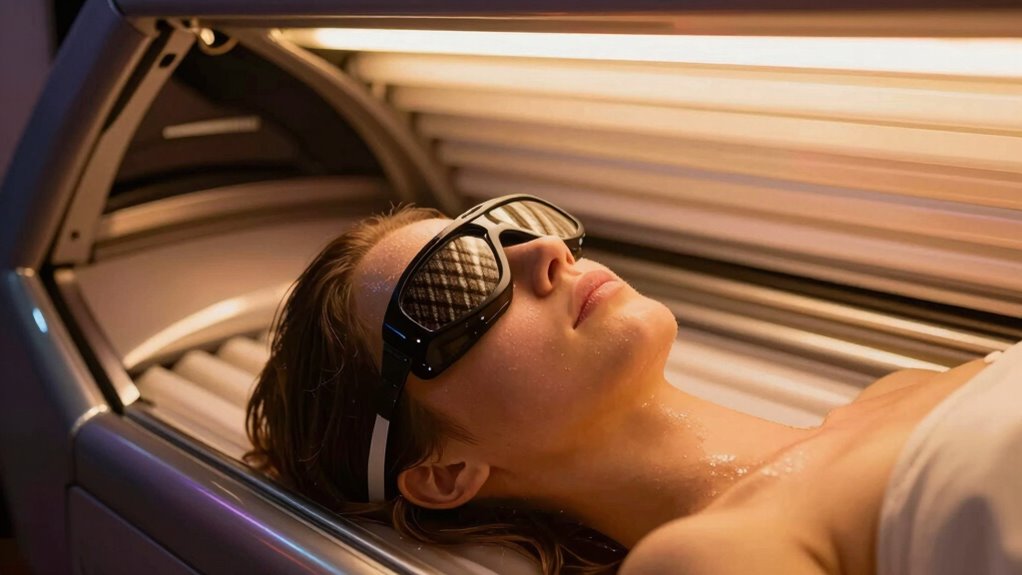
Many people develop the habit of indoor tanning, often seeking a quick way to achieve a sun-kissed glow. At first, it might seem harmless or even glamorous, but every time you step into a tanning bed, you’re exposing your skin to UV radiation. This UV exposure is a double-edged sword—it might give you that golden tan you want, but it also causes skin damage that can have long-term consequences. You might not notice immediate harm, but over time, UV rays break down your skin’s collagen and elastin, leading to premature aging, wrinkles, and age spots. The more frequently you tan indoors, the higher your risk of developing skin problems, including sunburns and, worse, skin cancers like melanoma.
Indoor tanning damages your skin over time, increasing aging signs and skin cancer risk.
As you continue this habit, you might start to notice subtle changes in your skin’s texture and color. The damage caused by UV exposure accumulates, making your skin thinner, more fragile, and prone to redness or irritation. It’s easy to overlook these early signs, especially when you’re chasing that perfect glow. However, what you’re really doing is increasing the likelihood of permanent skin damage. Each session contributes to DNA mutations in skin cells, which can eventually lead to skin cancer. The danger isn’t just immediate burns; it’s the silent, cumulative damage that builds up over time. Many people underestimate how much UV radiation they’re exposed to during indoor tanning, assuming it’s safer than lying in the sun, but in reality, tanning beds often emit concentrated UV rays that intensify skin damage.
Furthermore, a habitual indoor tanning routine can become psychologically addictive. The desire for a consistently bronzed appearance might push you to tan more frequently, ignoring the warning signs your skin is giving you. This addiction increases your overall UV exposure, further escalating the risk for skin damage. You might start to believe that tanning is essential for your confidence or mood, but the health risks far outweigh the temporary aesthetic benefits. Over time, your skin’s ability to repair itself diminishes, and you might find yourself trapped in a cycle where the damage becomes more evident—more age spots, uneven pigmentation, or persistent skin irritation. Recognizing the psychological effects of tanning addiction can help you better understand your motivations and seek healthier alternatives.
In addition, understanding the cumulative effects of UV radiation can help you realize the importance of protecting your skin. Recognize that every session adds to your UV exposure and skin damage. The long-term consequences of repeated UV exposure include not only skin cancer but also early skin aging, which can diminish your natural beauty over time. Being aware of the cumulative effects of UV radiation can motivate you to seek safer alternatives. The best choice is to limit or avoid indoor tanning altogether and seek safer ways to achieve your desired look, like using self-tanners or embracing your natural skin tone. Protecting your skin now can save you from serious health issues down the road.
sunscreen for indoor tanning protection
As an affiliate, we earn on qualifying purchases.
As an affiliate, we earn on qualifying purchases.
Frequently Asked Questions
Can Indoor Tanning Cause Long-Term Skin Damage?
Indoor tanning can cause long-term skin damage by accelerating skin aging and damaging your skin cells. The UV rays stimulate melanin production, but overexposure leads to premature wrinkles, sunspots, and loss of skin elasticity. Repeated tanning weakens your skin’s natural barrier, making it more prone to damage. If you want to maintain youthful, healthy skin, it’s best to avoid frequent indoor tanning and opt for safer alternatives.
Is Indoor Tanning Addictive?
A stitch in time saves nine, and recognizing indoor tanning as potentially addictive is essential. You might develop a behavior addiction or psychological dependence, feeling compelled to seek tanning sessions despite risks. This habitual pattern can become a cycle, making it hard to break free. If you notice cravings or anxiety about missing sessions, it’s a sign you should consider addressing your tanning habits before they escalate.
How Does Tanning Affect Mental Health?
Indoor tanning can temporarily boost your mood through a sense of relaxation or confidence, but it may also lead to psychological dependency. You might find yourself relying on tanning for mood enhancement, which can mask underlying issues like anxiety or low self-esteem. Over time, this dependency can harm your mental health, making it harder to find natural ways to improve your well-being. Be aware of these effects and seek healthier alternatives.
Are There Safer Alternatives to Indoor Tanning?
Safer alternatives to indoor tanning are like finding a treasure chest of options. Instead of falling for tanning myths, try self-tanning lotions or sprays, which give you a sun-kissed glow without UV exposure. You can also enjoy outdoor sun, but remember to wear sunscreen. These options let you achieve a healthy look while protecting your skin from damage, proving there are smarter ways to get that tan.
What Are the Legal Restrictions on Indoor Tanning?
You need to know that regulatory policies limit indoor tanning facilities’ operations, aiming to protect your health. Many regions enforce age restrictions, often banning minors from using tanning beds to reduce skin cancer risks. These laws vary by location but are designed to prevent youth from exposure. Always check local regulations before tanning, as adhering to these restrictions helps you stay safe and avoid potential legal issues.
Conclusion
If you develop a habit of indoor tanning, you’re increasing your risk of skin cancer considerably. Studies show that indoor tanners are 59% more likely to develop melanoma, the deadliest form of skin cancer. That’s a startling statistic that highlights just how risky frequent tanning can be. So, next time you’re tempted to hit the tanning bed, remember the potential dangers and consider safer ways to achieve that bronzed look. Your skin will thank you.
Fall Picks
fall essentials
As an affiliate, we earn on qualifying purchases.