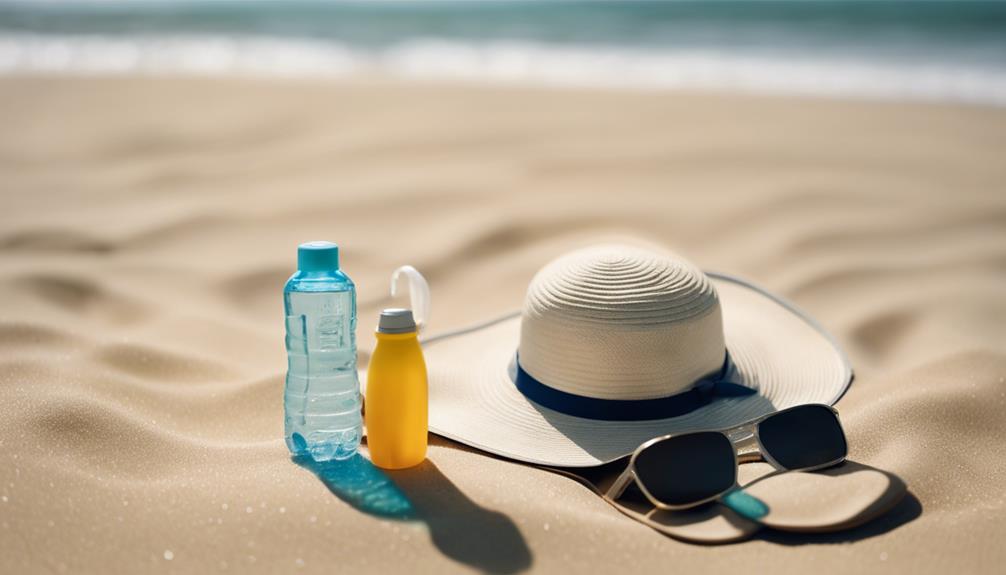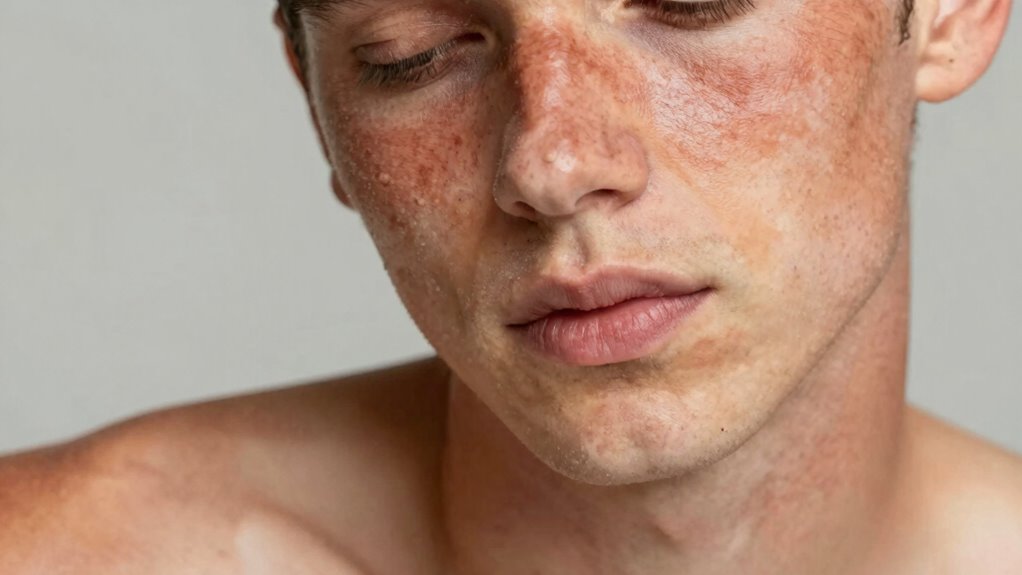

Uneven tans happen because your face and body respond differently to sun exposure due to factors like skin thickness, natural pigmentation, and how consistently you apply sunscreen. Areas with thinner skin, like your face, tend to tan faster, while thicker skin, like on your arms, tans more slowly. Variations in melanin distribution and protection habits also play a role. If you want to understand how to achieve a more even tan, keep exploring these key factors.

Get beauty and skincare favorites delivered free — and shop member deals
- Fast, free delivery on millions of items
- Access to Prime Big Deal Days deals on October 6–7
- Prime Video, Amazon Music and more included
Key Takeaways
- Varying sun exposure and turning during tanning sessions cause uneven pigmentation on the face and body.
- Differences in skin thickness and natural melanin levels influence how areas tan and respond to UV rays.
- Inconsistent application of sunscreen or protective skincare leads to uneven UV protection and tanning.
- Facial skin is thinner and more sensitive, causing it to tan faster and more visibly than thicker skin elsewhere.
- Skin conditions, scars, and individual genetics affect tanning uniformity across different regions.
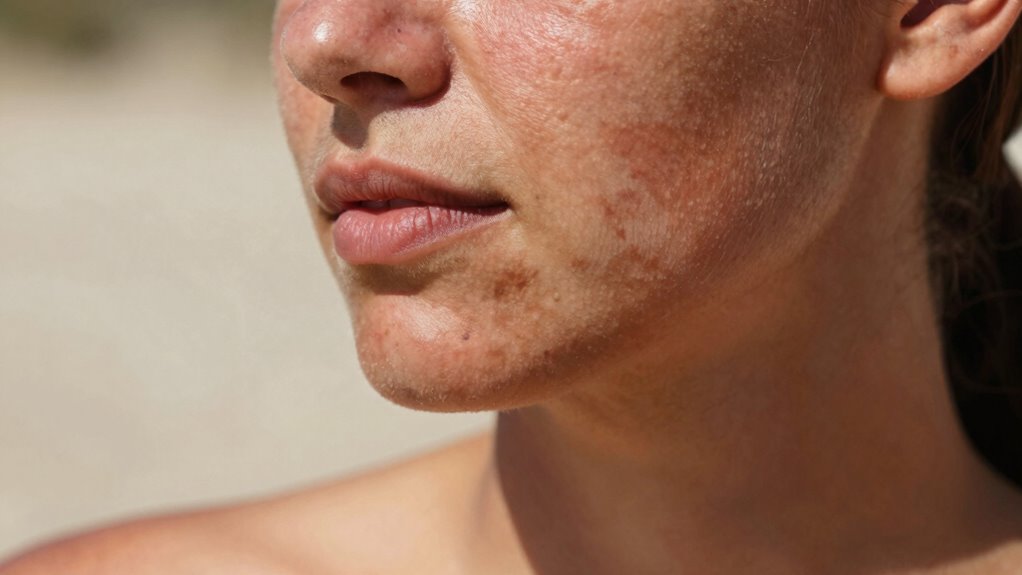
Uneven tans are a common frustration, especially when your face and body don’t develop color uniformly. You might notice that some areas look darker while others remain pale, which can be confusing and even embarrassing. The main reason this happens is due to how your skin reacts to sun exposure, and how your skin pigmentation varies across different parts of your body. Your skin contains melanin, the pigment responsible for your color, and the amount of melanin in different areas influences how much they tan. When you spend time in the sun, your skin produces more melanin to protect itself from UV damage. But this process isn’t always even, leading to uneven tanning.
One key factor is that different parts of your body receive varying degrees of sun exposure. For example, your face, arms, and legs might be exposed regularly, while areas like your torso or behind your knees are often covered by clothing. As a result, the exposed areas develop a darker, more noticeable tan, while covered parts stay lighter. Even within a single area, inconsistent sun exposure—like turning your head or leaning to one side—can cause unevenness. Additionally, the angle of the sun affects how much UV rays reach different parts of your body, making some areas tan faster than others. A sun exposure pattern can significantly influence how uniformly your skin tans. Recognizing the role of sun exposure patterns can help you plan your tanning sessions more effectively and avoid uneven results.
Varying sun exposure and angles cause uneven tans across different body parts and within single areas.
Skin pigmentation also plays a significant role. Everyone’s skin responds differently to UV rays, depending on genetics and baseline melanin levels. Some areas produce more melanin naturally, which can lead to darker patches, especially if those areas are more sensitive or prone to pigmentation changes. Furthermore, certain skin conditions or previous scarring can influence how your skin reacts to sun exposure, creating patches that resist tanning or develop unevenly.
Another reason for uneven tanning is the natural variation in skin thickness. Thinner skin, like that on your face, tends to tan faster and more visibly than thicker skin on other parts of your body. This difference means your face might develop a deep, even tan quickly, while your arms or legs tan more slowly and unevenly. Also, skincare routines, such as applying sunscreen unevenly or neglecting to reapply, can create disparities in protection, leading to uneven tanning patterns. Moreover, the distribution of melanin across your skin impacts how different regions respond to UV exposure, further contributing to uneven results. Properly understanding these factors can help you tailor your sun protection strategies more effectively.
In essence, uneven tans happen because of how your skin responds to sun exposure, influenced by skin pigmentation, genetics, and the way your body is exposed to UV rays. Understanding these factors can help you manage and prevent uneven tanning, whether by adjusting your sun habits, using proper protection, or seeking professional advice for more consistent results.
As an affiliate, we earn on qualifying purchases.
Frequently Asked Questions
Can Skincare Products Affect How My Tan Develops?
Skincare products can definitely affect how your tan develops because they influence chemical reactions on your skin. For example, some moisturizers contain ingredients that hydrate and protect, leading to a more even tan, while others might cause uneven color if they irritate or strip your skin. Using a good moisturizer before sun exposure can improve your tan’s appearance, but avoid products with harsh chemicals that might interfere with even development.
Does Skin Type Influence Uneven Tanning?
Yes, your skin type influences uneven tanning. Genetic skin factors determine how your skin responds to sun exposure, affecting tanning patterns. People with certain skin types may develop uneven tans because their skin produces melanin differently, leading to patchy or inconsistent color. Understanding your genetic skin traits helps you manage sun exposure better, so you can achieve a more even tan and reduce the risk of sun damage or uneven skin tone.
How Does Sunscreen Application Impact Tan Uniformity?
Sunscreen application directly impacts tan uniformity. If you use inconsistent sunscreen, some areas won’t be protected evenly, leading to uneven tanning. Focus on applying sunscreen with uniform thickness, covering all skin thoroughly using proper techniques like gentle, circular motions. Reapply regularly, especially after sweating or swimming. Proper application guarantees even protection, helping you achieve a more uniform tan and reducing the risk of uneven patches or sunburns.
Can Medical Skin Conditions Cause Uneven Tanning?
Yes, medical skin conditions can cause uneven tanning. You might find yourself in a catch-22, as genetic predispositions and hormonal fluctuations influence how your skin reacts to sun exposure. Conditions like melasma or vitiligo disrupt pigment production, making some areas tan darker or lighter. These factors create a patchwork effect, so it’s wise to consult a dermatologist to address underlying issues and achieve more uniform skin tone.
Is It Possible to Fix an Uneven Tan Quickly?
Yes, you can fix an uneven tan quickly with tan removal and skin exfoliation. Start by using a gentle exfoliant to remove dead skin cells, which helps even out skin tone. Follow with a tan remover product if needed to lighten darker patches. Consistent exfoliation and moisturizing improve skin texture and tone, making your tan look more uniform faster. Remember, patience is key for long-lasting results.
Conclusion
So, don’t get discouraged if your tan isn’t even. It’s common and usually easy to fix with proper exfoliation, moisturizing, and consistent application of sunscreen. Remember, your skin is unique, and some unevenness is normal. If you’re concerned, consider consulting a dermatologist for personalized advice. Keep up with your skincare routine, stay patient, and soon you’ll enjoy a more balanced, natural-looking tan. Your perfect glow is just a few simple steps away!
Halloween Picks
halloween
As an affiliate, we earn on qualifying purchases.