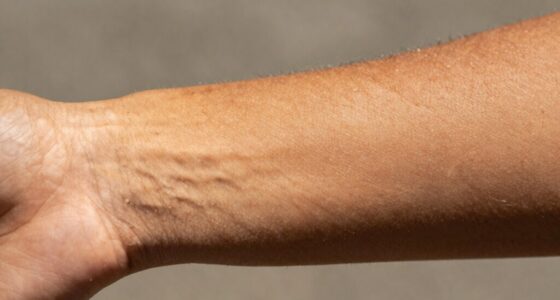
Your hormonal fluctuations can change how your skin reacts to UV exposure, influencing tanning and pigmentation. When hormones like estrogen and progesterone shift, your skin may become more sensitive or less responsive to sunlight, causing uneven tans or darker spots. During pregnancy or hormonal imbalances, these effects become more noticeable, raising your risk for sun damage. Understanding how hormones impact your skin can help you better protect yourself, and the details ahead will give you more insights into these influences.

Get beauty and skincare favorites delivered free with Prime
- Fast, free delivery on millions of items
- Prime Video, Amazon Music and more included
- Member-only deals all year
Key Takeaways
- Hormonal fluctuations can increase skin sensitivity, leading to more pronounced tanning or uneven pigmentation.
- Elevated estrogen and progesterone levels during hormonal changes can enhance or diminish tanning response.
- Pregnancy-related hormones often cause hyperpigmentation, making skin appear darker even with minimal UV exposure.
- Hormonal imbalances may impair melanin production, resulting in unpredictable tanning and pigmentation patterns.
- Recognizing hormonal influences encourages consistent sun protection to prevent damage and skin aging.

Tanned skin is often associated with health and attractiveness, but hormonal influences can considerably affect how your skin responds to sun exposure. When you spend time outside, your skin’s reaction isn’t solely determined by your UV exposure; hormonal fluctuations can also play a significant role. These fluctuations can alter your skin’s sensitivity to sunlight, making some individuals more prone to tanning or burning, regardless of the amount of sun they’re exposed to. For example, during certain phases of your menstrual cycle, hormonal changes can increase melanin production, leading to a darker or more uneven tan. Similarly, pregnancy involves hormonal shifts that can cause hyperpigmentation, making your skin appear darker in patches even with minimal UV exposure.
Your endocrine system, which governs hormone production, influences how your skin reacts to sunlight. Elevated levels of hormones like estrogen and progesterone can heighten your skin’s sensitivity to UV rays, prolonging sun exposure’s tanning effects or increasing the risk of sunburns. Conversely, hormonal imbalances caused by conditions like hypothyroidism or polycystic ovary syndrome (PCOS) can result in unpredictable skin responses. These imbalances might reduce melanin synthesis, leading to less tanning even after significant UV exposure, or cause irregular pigmentation changes. You might notice that your skin reacts differently during stressful periods or when your hormone levels fluctuate due to medication or health issues.
Understanding how hormonal fluctuations impact your skin’s response to UV exposure can help you better manage sun safety. If your hormones are out of balance, your skin may be more susceptible to damage, which raises your risk for premature aging and skin cancers. It’s essential to protect your skin consistently, regardless of whether you feel more or less tanned than usual. Wearing broad-spectrum sunscreen, seeking shade during peak sunlight hours, and wearing protective clothing become even more critical when hormonal influences heighten your skin’s reactivity. Recognizing that your hormonal state can influence tanning and sun damage encourages you to adopt a proactive approach to skin care and sun protection. Additionally, research on personality traits like conscientiousness can support diligent sun safety behaviors.
broad spectrum sunscreen for sensitive skin
As an affiliate, we earn on qualifying purchases.
As an affiliate, we earn on qualifying purchases.
Frequently Asked Questions
Can Hormones Affect the Skin’s Response to UV Exposure?
Yes, hormones can affect your skin’s response to UV exposure. Hormone regulation influences skin sensitivity, making some people more prone to sunburn or damage. Fluctuations in hormones, like during pregnancy or hormonal therapies, can increase your skin’s vulnerability to UV rays. By understanding these effects, you can better protect your skin, using sunscreen and avoiding excessive sun exposure during periods of hormonal imbalance.
Do Hormonal Changes Influence Tanning Duration or Intensity?
Hormonal regulation definitely influences your skin pigmentation and can affect how long or how intensely you tan. When hormones like estrogen and progesterone fluctuate, they can boost melanin production, leading to darker or more sustained tans. During hormonal shifts such as pregnancy or menstrual cycles, you might notice changes in tanning response. So, hormones do play a role in both the duration and intensity of your tan, impacting your skin’s pigmentation process.
Are Certain Hormonal Imbalances Linked to Skin Pigmentation Issues?
Hormonal imbalances can definitely impact your skin pigmentation. You might notice issues like hyperpigmentation or uneven skin tone when your hormones are out of sync. Hormonal impact affects melanin production, leading to these pigmentation issues. Conditions such as thyroid disorders or hormonal fluctuations during pregnancy can trigger changes in skin color. If you’re experiencing persistent pigmentation concerns, it’s a good idea to consult a dermatologist who can help identify and address the hormonal causes.
How Does Hormonal Therapy Impact Tanning Ability?
Hormonal therapy can alter your tanning response by affecting melanin production. When you undergo hormonal therapy, it might boost or suppress hormones like estrogen or testosterone, which influence skin pigmentation. As a result, your ability to tan could become either more pronounced or diminished. You may notice changes in how quickly or deeply your skin darkens after sun exposure, depending on how your hormonal balance shifts due to the therapy.
Can Hormonal Fluctuations Cause Uneven Tanning or Skin Discoloration?
Oh, absolutely! Hormonal effects can turn your skin into a Jackson Pollock masterpiece, causing uneven tanning or discoloration. Fluctuations in hormones mess with your skin pigmentation, leading to blotches or dark patches. You might think you’re a sun-kissed goddess, but instead, you get a patchwork quilt. Hormones love to play tricks, making your tanning results as unpredictable as a cat on a hot tin roof.
Conclusion
So, next time you notice your skin glowing from a tan or changing with hormones, remember—your body’s story is written in your skin’s shades. Like a silent poet, it whispers secrets of sun exposure and hormonal shifts, inviting you to listen closely. Embrace these signals, for they’re your body’s way of telling a tale only you can understand. Stay curious, stay aware, and let your skin be the canvas of your health’s story.
Halloween Picks
halloween
As an affiliate, we earn on qualifying purchases.