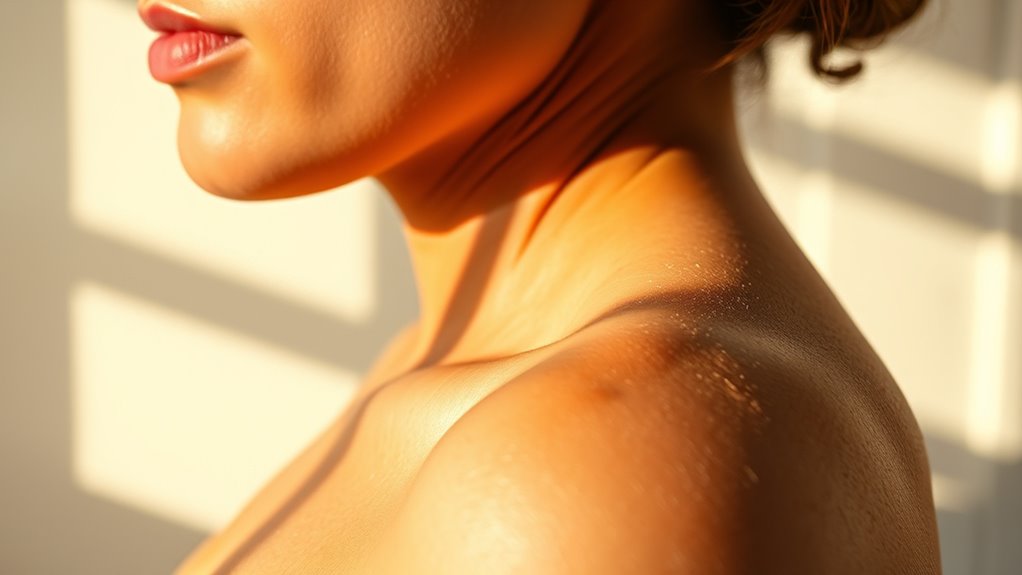

Hormonal changes from pregnancy or HRT can markedly impact how your skin responds to UV exposure. Increased hormone levels may make your skin more sensitive, leading to easier tanning, pigmentation changes, or uneven skin tone. These fluctuations can also cause your skin to react unpredictably, sometimes resulting in more pronounced sun damage or hyperpigmentation. If you’re curious about how hormones influence these skin responses and want practical tips, there’s more to discover below.
Key Takeaways
- Hormonal changes during pregnancy and HRT can increase skin sensitivity, leading to more pronounced tanning or pigmentation changes.
- Elevated estrogen and progesterone levels stimulate melanin production, potentially resulting in darker, uneven skin tone upon sun exposure.
- Hormonal fluctuations can cause conditions like melasma, characterized by dark patches, which may be worsened by UV exposure.
- Thinner, hormonally affected skin during menopause may be more prone to UV damage and uneven tanning.
- External hormones from therapies can amplify natural hormonal effects, increasing the likelihood of pigmentation irregularities after sun exposure.

Tanned skin results from the skin’s response to ultraviolet (UV) exposure, but your hormones also play a notably role in how your skin reacts and changes color. When you spend time in the sun, your skin produces melanin, the pigment responsible for tanning. This process is a protective response aimed at reducing UV damage. However, your hormonal fluctuations can influence how your skin reacts to sun exposure, sometimes leading to unexpected changes in skin tone or pigmentation.
During pregnancy, for example, hormone levels like estrogen and progesterone increase substantially. These shifts can cause your skin to become more sensitive to sunlight, leading to conditions such as melasma—a darkening of certain facial areas. Melasma isn’t just a result of sun exposure; it’s also heavily influenced by hormonal fluctuations. You might notice that even minimal sun exposure results in more pronounced pigmentation, especially if you’re pregnant or on hormonal treatments like hormone replacement therapy (HRT). These therapies introduce external hormones that can mimic or amplify natural fluctuations, making your skin more prone to pigmentation changes upon sun exposure.
Hormonal changes don’t just affect pigmentation. They can also alter your skin’s overall response to UV rays. For instance, during menopause, declining estrogen levels can lead to thinner, more fragile skin that’s less effective at protecting itself from UV damage. This means that even moderate sun exposure might cause more noticeable tanning, burning, or pigmentation irregularities. Conversely, some women report that hormone fluctuations lead to less tanning, possibly due to changes in melanin production or distribution.
Your lifestyle choices, combined with hormonal influences, also impact how your skin reacts. If you’re on HRT or experiencing pregnancy-related hormonal shifts, you might find that your skin’s response to sun exposure becomes more unpredictable. Some days, your skin might tan more easily, while on others, it might be more prone to pigmentation spots or uneven coloring. It’s essential to understand that hormonal fluctuations can sensitize your skin, making it more reactive to UV rays and increasing your risk of hyperpigmentation or sun damage.
Frequently Asked Questions
Can Hormonal Changes Cause Permanent Skin Tanning?
Hormonal effects can cause lasting changes in skin pigmentation, but they typically don’t lead to permanent tanning. When hormones fluctuate, they may increase melanin production, resulting in darker skin patches or overall pigmentation changes. These effects often fade over time once hormone levels stabilize. However, in some cases, prolonged hormonal imbalance might cause long-term pigmentation, so consulting a dermatologist can help determine if treatment is needed to address persistent skin discoloration.
Does Pregnancy Increase the Risk of Skin Pigmentation Changes?
Yes, pregnancy can increase your risk of skin pigmentation changes. During pregnancy, hormonal shifts boost melanin production, leading to skin discoloration such as dark patches or a mask of pregnancy. You might notice these changes appear more prominently on the face, neck, or other areas exposed to sunlight. While often temporary, some pigmentation changes can persist, so it is crucial to protect your skin from UV rays and consult a dermatologist if needed.
How Does Hormone Therapy Affect Tanning Ability?
Sure, hormone therapy might seem like a miracle, but instead of boosting your tan, it actually plays a tricky game with hormonal regulation and melanin production. You’d think it’d turn you into a golden goddess, but often, it can disrupt your skin’s natural ability to tan evenly. So, don’t expect a sun-kissed glow; hormone therapy might just leave you with unpredictable pigmentation instead.
Are Hormonal Influences on Tanning Reversible After Pregnancy or HRT?
Hormonal influences on tanning are often reversible after pregnancy or HRT. Your hormonal regulation shifts, impacting skin pigmentation, which can lead to changes in how your skin responds to sun exposure. Once hormone levels stabilize post-pregnancy or HRT, your skin’s pigmentation may return to its pre-influence state. Keep in mind, individual responses vary, so it might take time for your skin to fully adapt back to its original pigmentation levels.
Can Hormonal Imbalances Lead to Uneven Tanning or Pigmentation Spots?
Imagine your skin telling a story—hormonal effects can cause uneven tanning or pigmentation spots, turning beauty into a puzzle. Yes, hormonal imbalances from fluctuations or sun exposure can disrupt melanin production, leading to irregular patches. Sun exposure worsens this, highlighting those spots and uneven tones. You can take control by protecting your skin, balancing hormones, and avoiding excessive sun. Your skin’s narrative can still be beautifully rewritten.
Conclusion
Understanding how hormones influence your skin helps you recognize the signs of pregnancy, hormonal shifts, or hormone therapy. It helps you see the connection between your body’s changes and your skin’s appearance. It guides you in caring for your skin during different hormonal phases. It empowers you to seek advice when needed, to protect your skin’s health, and to embrace your natural beauty through every hormonal change. Recognize, respond, and care—your skin’s health depends on it.