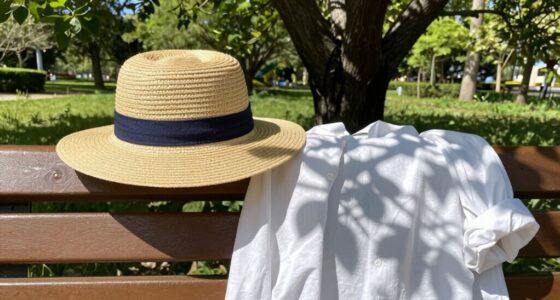
To use shade as your main sun protection tool, position it carefully to block direct sunlight during peak UV hours, like 10 a.m. to 4 p.m. Use structures with opaque canopies or wide umbrellas to reduce UV reflection from surfaces like concrete or water. Place shade away from reflective surfaces and adjust based on the sun’s angle. Combining shade with protective clothing and sunscreen enhances safety. Keep exploring to discover more ways to maximize your sun protection strategy.

Get beauty and skincare favorites delivered free with Prime
- Fast, free delivery on millions of items
- Prime Video, Amazon Music and more included
- Member-only deals all year
Key Takeaways
- Position large, solid shade structures to maximize coverage and block direct sunlight during peak UV hours.
- Place shade away from reflective surfaces like water or concrete to reduce UV reflection exposure.
- Adjust shade placement and angle based on the sun’s position throughout the day and seasons.
- Combine shade use with UV-protective clothing and broad-spectrum sunscreen for comprehensive protection.
- Incorporate high UPF-rated materials and natural or artificial shade structures for enhanced UV blocking effectiveness.

Have you ever wondered how effective shade really is in protecting you from the sun’s harmful rays? Shade is one of the simplest, most accessible ways to reduce your exposure to UV radiation, but its effectiveness depends heavily on proper shade design. Well-designed shade structures can considerably cut down UV reflection, which is when sunlight bounces off surfaces like concrete, water, or sand, increasing your risk even when you’re sitting in the shade. That’s why understanding how to use shade correctly is essential for ideal sun protection, especially during peak hours when UV rays are strongest.
When choosing a shade, consider how its design influences UV reflection. A solid, opaque canopy or awning can block direct sunlight and reduce UV reflection from surrounding surfaces. Conversely, open structures like lattice or mesh shades might let some UV rays through, but they can still provide substantial protection if positioned correctly. The key is to position your shade to shield you from direct rays and minimize indirect UV exposure caused by reflected sunlight. For example, placing a shade structure away from highly reflective surfaces or choosing materials that absorb rather than reflect UV rays can make a noticeable difference in your sun safety. Additionally, understanding how UV reflection can be amplified by surrounding surfaces helps you make more informed decisions about shade placement and materials.
Shade design also plays a crucial role in how well it protects you from the sun. Overhanging roofs, umbrellas with wide canopies, and natural shade from trees all serve different purposes. A well-designed shade structure considers the sun’s angle, which varies throughout the day and seasons. By adjusting the location or angle of your shade, you can maximize protection and reduce UV reflection. Incorporating materials with high UPF (Ultraviolet Protection Factor) ratings further enhances the shade’s ability to block UV rays, making it a more effective shield against the sun’s harmful effects. Additionally, understanding herbalism principles can inspire the use of natural remedies to support skin health after sun exposure.
Moreover, the size and placement of your shade influence its overall effectiveness. Large, well-placed shade structures can cover more area, protecting not only your body but also your skin and eyes from reflected rays. Positioning your shade to block the sun’s rays when they’re at their peak—typically between 10 a.m. and 4 p.m.—maximizes protection. Remember, shade alone isn’t foolproof; combining it with other sun safety measures like wearing UV-protective clothing and applying broad-spectrum sunscreen will give you the best defense. Recognizing the importance of contrast ratio in outdoor environments can also help you choose materials that better reduce glare and reflection.
In essence, understanding UV reflection and carefully designing your shade can dramatically improve your sun protection strategy. By choosing the right materials, positioning your shade thoughtfully, and considering how surfaces reflect UV rays, you can enjoy outdoor activities while minimizing your risk of sun damage. Additionally, considering climate and environment can help tailor your shade setup to specific conditions, further enhancing its effectiveness. Being aware of ambient light conditions also plays a vital role in optimizing your shade for maximum protection and comfort.
As an affiliate, we earn on qualifying purchases.
Frequently Asked Questions
Can Shade Block 100% of UV Rays?
Shade can’t block 100% of UV rays because some UV penetration occurs through gaps or thin areas, especially if the shade isn’t durable. The effectiveness depends on the shade’s durability — thicker, tightly woven fabrics provide better UV protection. Keep in mind, even the best shade reduces UV exposure but doesn’t eliminate it completely. So, combining shade with other sun protection measures offers the best defense against harmful UV rays.
What Types of Shade Provide the Best UV Protection?
Shade materials like tightly woven fabrics and UV-protective canopies are your best bets for blocking harmful rays. Shade installation matters too—permanent structures like pergolas or awnings with UV-resistant fabric offer superior protection compared to temporary setups. Look for shades with a UPF rating of 50+ to guarantee maximum UV defense. When you choose wisely, you’re creating a fortress against the sun’s harshest rays, protecting your skin like a superhero shield.
How Does Shade Effectiveness Vary Throughout the Day?
Shade effectiveness varies throughout the day because of the sun’s movement. In the early morning and late afternoon, the sun is lower, so shade provides more protection. During midday, when the sun is highest, shade becomes less effective, especially if it’s less dense. Dense shade offers better protection at all times, but it’s especially essential when the sun is directly overhead. Adjust your shade strategies accordingly for maximum sun safety.
Is Shade Alone Sufficient for Full Sun Protection?
Is shade alone enough to keep you safe from the sun? Not entirely. Shade’s durability can vary depending on the material’s transparency and how well it blocks UV rays. Some fabrics allow UV penetration, making them less effective. Relying solely on shade leaves gaps in protection, especially during peak hours when the sun’s rays are strongest. Use shade as part of an all-encompassing sun protection plan, including clothing and sunscreen.
Can Shade Help Prevent Heat-Related Illnesses?
Shade benefits your health by helping prevent heat-related illnesses. When you stay under shade, you limit direct sun exposure, reducing heat buildup on your skin and core body temperature. This natural barrier promotes heat prevention, especially during peak sunlight hours. By seeking shaded areas, you lower your risk of heat exhaustion and heat stroke, making shade an essential part of protecting yourself from extreme heat conditions.
Conclusion
Remember, shade is your shield against the sun’s harsh rays, offering a simple yet powerful line of defense. When you seek shelter under a tree or a canopy, you’re not just avoiding sunburn—you’re protecting your skin and health for the long haul. Think of shade as your silent guardian, quietly working in the background. As the old adage goes, “A shield in hand is worth two in the bush,” so make shade your go-to sun protection tool every time you step outside.
Halloween Picks
halloween
As an affiliate, we earn on qualifying purchases.