To stay protected during outdoor workouts, apply broad-spectrum sunscreen with SPF 30 or higher generously on all exposed skin, reapplying every two hours or more often if sweating. Wear lightweight, long-sleeved clothing, a wide-brimmed hat, and UV-protective sunglasses. Schedule your activities outside peak sun hours, like early mornings or late afternoons, and seek shade during breaks. Following these simple steps helps prevent sunburn and long-term skin damage—learn more to keep yourself safe under the sun.
Key Takeaways
- Schedule workouts early mornings or late afternoons to avoid peak UV hours (10 a.m. – 4 p.m.).
- Wear protective clothing such as long-sleeved shirts, wide-brimmed hats, and UV-protective sunglasses.
- Apply broad-spectrum sunscreen SPF 30+ generously before outdoor activity and reapply every two hours.
- Seek shade during breaks to reduce direct sun exposure and stay cool.
- Recognize that UV rays can penetrate clouds; continue sun safety measures on overcast days.
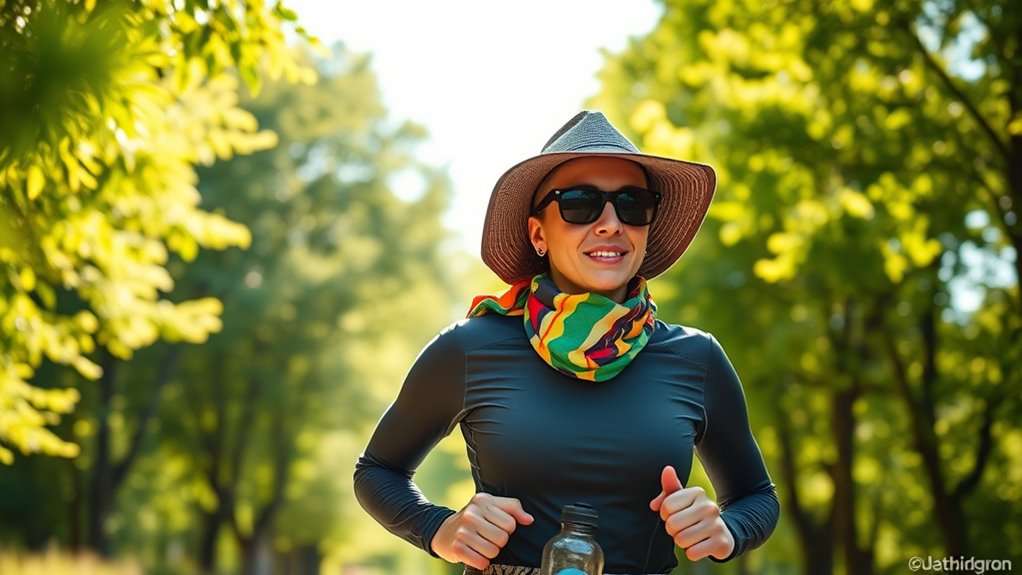
Exercising outdoors offers numerous benefits, but it also exposes you to harmful UV rays that can damage your skin and increase the risk of skin cancer. Protecting yourself during outdoor workouts is essential, and the first step is understanding how to apply sunscreen correctly. You want to guarantee your sunscreen has broad-spectrum protection with at least SPF 30. Before heading out, generously apply it to all exposed skin—your face, neck, arms, legs, and any other areas that might be uncovered. Don’t forget spots like your ears, the back of your neck, and your hands, which are often overlooked but vulnerable to UV damage. Reapply sunscreen every two hours, or more frequently if you’re sweating heavily or wiping your face with a towel. Proper application guarantees that you get the full protective benefits and reduces your risk of sunburn and long-term skin damage. Additionally, choosing appropriate clothing designed for sun protection can greatly enhance your defense against harmful rays.
In addition to sunscreen, wearing protective clothing is a highly effective way to shield your skin during outdoor workouts. Lightweight, long-sleeved shirts and full-length pants made from tightly woven fabrics provide an excellent barrier against UV rays. Opt for clothing with UPF (Ultraviolet Protection Factor) labels for added assurance of sun protection. Wide-brimmed hats are also crucial; they shade your face, ears, and neck, preventing sunburns and reducing the risk of skin cancer. Sunglasses with UV protection protect your eyes from harmful rays and help prevent eye strain. When selecting clothing, prioritize lighter colors, which reflect sunlight and keep you cooler, but don’t neglect coverage. Many outdoor workout gear brands now incorporate UPF fabrics, making it easier to stay protected without sacrificing comfort or mobility.
Timing your workouts to avoid the peak sun hours—typically between 10 a.m. and 4 p.m.—can considerably diminish UV exposure. If you must exercise during these hours, double down on your sun protection efforts. Seek shade whenever possible, especially during breaks, and consider adjusting your schedule to early mornings or late afternoons when the sun’s rays are less intense. Remember, UV rays can penetrate clouds, so protection is still necessary on overcast days. Staying vigilant about sunscreen application and wearing protective clothing not only helps prevent immediate sunburns but also safeguards your skin in the long run. Combining these strategies effectively minimizes your UV exposure, allowing you to enjoy outdoor workouts safely while reducing your risk of skin damage and skin cancer.
Frequently Asked Questions
How Often Should I Reapply Sunscreen During Outdoor Exercise?
You should reapply sunscreen every two hours during outdoor exercise to guarantee continuous protection. If you’re sweating heavily or swimming, reapply more often, ideally immediately after these activities. Follow sunscreen application tips like applying a generous, even layer 15 minutes before activity and covering all exposed skin. Regular reapplication helps maintain effective sun protection throughout your workout, reducing your risk of sunburn and skin damage.
Are There Specific Fabrics Recommended for Sun Protection During Workouts?
For sun protection during workouts, opt for moisture-wicking fabrics that keep you dry and comfortable. Look for UPF-rated clothing, which is specially designed to block harmful UV rays. These fabrics are lightweight, breathable, and provide an extra layer of defense against sun damage. Wearing UPF-rated clothing combined with other sun safety measures helps you stay protected while staying active outdoors.
Can Sunglasses Prevent UV Damage to My Eyes During Outdoor Activities?
It’s no coincidence that sunglasses benefits extend beyond style—they provide essential UV protection during outdoor activities. Wearing sunglasses can substantially reduce your risk of UV damage to your eyes, shielding them from harmful rays that cause long-term issues like cataracts and macular degeneration. By choosing sunglasses with UV protection, you actively safeguard your vision while enjoying outdoor workouts, making them an invaluable part of your sun safety routine.
Is It Safe to Work Out in the Early Morning or Late Evening?
Working out in the early morning or late evening is generally safe, but consider timing considerations and environmental factors. Early mornings and evenings often have cooler temperatures and less direct sunlight, reducing UV exposure. However, you should still wear protective gear like sunscreen, sunglasses, and appropriate clothing. Be aware of low visibility or uneven terrain, which can pose risks. Adjust your workout schedule based on weather and your comfort level for a safer experience.
What Are the Signs of Sunburn or Heat-Related Illness During Exercise?
You’ll know you’re battling sunburn or heat-related illness when your skin feels like a fiery furnace or your head pounds like a drum. Watch for signs of dehydration like dry mouth and dark urine, and symptoms of heat exhaustion such as dizziness, heavy sweating, and weakness. If these strike, stop immediately, hydrate, and seek shade—your body’s warning signals are your best guide to stay safe during outdoor workouts.
Conclusion
As you lace up for your outdoor workout, remember that sun protection is your loyal shield against the relentless glare. Think of it as a delicate dance with the sun’s fiery kiss—balance and preparation keep you safe and energized. By layering on sunscreen, wearing protective gear, and seeking shade when needed, you create a fortress of defense. Embrace these habits, and let your fitness journey unfold under the sun’s watchful, yet gentle, gaze.