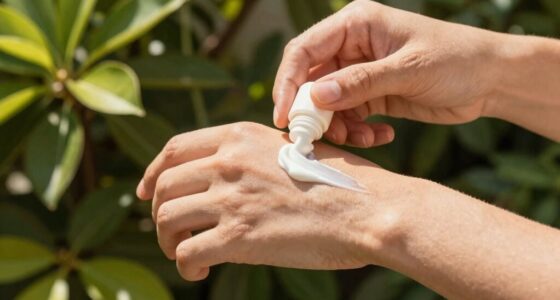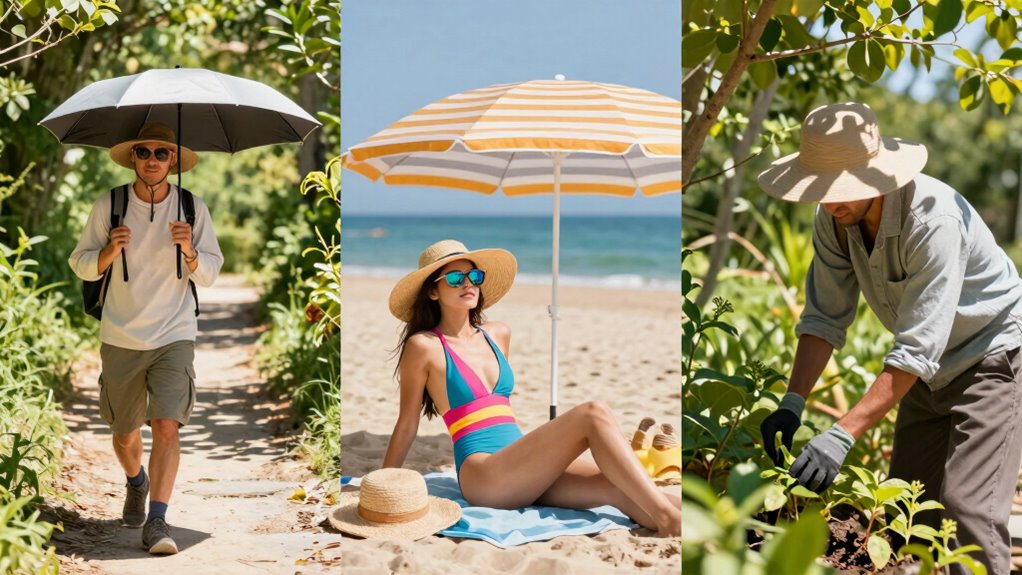

To pick the right sun protection strategy, consider your activity’s level of movement and environment. For active pursuits like hiking or sports, wear lightweight, breathable clothing with UPF protection, and use wide-brimmed hats and UV-protective sunglasses. During outdoor tasks like gardening, add sunscreen on exposed areas and reapply every two hours, especially if sweating or swimming. Understanding peak sun hours and combining multiple protection methods helps keep your skin safe—keep exploring to see how to get it just right.

Get beauty and skincare favorites delivered free with Prime
- Fast, free delivery on millions of items
- Prime Video, Amazon Music and more included
- Member-only deals all year
Key Takeaways
- Assess the activity’s duration and intensity to determine the level of sun exposure and protection needed.
- Choose protective clothing with UPF ratings suitable for the activity’s movement and environmental conditions.
- Use broad-spectrum sunscreen with SPF 30+ on exposed skin, applying before activity and reapplying regularly.
- Incorporate accessories like wide-brimmed hats and UV-protective sunglasses to shield face, neck, and eyes.
- Time outdoor activities outside peak hours (10 a.m.–4 p.m.) for reduced UV exposure and enhanced protection.
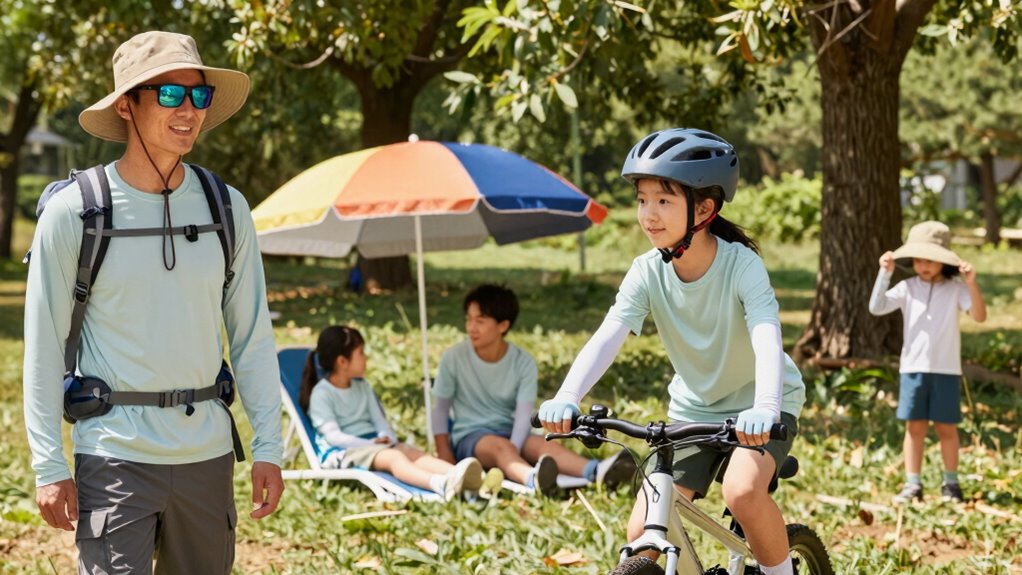
Choosing the right sun protection strategy is essential for safeguarding your skin from harmful UV rays without sacrificing your outdoor enjoyment. It’s easy to fall for sun safety myths that suggest you only need sunscreen on sunny days or during certain hours. In reality, UV rays can reach you even on cloudy days or during winter, so understanding the facts helps you make smarter choices. When considering protective clothing options, look for garments specifically designed for sun protection. These clothes are often made from tightly woven fabrics that block out UV rays more effectively than regular clothing. Long-sleeved shirts, wide-brimmed hats, and full-length pants are excellent choices for covering your skin and reducing exposure. Opt for light-colored or moisture-wicking materials that keep you cool and comfortable during physical activities.
If you’re engaging in outdoor activities like hiking, sports, or gardening, your protective clothing options should adapt to your movements and environment. Lightweight, breathable fabrics with built-in UV protection are ideal for active pursuits, so you stay protected without overheating. Keep in mind that many outdoor brands now produce clothing with UPF ratings, which indicate the level of UV protection the fabric offers. Wearing a wide-brimmed hat not only shields your face but also provides extra coverage for your neck and ears, areas often overlooked but highly vulnerable to sun damage. Sunglasses with UV protection are equally important; they guard your eyes against harmful rays and prevent discomfort or long-term eye issues.
Beyond clothing, sunscreen remains a crucial layer of defense, especially for exposed skin areas that clothing can’t cover, like your face, hands, and feet. Choose broad-spectrum sunscreens with at least SPF 30, and apply generously 15 minutes before sun exposure. Reapply every two hours or more frequently if you’re sweating or swimming. Remember, relying solely on sunscreen can be a mistake, as many people underestimate the importance of physical barriers like protective clothing options. Combining these strategies ensures comprehensive coverage, especially during peak sunlight hours from 10 a.m. to 4 p.m.
UPF protective clothing for hiking
As an affiliate, we earn on qualifying purchases.
As an affiliate, we earn on qualifying purchases.
Frequently Asked Questions
How Often Should I Reapply Sunscreen During Outdoor Activities?
You should reapply sunscreen every two hours during outdoor activities, especially if you’re sweating or swimming. Reapplication frequency is vital to maintaining protection, so keep track of how long you’ve been exposed to the sun. If you’re in the water or towel drying, reapply immediately afterwards. Remember, consistent reapplication during outdoor timing guarantees your skin stays protected from harmful UV rays, reducing the risk of burns and long-term damage.
Are Natural Sun Protection Methods as Effective as Commercial Products?
Natural remedies like wearing wide-brimmed hats and seeking shade can help reduce sun exposure, but they’re not as effective as chemical barriers found in commercial sunscreens. While natural methods are good supplementary options, they often lack the broad-spectrum protection needed against UV rays. For maximum skin safety, combine natural remedies with high-SPF, broad-spectrum sunscreens to guarantee thorough sun protection during outdoor activities.
What Are the Best Clothing Materials for Sun Protection?
You might think dressing in sheer, lightweight fabrics is enough, but it’s not. To truly shield yourself, look for UV resistant fabrics that block harmful rays and are made from breathable materials for comfort. Imagine wearing a shirt that’s like a second skin—protective yet airy. These fabrics keep you safe from UV damage, preventing sunburns while allowing sweat to escape, making your outdoor adventures both safe and comfortable.
How Does Altitude Affect Sun Exposure and Protection Needs?
Altitude effects increase your sun exposure because UV rays intensify as you go higher. At higher elevations, you need to boost your protection considerations, like wearing broad-spectrum sunscreen, UV-protective clothing, and sunglasses. Remember, even on cloudy days, altitude can amplify UV exposure. So, stay vigilant and adapt your sun protection strategies accordingly, especially if you’re engaging in outdoor activities at high elevations.
Can Sunglasses Fully Protect My Eyes From UV Rays?
Sunglasses with 100% UV blocking protect your eyes from harmful UV rays, but they can’t fully guarantee eye safety alone. They reduce UV exposure and shield your eyes from wind, dust, and glare, but you should also wear a wide-brim hat and seek shade for complete protection. Combining these measures gives you the best eye safety during outdoor activities, especially in bright or high-altitude environments.
Conclusion
Remember, overexposure to the sun can cause skin damage and increase cancer risk. Did you know that up to 90% of skin cancers are linked to UV exposure? By choosing the right sun protection strategy for your activity—like wearing broad-spectrum sunscreen, seeking shade, or donning protective clothing—you considerably lower your risk. So, stay smart, be prepared, and enjoy your time outdoors safely. Your skin will thank you for it!
Halloween Picks
halloween
As an affiliate, we earn on qualifying purchases.