
Choosing between mineral and chemical sunscreen depends on your skin and lifestyle. Mineral sunscreens, made with zinc oxide or titanium dioxide, offer immediate, gentle protection and are eco-friendly, making them great for sensitive skin. Chemical sunscreens absorb UV rays quickly but need time to activate and may cause irritation. Both types can be effective if properly applied, but exploring your options further can help you pick the best fit for your skin’s needs.
Key Takeaways
- Mineral sunscreens offer immediate, physical UV protection and are gentler for sensitive skin, while chemical sunscreens require 15 minutes to activate.
- Mineral formulas reflect UV rays and tend to be more eco-friendly, reducing environmental harm, especially to coral reefs.
- Chemical sunscreens absorb UV rays and often provide a clear finish, making them more convenient for daily makeup use.
- Mineral options may leave a white cast, but are less likely to cause irritation; chemical options are generally more cosmetically elegant.
- The best choice depends on your skin sensitivity, lifestyle, environmental concerns, and personal preference for ease of application.

When choosing a sunscreen, understanding the difference between mineral and chemical formulas is vital for protecting your skin effectively. One of the first things to contemplate is SPF ratings, which indicate how well the product shields you from UVB rays. Higher SPF values offer more protection, but no sunscreen blocks 100% of UV rays, so it’s important to apply generously and reapply regularly. Mineral sunscreens, often labeled as physical blockers, typically have SPF ratings ranging from 15 to 50 or higher. They work by reflecting UV rays away from your skin, providing immediate defense upon application. Chemical sunscreens, on the other hand, usually offer comparable SPF ratings but require about 15 minutes to become effective after application, as they absorb UV rays and convert them into heat. While both types can deliver high SPF protection, your choice might depend on your skin sensitivity and lifestyle needs. Additionally, application techniques can influence how well your sunscreen performs and how evenly it protects your skin.
Environmental impact is another vital aspect to contemplate. Mineral sunscreens generally have a lower environmental footprint because they contain active ingredients like zinc oxide or titanium dioxide, which are less likely to harm marine life. In contrast, some chemical sunscreens include ingredients such as oxybenzone and octinoxate, which research suggests can damage coral reefs and aquatic ecosystems. If you’re someone who spends time in the ocean or a pool, opting for a mineral formula can help reduce your environmental impact. Additionally, mineral sunscreens tend to be gentler on sensitive skin and are less likely to cause irritation or breakouts, making them a good choice for those with allergies or skin conditions.
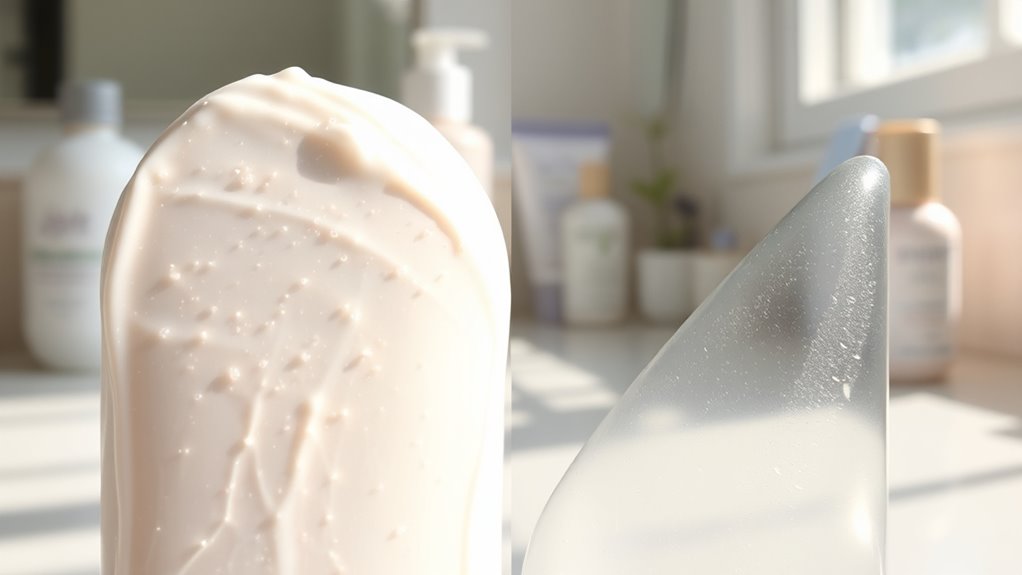
However, mineral sunscreens are often perceived as leaving a white cast on the skin, especially with higher SPF formulations, which can be a cosmetic concern. Chemical sunscreens usually go on clear and are more convenient for daily wear, especially under makeup. Still, the trade-off is that some chemical formulas may contain ingredients that are less eco-friendly and possibly irritating to sensitive skin over time. Ultimately, your decision should balance protection, skin sensitivity, environmental considerations, and personal preference. Always look for broad-spectrum options that protect against both UVA and UVB rays, regardless of the formula type. By understanding these factors—SPF ratings, environmental impact, and formulation differences—you can choose a sunscreen that best fits your needs while keeping your skin healthy and the environment safe.
Frequently Asked Questions
Which Sunscreen Type Is More Environmentally Friendly?
When choosing a sunscreen, you wonder which type is more environmentally friendly. Mineral sunscreens are generally better for reef safety because they typically use zinc oxide or titanium dioxide, which are less harmful to aquatic life. They’re also more biodegradable, breaking down more easily in the environment. Chemical sunscreens, on the other hand, often contain ingredients that can damage coral reefs and persist longer, making mineral options a smarter choice for eco-conscious sun protection.
Can Mineral Sunscreens Cause Breakouts?
Some believe mineral sunscreens can’t cause breakouts, but that’s not entirely true. While they’re less likely to cause pore clogging, mineral sunscreens can sometimes trigger acne flare-ups if they contain certain ingredients like zinc oxide or titanium dioxide that clog pores or irritate sensitive skin. You need to choose non-comedogenic formulas and test small areas first to minimize the risk of breakouts.
Are Chemical Sunscreens Safe for Sensitive Skin?
You might wonder if chemical sunscreens are safe for sensitive skin, and the truth is, they can cause skin irritation for some people. While many find chemical formulas effective and lightweight, those with sensitive skin should be cautious. Look for sunscreens labeled “for sensitive skin” or choose mineral options to minimize irritation. Always patch-test new products to verify they won’t trigger discomfort or worsen skin sensitivity.
How Do Mineral and Chemical Sunscreens Differ in SPF Longevity?
While it’s tempting to rely on appearances, you should know that mineral and chemical sunscreens differ in SPF durability and formulation stability. Mineral sunscreens tend to offer more consistent SPF over time, thanks to their stable formulation, providing steady protection. Chemical sunscreens might experience slight drops in SPF due to breakdown from sun exposure. So, if lasting protection matters, mineral options often shine brighter in maintaining SPF durability.
Do Mineral Sunscreens Protect Against Blue Light?
You might wonder if mineral sunscreen offers blue light protection. The good news is, mineral sunscreens contain zinc oxide or titanium dioxide, which reflect and scatter blue light, providing some defense. While they’re not specifically formulated for blue light protection like some chemical options, mineral sunscreens do help shield your skin from blue light exposure, making them a good choice if you’re concerned about digital device effects.
Conclusion
Ultimately, choosing between mineral and chemical sunscreen depends on your skin type and personal preferences. Both offer protection, but each has its own pros and cons. Trust your instincts and do your homework—finding the perfect fit is key to staying protected. Remember, the proof is in the pudding, so test what works best for you and stick with it. After all, the right sunscreen can be your best ally against the sun’s harsh rays.