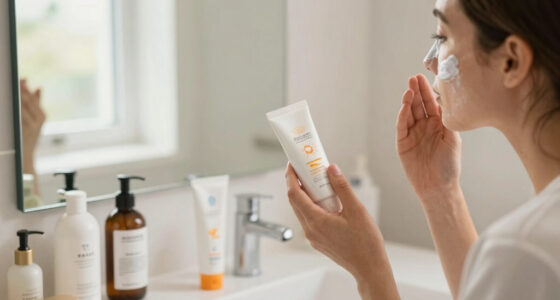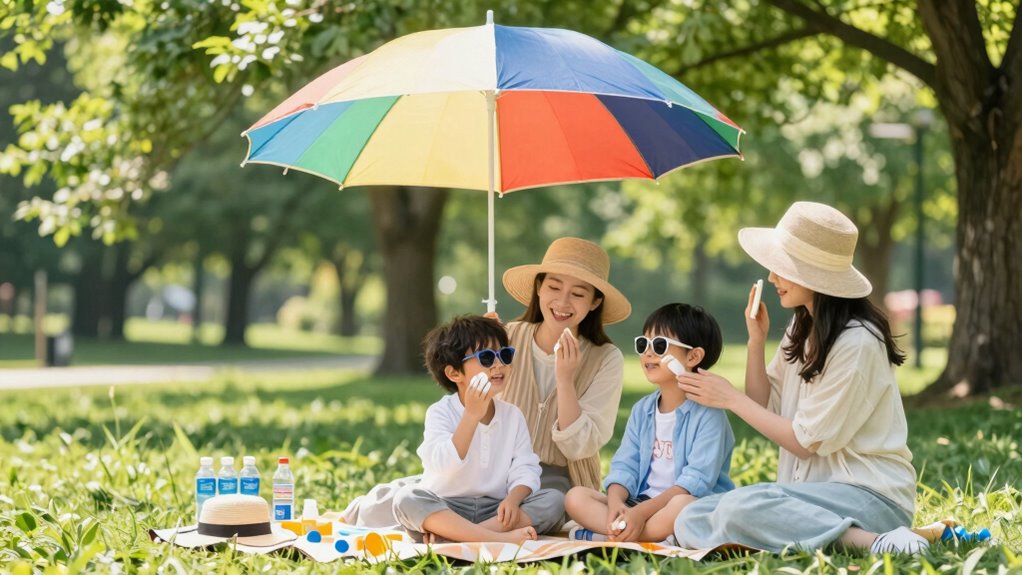

To build a better family sun protection routine, start by applying broad-spectrum sunscreen with at least SPF 30 to all exposed skin 15 minutes before going outside, and reapply every two hours. Encourage everyone to wear protective clothing, wide-brimmed hats, and UV sunglasses. Seek shade during peak hours and schedule outdoor activities early or late in the day. Make these habits consistent, lead by example, and keep sun safety supplies handy—more tips await to keep your family protected.
Listen free for 30 days with Audible
Thousands of audiobooks and originals — cancel anytime.
As an affiliate, we earn on qualifying purchases.
Key Takeaways
- Establish a daily sun safety routine that includes applying sunscreen, wearing protective clothing, and seeking shade.
- Educate children early about UV risks and proper sun protection practices through consistent family discussions.
- Keep sun protection supplies, like sunscreen and hats, accessible and ready for quick application before outdoor activities.
- Schedule outdoor activities during early morning or late afternoon to minimize UV exposure during peak hours.
- Lead by example by consistently practicing sun safety to motivate family members to adopt protective habits.
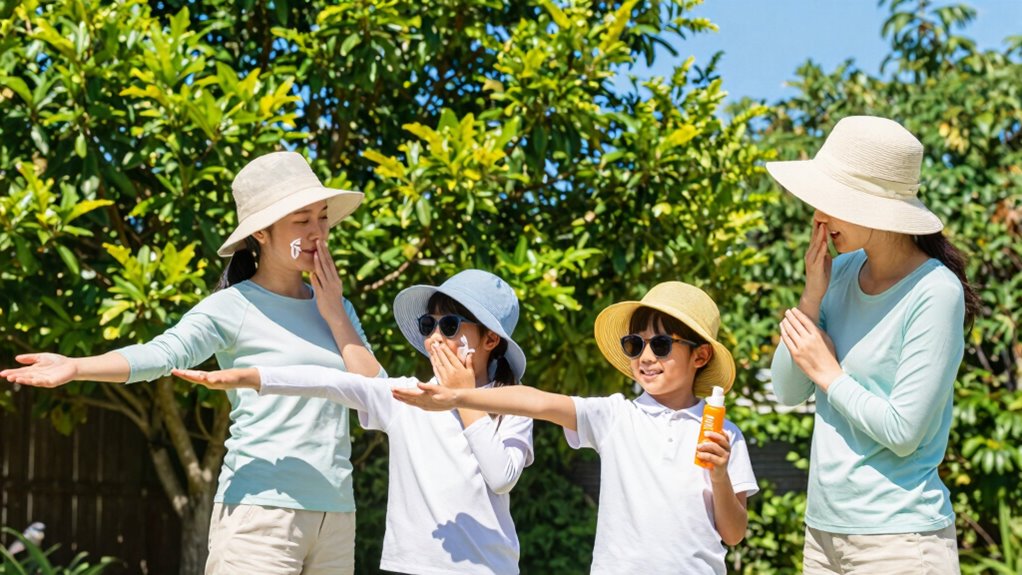
Protecting your family from the sun’s harmful rays is essential, especially as outdoor activities increase during warmer months. Building a solid sun protection routine starts with understanding the importance of UV protection and how to effectively incorporate sunscreen application into your daily habits. When you’re outside, UV rays can damage your skin in as little as 15 minutes, so it’s imperative to be proactive. Start by choosing broad-spectrum sunscreens with at least SPF 30 that protect against both UVA and UVB rays. Apply sunscreen generously to all exposed skin, including often-missed spots like your ears, the back of your neck, and the tops of your feet.
Sunscreen application isn’t a one-and-done task; it needs to be a regular part of your outdoor routine. Before heading out, make it a habit to apply sunscreen 15 minutes beforehand so it has time to set. Reapply every two hours, or sooner if your family is swimming or sweating heavily. Carry portable sunscreen bottles or sticks so reapplication becomes quick and easy, especially during longer outings. Don’t forget to apply sunscreen to children and infants, using products formulated specifically for their sensitive skin. It’s also smart to keep some handy in your bag or car for quick touch-ups throughout the day.
In addition to sunscreen, other UV protection measures are indispensable. Encourage your family to wear protective clothing, such as long-sleeved shirts, wide-brimmed hats, and UV-protective sunglasses. Seek shade whenever possible, especially during peak sunlight hours between 10 a.m. and 4 p.m. When planning outdoor activities, try to schedule them early in the morning or later in the afternoon when UV rays are less intense. Remember, even on cloudy days, UV rays can penetrate clouds and cause skin damage, so don’t skip sun protection just because it’s overcast. Understanding the contrast ratio of your protective gear and environment can also help optimize your sun safety efforts. Incorporating natural shade sources, like trees or umbrellas, can significantly reduce UV exposure during outdoor family time. Additionally, choosing clothing made with UV-protective fabric can provide an extra layer of defense against harmful rays. Being aware of the effectiveness of UV protection gear ensures you select the most suitable options for your family’s needs.
Establishing a consistent sun safety routine within your family can make a significant difference in long-term skin health. Making sun safety a family priority involves consistent habits. Teach your children the importance of sunscreen application and proper UV protection from an early age. Lead by example, demonstrating how to correctly use sunscreen and protective gear. Keep your sun protection supplies readily accessible, and incorporate these practices into your daily routine so they become second nature. By being diligent and intentional, you’ll help safeguard your family’s skin health and reduce the risk of sun-related damage, all while enjoying outdoor activities comfortably and confidently.
As an affiliate, we earn on qualifying purchases.
Frequently Asked Questions
What’s the Best Time of Day for Outdoor Activities to Avoid Sun Damage?
You should plan outdoor activities early in the morning or late in the afternoon when the sun’s rays are less intense, typically before 10 a.m. and after 4 p.m. This helps you avoid sun damage, busting common Sun protection myths. Remember, sunscreen ingredients like zinc oxide or avobenzone are most effective when applied properly. Don’t rely solely on sunscreen; seek shade and wear protective clothing for the best protection.
How Often Should Sunscreen Be Reapplied During Outdoor Play?
Sunscreen is your skin’s shield, so you should reapply every two hours during outdoor play, especially if you’re sweating or swimming. Look for sunscreens with broad-spectrum ingredients like zinc oxide or avobenzone. Keep skin hydrated by applying moisturizer underneath, and reapply sunscreen generously to maintain protection. Staying vigilant guarantees your family’s skin stays safe, like a fortress standing strong against the sun’s relentless attack.
Are There Any Natural or Homemade Sun Protection Options?
Yes, you can try natural remedies like wearing wide-brimmed hats, staying in the shade, and using homemade shields such as clothing treated with natural sunblock ingredients like zinc oxide or coconut oil. These options provide some protection, but they aren’t as reliable as commercial sunscreen. Always combine natural remedies with other sun safety practices, and remember that homemade solutions may need reapplication and aren’t fully tested for effectiveness.
How Can I Protect My Child’s Sensitive Skin Effectively?
To protect your child’s sensitive skin, skip the sun protection myths and opt for child-safe sunscreens. Apply broad-spectrum SPF 30 or higher, especially during peak hours, and reapply every two hours. Combine this with protective clothing and shade. While natural remedies sound appealing, they often lack proven effectiveness. Trust scientifically backed options to keep your child safe, avoiding harmful chemicals and ensuring proper sun defense.
What Are the Signs of Sunburn in Different Skin Types?
Sunburn symptoms vary based on skin type, but common signs include redness, pain, and warmth. For fair skin, watch for blistering or peeling, while darker skin might show subtle discoloration or a dull appearance. Skin type variations influence how easily you get burned and how visible symptoms are. If you notice any of these signs after sun exposure, take immediate steps to soothe and protect the skin.
Conclusion
By establishing a consistent and thorough sun protection routine, you’re safeguarding your family’s health for years to come. Remember, prevention is better than cure—so don’t wait until damage is done. Make applying sunscreen, wearing protective clothing, and seeking shade a daily habit. When everyone stays vigilant, you create a safe environment where fun in the sun doesn’t come with unnecessary risks. After all, a stitch in time saves nine—invest now for healthier, happier family days ahead.
Evergreen bestsellers Picks
bestsellers
As an affiliate, we earn on qualifying purchases.