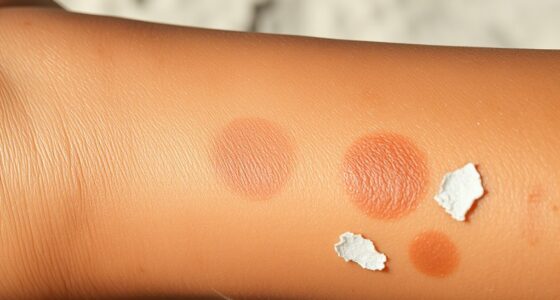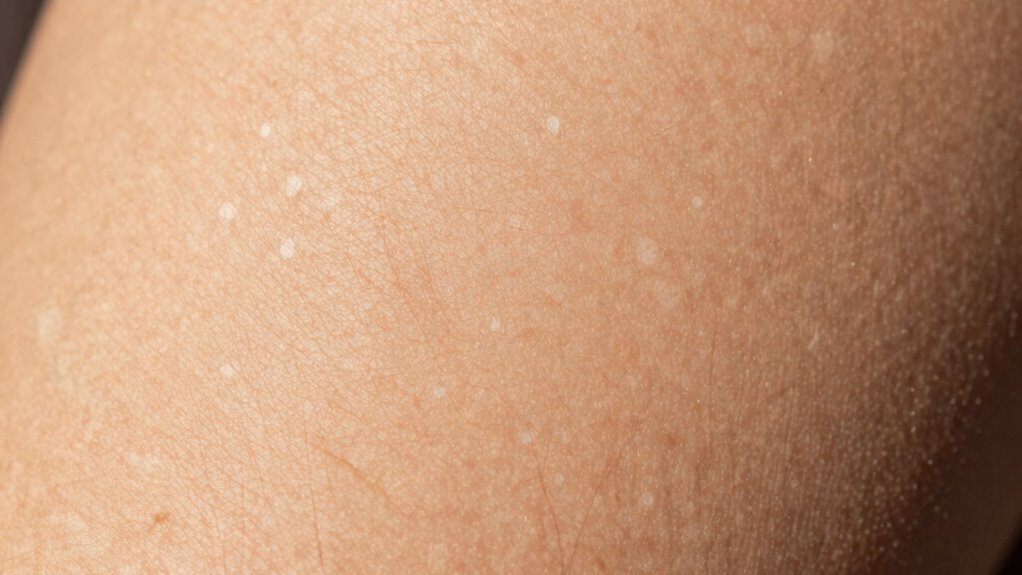

UV damage starts beneath your skin’s surface, making it hard to see right away. It gradually harms cells and breaks down collagen, lowering your skin’s elasticity. Free radicals attack your skin, but visible signs like wrinkles or dark spots take weeks to show because your body’s natural repair systems temporarily hide the damage. If you’re curious about how this damage sneaks up on you and what you can do, keep exploring this topic.
Key Takeaways
- UV damage occurs beneath the skin surface, making initial changes invisible to the naked eye.
- Free radicals generated by UV rays gradually break down collagen, causing delayed visible signs.
- Skin’s natural repair mechanisms temporarily mask early damage, delaying visible symptoms.
- Inflammation from UV exposure hampers cell regeneration, contributing to silent damage accumulation.
- Long-term damage accumulates silently over years before visible signs like wrinkles appear.
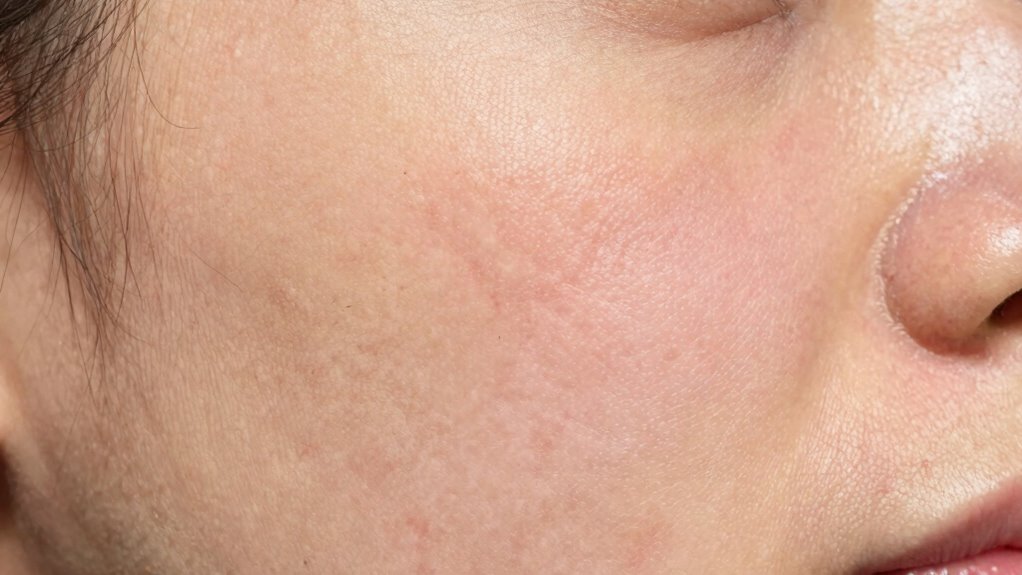
Have you ever noticed that your skin shows signs of sun damage only after days or even weeks? It’s frustrating because you might not see immediate effects, but the damage is happening beneath the surface. When UV rays hit your skin, they start a process that leads to skin cell deterioration. This isn’t an instant change; instead, it unfolds gradually over time. The microscopic cells that make up your skin sustain damage that’s invisible to the naked eye at first. As these cells weaken, they become less effective at repairing themselves, which sets the stage for longer-term issues.
One of the most significant effects of UV exposure is collagen breakdown. Collagen is the protein that keeps your skin firm, plump, and youthful. When UV rays penetrate your skin, they generate free radicals—unstable molecules that attack healthy cells. These free radicals accelerate collagen breakdown, which means your skin loses its elasticity and begins to sag. But right after sun exposure, you might not notice any change because collagen loss takes time to manifest visibly. Instead, your skin is quietly deteriorating beneath the surface, setting up the potential for wrinkles, fine lines, and sagging later on.
The reason UV damage remains invisible initially is that the processes involved—like skin cell deterioration and collagen breakdown—are subtle at first. Your skin’s natural repair mechanisms kick in immediately after exposure, temporarily masking the damage. It’s only when the damage exceeds your skin’s ability to repair itself that visible signs begin to show. This delayed appearance explains why you often see wrinkles or dark spots only weeks after spending too much time in the sun without protection. Additionally, the cell damage caused by UV rays can accumulate over years, making early signs harder to detect but equally damaging. The cumulative nature of UV damage underscores the importance of proactive sun protection practices.
Moreover, UV rays cause inflammation that further damages skin cells and hampers their ability to regenerate. This ongoing inflammation exacerbates skin cell deterioration, which can lead to further decline in skin health if not managed properly. Since these changes happen gradually, you might assume your skin is fine during or right after sun exposure, only to find that in the coming weeks, your complexion looks dull, uneven, or aged. The cumulative effect of repeated UV exposure accelerates the breakdown of collagen and skin cell deterioration, making early damage hard to detect but very real. Studies also show that UV exposure can weaken the skin’s natural barrier, making it more susceptible to environmental damage and irritation. Furthermore, the long-term effects of UV radiation can include premature aging and an increased risk of skin cancer.
In essence, UV damage is a silent process. It quietly undermines your skin’s structure and vitality long before any visible clues appear. That’s why protecting your skin daily with sunscreen and avoiding prolonged sun exposure is essential—because once the damage shows up, it’s often too late to reverse the effects entirely. Recognizing these subtle changes emphasizes the importance of preventive measures, such as wearing protective clothing or seeking shade during peak hours.

Neutrogena Ultra Sheer Dry-Touch Sunscreen Lotion SPF 70, Broad Spectrum, Water Resistant 80 Min, Oil-Free, Oxybenzone-Free, Non-Comedogenic, Matte Finish, Body Sunscreen, Travel Size 3 Fl Oz
SPF 70 broad spectrum sunscreen lotion delivers high UVA/UVB protection for daily use; water resistant for up to…
As an affiliate, we earn on qualifying purchases.
As an affiliate, we earn on qualifying purchases.
Frequently Asked Questions
Can UV Damage Affect Internal Skin Layers Without Visible Signs?
Yes, UV damage can affect your internal skin layers without visible signs. You might not see immediate changes, but hidden effects are happening beneath the surface. UV rays cause cellular damage that can weaken skin’s structure over time, even if your skin looks fine now. This invisible damage can lead to long-term problems like premature aging and increased cancer risk. Protect your skin daily to prevent these hidden effects.
How Long Does It Typically Take for UV Damage to Become Visible?
Think of ultraviolet effects as seeds planted beneath the surface, quietly growing before breaking through the soil. Usually, it takes about 10 to 20 years for hidden damage from UV rays to become visible, revealing sunspots or wrinkles. During this time, the damage remains concealed, like a silent warning. Your skin’s internal layers suffer silently, emphasizing that UV damage often shows its true face only after years of unnoticed harm.
Are Certain Skin Types More Prone to Invisible UV Damage?
Yes, certain skin types are more prone to invisible UV damage. If you have sensitive skin or lower UV resilience, you’re at a higher risk of damage that doesn’t show right away. Your skin’s natural defenses influence how quickly damage occurs and becomes visible. To protect yourself, use broad-spectrum sunscreen, seek shade, and wear protective clothing, especially if you notice your skin is easily irritated or burns easily.
Does UV Damage Impact All Skin Areas Equally?
UV damage doesn’t impact all skin areas equally. You might notice more visible damage on areas with less skin resilience, like your face or hands, where UV penetration is deeper. Thinner or more exposed skin absorbs UV rays more readily, while thicker or protected areas resist damage better. So, your skin’s resilience varies, making some parts more vulnerable to UV damage, even if it’s not immediately obvious.
Can UV Damage Be Reversed Before It Becomes Visible?
Yes, UV damage can be reversed if caught early. By practicing sun protection and avoiding further exposure, you give your skin a chance to repair itself. Skin regeneration processes help restore some of the damage before it becomes visible or permanent. Consistent use of sunscreen, moisturizing, and staying out of the sun allow your skin’s natural healing to work, minimizing long-term effects and keeping your skin healthier over time.

L’Oreal Paris Collagen Daily Face Moisturizer, Anti Aging Face Cream to Reduce Wrinkles and Provide Intense Hydration, 1.7 oz
Day and night face and chest cream: provides skin with a daily dose of intense hydration that helps…
As an affiliate, we earn on qualifying purchases.
As an affiliate, we earn on qualifying purchases.
Conclusion
So, next time you bask in the sun, remember that UV damage is sneaky—it hides in plain sight, quietly wreaking havoc. You might feel fine now, but your skin’s future self is quietly paying the price. Ironically, the very rays that promise a sunny day can leave you with invisible scars, proof that sometimes, the biggest threats are the ones you can’t see coming. Protect yourself today—your future skin will thank you.

Sun Shawl UV Sun Protection UPF 50+ Beach Travel Scarf Wrap Summer Swimsuit Cover Up Cooling Blanket
MULTIPLE USE:Our scarf can be uesd as a pashmina shawl, dressy scarf, beach wrap, blanket, swimsuit cover-ups, swim…
As an affiliate, we earn on qualifying purchases.
As an affiliate, we earn on qualifying purchases.

ALASTIN Skincare C-RADICAL Defense Face Serum (1 oz) | Hydrating Vitamin C Skin Serum | Fights Free Radicals | Anti-Aging Formula Reduces Fine Lines, Wrinkles
A potent Vitamin C face serum that helps protect against environmental stressors while helping to conserve elastin.
As an affiliate, we earn on qualifying purchases.
As an affiliate, we earn on qualifying purchases.