You can spot early sun damage by noticing uneven skin discoloration, like dark or light patches on your face, shoulders, or arms. Small, irregular spots or blotchy patches are key warning signs that UV rays are affecting your skin. If you see these changes, it’s important to protect your skin better and start taking preventive steps. By understanding these signs, you’ll be equipped with the info to act quickly and prevent more serious damage down the line.

Get beauty and skincare favorites delivered free with Prime
- Fast, free delivery on millions of items
- Prime Video, Amazon Music and more included
- Member-only deals all year
Key Takeaways
- Look for skin discoloration such as darker or lighter patches on sun-exposed areas.
- Notice irregular spots or blotches that differ from your natural skin tone.
- Recognize uneven pigmentation or patches of hyperpigmentation indicating UV damage.
- Be alert to subtle changes in skin tone that worsen with continued sun exposure.
- Respond promptly by protecting your skin, using sunscreen, and consulting a dermatologist if needed.
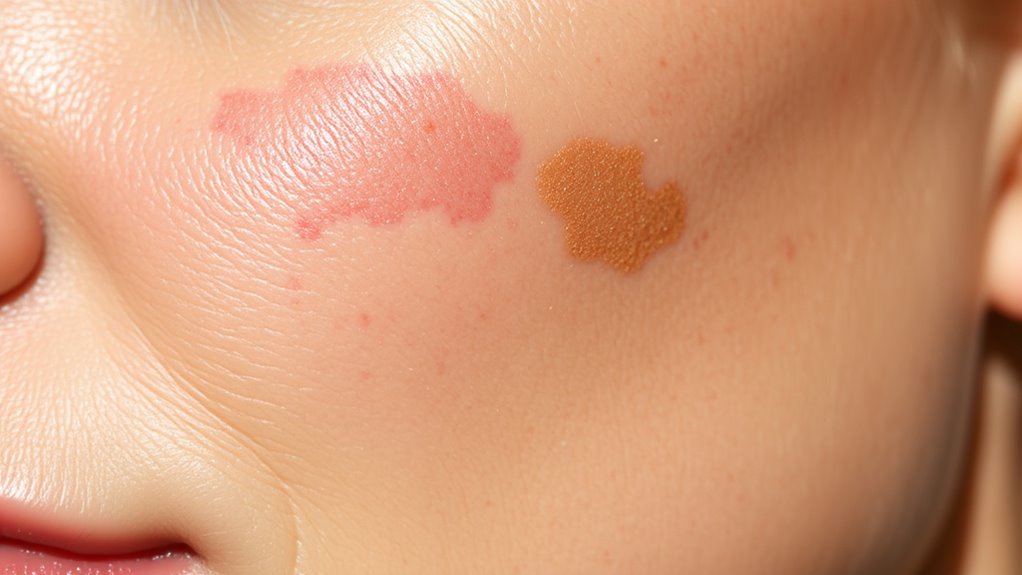
Your skin often shows early signs of sun damage before more obvious issues like wrinkles or age spots appear. One of the first indicators is skin discoloration, which manifests as patches of darker or lighter areas that don’t match your natural skin tone. You might notice irregular spots or blotches that stand out, especially on areas frequently exposed to the sun like your face, shoulders, or arms. These changes are often subtle at first but serve as a warning that your skin has been affected by UV rays. Uneven pigmentation, in particular, becomes more apparent when your skin’s tone isn’t uniform. You could see areas that look slightly darker or lighter than the surrounding skin, and these variations tend to become more pronounced over time if sun exposure continues without protection. Both discoloration and uneven pigmentation are early signs that your skin’s natural barrier has been compromised, indicating underlying damage from UV exposure.
Recognizing these early signs is vital because they signal underlying damage that could worsen if ignored. Skin discoloration and uneven pigmentation aren’t just cosmetic concerns—they indicate that your skin’s natural barrier has been compromised. UV rays stimulate melanin production unevenly, leading to patches of hyperpigmentation or hypopigmentation. These changes can be caused by frequent sun exposure, tanning, or not wearing enough sun protection. When you notice these irregularities, it’s a clear sign that your skin’s health is at risk, and immediate action can prevent more serious damage later on.
broad-spectrum sunscreen for face
As an affiliate, we earn on qualifying purchases.
As an affiliate, we earn on qualifying purchases.
Frequently Asked Questions
Can Sun Damage Occur on Cloudy Days?
Yes, sun damage can happen on cloudy days. Cloud cover doesn’t block all UV rays, so your skin still faces exposure. That’s why you need to prioritize skin protection every day, even when it’s overcast. Use broad-spectrum sunscreen, wear protective clothing, and seek shade when possible. Remember, UV rays can penetrate clouds, so staying vigilant helps prevent early signs of sun damage and keeps your skin healthy.
How Quickly Can Sun Damage Appear After Sun Exposure?
Sun damage can strike like lightning, with UV penetration and your skin’s response happening in just minutes. You might notice redness or warmth within 15-30 minutes after exposure, while more subtle damage, like fine lines or age spots, takes years to develop. Your skin responds quickly to UV rays, so it’s essential to protect it right away. Don’t wait for symptoms—shield your skin to prevent long-term harm.
Are All Skin Types Equally Susceptible to Sun Damage?
Not all skin types are equally susceptible to sun damage. Your skin type vulnerability depends on pigment variation; those with lighter skin have less melanin, making them more prone to damage, while darker skin offers some protection. However, everyone should take precautions, as all skin types can be harmed by UV rays. Recognizing your skin’s vulnerability helps you respond effectively, like applying sunscreen and avoiding peak sun hours.
What Are the Long-Term Health Risks of Unrecognized Sun Damage?
If you ignore unrecognized sun damage, you increase your long-term health risks, including skin cancer and premature aging. Without proper attention, UV exposure can cause DNA damage, raising your skin cancer risk over time. You might also notice early signs like wrinkles and age spots, which lead to premature aging. Protect your skin now by using sunscreen, avoiding peak sun hours, and seeing a dermatologist if you notice suspicious changes.
Can Sun Damage Be Reversed or Healed Naturally?
Think of your skin as a delicate canvas, and sun damage as faded paint. While natural healing can improve minor damage over time, it’s limited, like a watercolor fading. Incorporate Vitamin C-rich foods and topical treatments to support repair, but don’t rely solely on natural healing. Protect your skin from further harm with sunscreen, and consult a dermatologist for advanced care. Remember, prevention is your best defense.
Conclusion
By paying close attention to subtle changes in your skin, you can catch the gentle whispers of sun damage before they become more evident. Recognizing these early signs allows you to nurture your skin’s resilience and prevent further harm. Remember, a mindful approach and consistent care serve as a quiet shield, helping your skin maintain its natural glow and health. Embrace these gentle signals, and give your skin the kindness it deserves, today and always.
Fall Picks
fall essentials
As an affiliate, we earn on qualifying purchases.