
Tanning accelerates skin aging by damaging the collagen and elastin fibers that keep your skin firm and elastic. UV rays cause oxidative stress and break down these structural proteins, leading to fine lines, wrinkles, and sagging over time. While melanin offers some protection, it can’t fully prevent damage, especially as your skin’s ability to produce melanin wanes with age. Keep exploring to discover simple ways to protect your skin and maintain a youthful appearance.
Key Takeaways
- Tanning accelerates skin aging by damaging collagen and elastin fibers, leading to wrinkles and loss of skin firmness.
- UV exposure induces oxidative stress and DNA damage, promoting premature skin aging and fine lines.
- Melanin production increases with tanning, but it cannot fully prevent UV-induced collagen breakdown.
- Artificial or natural tanning exposes skin to concentrated UV rays, speeding up the formation of wrinkles.
- Consistent sun protection habits help preserve skin’s structural integrity and delay wrinkle development.
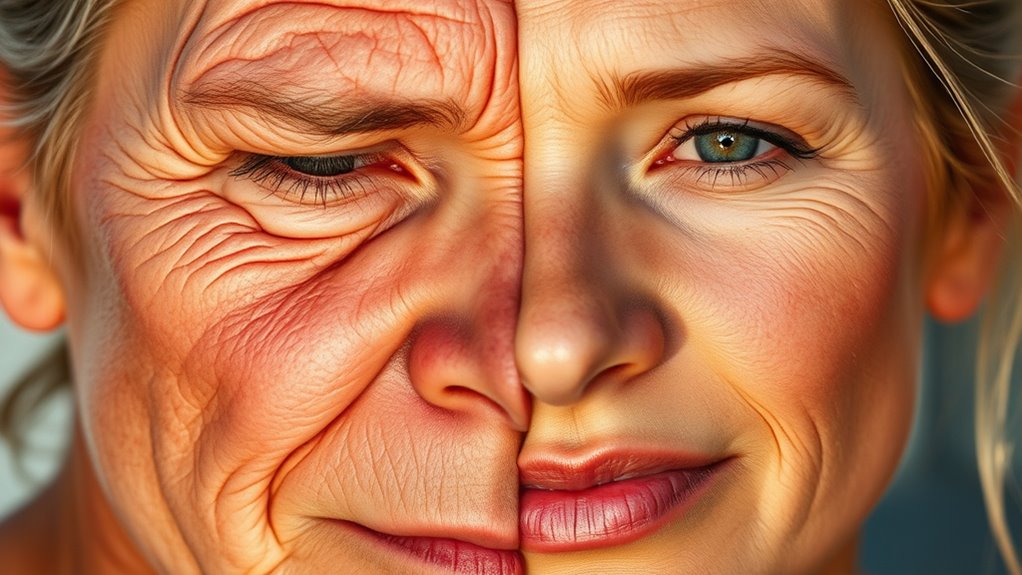
Sun exposure is a leading cause of premature wrinkles, as ultraviolet (UV) rays damage the collagen and elastin fibers in your skin. These fibers are responsible for keeping your skin firm and elastic, but when exposed to UV radiation, they break down more quickly. Over time, this loss of structural support leads to fine lines and deeper creases, making you look older than you are. The more frequently you’re in the sun without protection, the faster this damage accumulates. That’s why wearing sunscreen daily is one of the most effective ways to delay the formation of wrinkles and maintain a youthful complexion.
Sun exposure damages collagen and elastin, accelerating wrinkles and aging. Protect your skin daily with sunscreen.
UV damage doesn’t just affect the surface of your skin; it triggers a cascade of cellular responses that accelerate aging. When UV rays penetrate your skin, they induce oxidative stress, which harms the DNA in your skin cells. To protect itself, your skin ramps up melanin production, leading to tanning as a natural defense mechanism. Melanin acts as a shield, absorbing UV radiation and reducing further damage, but this process isn’t entirely foolproof. Excessive UV exposure overwhelms your skin’s defenses, resulting in more damage than protection. Over time, this constant cycle of damage and repair weakens your skin’s structural integrity, contributing heavily to wrinkles.
While melanin production offers some protection, it’s not enough to completely prevent the aging effects of the sun. As you age, your skin’s ability to produce melanin diminishes, making it more vulnerable to UV damage. This is why older skin tends to develop wrinkles and age spots more readily. Additionally, irregular melanin production can cause uneven pigmentation, further emphasizing the signs of aging. If you tan frequently or spend extended periods in the sun without protection, you’re not just risking pigmentation issues—you’re actively accelerating wrinkle formation. Using broad-spectrum sunscreen consistently can significantly help protect your skin’s vital structures from UV-induced damage.
To minimize these effects, it’s essential to adopt sun-safe habits. Seek shade during peak sunlight hours, wear broad-spectrum sunscreen with at least SPF 30, and don protective clothing and sunglasses. Avoid tanning beds, which emit concentrated UV rays, and be aware that tanning, whether natural or artificial, damages your skin in the same way. Remember, the goal isn’t to avoid sunlight altogether, but to manage your exposure wisely. Taking these steps helps preserve your skin’s collagen and elastin, reducing the rate at which wrinkles develop. In the end, protecting your skin from UV damage is one of the most effective ways to maintain a youthful appearance and keep your skin healthy for years to come.
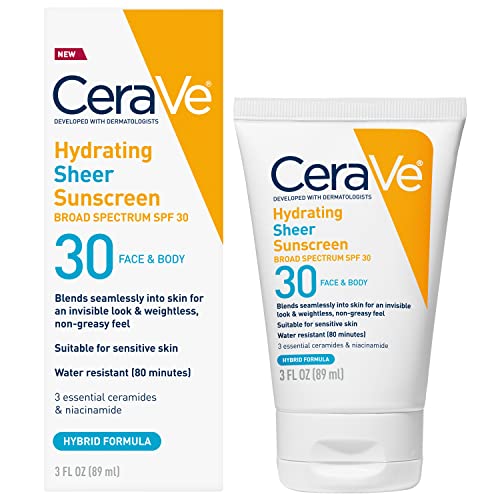
CeraVe Hydrating Sheer Sunscreen with SPF 30 for Face and Body, Mineral & Chemical Sunscreen for Men & Women with Zinc Oxide, Hyaluronic Acid and Ceramides, Paraben-Free + Fragrance-Free, 3 Ounces
[ FACE SUNSCREEN & BODY SUNSCREEN WITH SPF 30 ] CeraVe sunblock helps protect your skin against harmful…
As an affiliate, we earn on qualifying purchases.
As an affiliate, we earn on qualifying purchases.
Frequently Asked Questions
Does Indoor Tanning Also Cause Skin Aging?
Indoor tanning also causes skin aging. When you use tanning beds, UV rays damage your skin’s collagen and elastin fibers, leading to collagen breakdown and reduced skin elasticity. This accelerates the development of wrinkles and fine lines. Even if it’s indoors, the UV exposure still harms your skin just like natural sun exposure. Protect your skin by avoiding indoor tanning to maintain a youthful, healthy appearance.
How Quickly Does Skin Show Signs of Sun Damage?
Oh, the speed at which your skin shows sun damage? It’s faster than you’d think! UV exposure can start affecting your skin’s elasticity in just a few days of intense sunbathing. Fine lines, sagging, and wrinkles might be hiding just around the corner, waiting to appear. So, if you want to keep that youthful glow, protect your skin now—because damage doesn’t wait, and neither should you!
Can Sunscreen Completely Prevent Wrinkles?
Sunscreen can’t completely prevent wrinkles, but it substantially reduces UV exposure that damages skin elasticity. When you wear broad-spectrum sunscreen daily, you protect your skin from harmful rays that cause premature aging. Remember, no product offers 100% protection, so combining sunscreen with other sun-smart habits helps maintain your skin’s youthful appearance longer. Consistent use is key to minimizing wrinkles caused by sun-related skin damage.
Do Genetic Factors Influence Sun-Related Skin Aging?
You might think genetics don’t matter, but your genetic predisposition plays a big role in skin aging. Even if you protect your skin from the sun, your genes influence how your skin ages over time. Some people naturally develop wrinkles faster, regardless of sun exposure. So, while sun protection helps, understanding your genetic predisposition helps you better manage skin aging, making proactive skincare even more essential.
Are There Age-Specific Recommendations for Sun Protection?
You should follow age-specific skincare and sunscreen guidelines to protect your skin effectively. As you age, your skin becomes more delicate, so it’s important to adjust your sun protection routine accordingly. Young adults need broad-spectrum SPF daily, while older adults should prioritize higher SPF and additional protective measures like hats and sunglasses. By tailoring your sun protection to your age, you reduce wrinkle formation and skin damage.

Skin Care Set,6 Pcs Anti-aging Skincare w/Korean Retinol,Hydrate, Moisturize Self Care Facial Skin Care Routine Kit Women Teen Girls Travel Skincare Gift Set,Valentines Birthday Gift for Women Her Mom
Complete Skin Care Sets for Women: Our 6 in 1 comprehensive anti-aging skincare set includes Hydrating Mask, Cleanser,Toner…
As an affiliate, we earn on qualifying purchases.
As an affiliate, we earn on qualifying purchases.
Conclusion
So, whenever you step into the sun, remember you’re playing a quiet game of time. Every tan you chase isn’t just a fleeting glow but a step closer to wrinkles and aging. Protect your skin now, and you’re choosing to write a different story—one where your future self looks back with a radiant, youthful glow, not regrets. Don’t let the sun be the author of your skin’s story; instead, be the writer of your own timeless beauty.

IUGA Rash Guard for Women UPF 50+ SPF UV Protection Long Sleeve Workout Tops with Pockets Dry Fit Hiking Swim Shirt
UPF 50+ for Sun Protection: Want to enjoy the outdoors without being damaged by UV rays? Putting on…
As an affiliate, we earn on qualifying purchases.
As an affiliate, we earn on qualifying purchases.

DUSHINE Polarized Sunglasses for Women Classic Retro Style UV400 Protection
HD Polarized Lens – Offering UV 400 Protection.Restore true color,eliminate reflected light and scattered light,cut glare and protect…
As an affiliate, we earn on qualifying purchases.
As an affiliate, we earn on qualifying purchases.