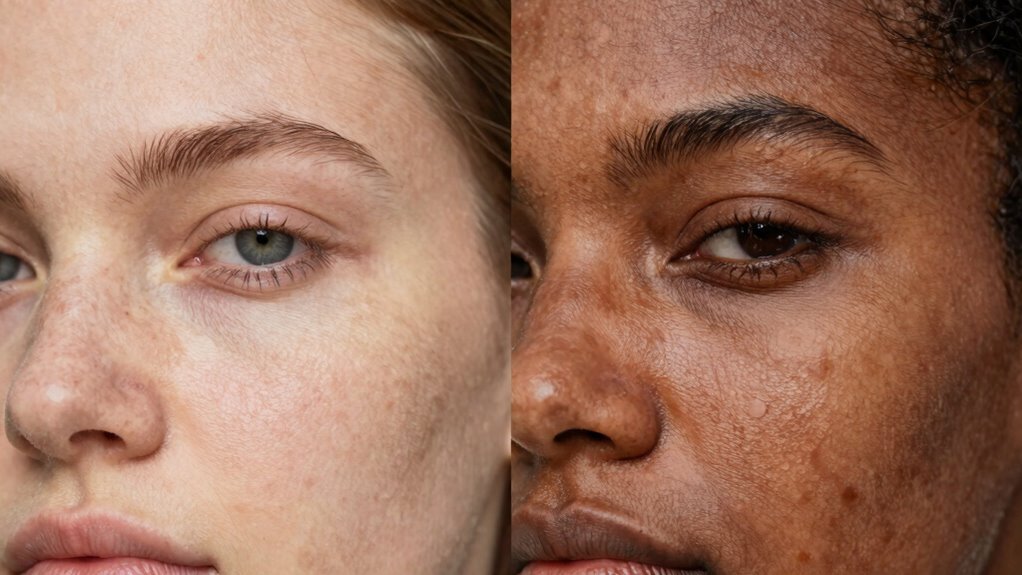

Your skin tone influences how UV damage shows up and how noticeable it is over time. With darker skin, you might not see sunburns or redness right away, but you can develop dark patches, uneven skin tone, and persistent hyperpigmentation. Lighter skin typically shows immediate signs like burns, redness, and early wrinkles. Even if damage isn’t obvious early on, understanding these differences helps you protect your skin better; explore more to discover how to tailor your skincare routine.

Get beauty and skincare favorites delivered free with Prime
- Fast, free delivery on millions of items
- Prime Video, Amazon Music and more included
- Member-only deals all year
Key Takeaways
- Darker skin tones often show fewer immediate UV damage signs but may develop hyperpigmentation and uneven skin tone over time.
- Lighter skin exhibits more visible UV damage symptoms like sunburn, redness, and early wrinkles.
- Melanin provides some natural UV protection in darker skin, reducing the speed of visible damage.
- UV damage in lighter skin appears quickly, increasing risk of sunburn, age spots, and skin cancers.
- Both skin types can suffer long-term damage; protection strategies should be tailored accordingly.
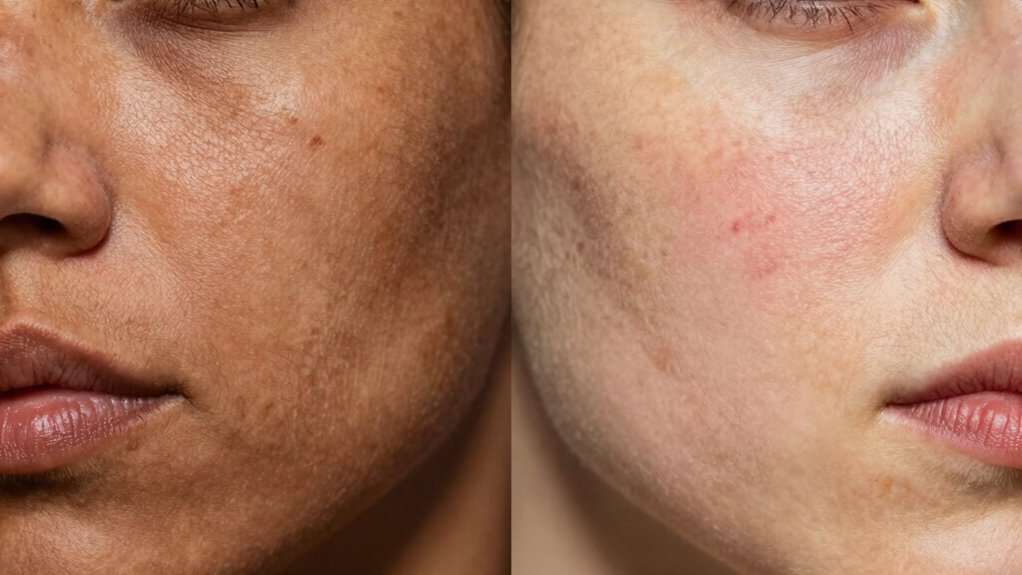
Your skin’s tone plays a significant role in how UV damage appears and is perceived. The amount of melanin in your skin, which determines your skin pigmentation, influences how your skin reacts to sun exposure and how damage manifests over time. Melanin acts as a natural sunscreen, absorbing harmful ultraviolet rays and protecting your skin’s deeper layers. People with higher levels of melanin typically have darker skin tones, which means their skin pigmentation provides some inherent defense against UV rays. Conversely, those with lighter skin have less melanin, making them more vulnerable to UV damage and its visible signs.
Your skin’s pigment influences UV damage visibility and protection, but consistent sun safety is essential for everyone.
In individuals with darker skin tones, UV damage often appears less obvious initially. You might notice that pigmentation irregularities, like dark patches or uneven tone, become more prominent over time. These changes happen because UV exposure can trigger an overproduction of melanin, leading to hyperpigmentation. While these dark spots are less immediately visible than sunburn or peeling, they can be persistent and challenging to treat. Your skin’s pigmentation acts as a barrier to some extent, but it doesn’t make you immune to damage like premature aging, fine lines, or even skin cancers. Overexposure can still cause long-term harm, even if your skin tone masks some of the more obvious signs. Additionally, understanding how natural protection varies with skin tone allows for more tailored sun safety practices. Recognizing the role of melanin in defending against UV rays can help you better understand your skin’s specific needs and vulnerabilities. Moreover, knowing how different skin types respond to UV exposure can assist in personalized skincare strategies that enhance overall skin health.
For those with lighter skin, the signs of UV damage tend to be more immediately visible. You’re more likely to notice sunburns, redness, and peeling after intense sun exposure. The lower melanin levels mean your skin doesn’t have as much natural protection, so UV rays penetrate more deeply and cause visible damage faster. This heightened sensitivity makes it essential for you to be diligent with sun protection measures, like applying broad-spectrum sunscreen, wearing protective clothing, and seeking shade during peak hours. Over time, repeated sun damage can result in early wrinkles, age spots, and an increased risk of skin cancer, which tend to be more apparent on lighter skin.
Furthermore, understanding how melanin production influences UV damage can help you develop more effective sun safety routines. Regardless of your skin tone, understanding how your melanin levels and skin pigmentation influence UV damage helps you take better precautions. Recognizing that darker skin doesn’t mean immunity encourages you to stay vigilant, while knowing that lighter skin shows damage more visibly reminds you to prioritize sun safety. Your skin’s response to UV exposure is deeply linked to your natural pigmentation, but the importance of consistent protection remains universal. Protecting your skin today keeps it healthier and more youthful tomorrow, no matter your skin tone. Being aware of your skin’s unique characteristics and vulnerabilities can help you better understand UV damage and tailor your sun protection strategies accordingly.
broad spectrum sunscreen for dark skin
As an affiliate, we earn on qualifying purchases.
As an affiliate, we earn on qualifying purchases.
Frequently Asked Questions
Does Skin Tone Affect the Effectiveness of SPF Products?
Yes, your skin tone can affect how effective SPF products are. While SPF offers protection, limitations exist, especially for darker skin tones, which are less prone to visible skin discoloration but still vulnerable to UV damage. You might not see signs of damage as quickly, but SPF still shields against harmful rays. Remember, no SPF is perfect, so reapplying regularly and using broad-spectrum protection is essential for all skin tones.
How Quickly Does UV Damage Appear on Different Skin Tones?
You’ll notice UV damage appears more slowly on darker skin tones because of melanin protection, which helps shield against UV rays. However, skin damage visibility tends to be less obvious initially, so it’s easy to overlook. Lighter skin shows damage quickly through visible signs like redness or peeling. Regardless of skin tone, consistent sun protection is essential, because UV rays can cause long-term harm even if signs aren’t immediately visible.
Are Darker Skin Tones More Resilient to Aging Signs From UV Exposure?
Think of your skin as a fortress, with melanin as its shield. Darker skin tones generally have more melanin, providing better protection against UV rays, which translates to increased aging resilience. While this doesn’t mean they’re immune, they often show fewer signs of aging like wrinkles or age spots. So, yes, darker skin tones tend to be more resilient to UV-induced aging signs, but sun protection remains essential for everyone.
Can UV Damage Be Completely Reversed in All Skin Tones?
UV damage can’t be completely reversed in all skin tones. Your skin tone influences how visible the damage appears, but regardless of color, UV exposure causes lasting changes. While treatments can improve skin’s appearance and promote healing, full UV reversal isn’t always possible. Protecting your skin now is key, as early intervention helps minimize future damage, even if some signs remain.
What Are the Long-Term Risks of UV Exposure for Various Skin Colors?
Long-term risks of UV exposure vary with skin color. You might experience more visible signs like sunspots and pigmentation differences if your skin has less melanin protection, which offers natural defense. Darker skin tones generally have higher melanin levels, reducing risks like skin cancer but still risking hyperpigmentation and premature aging. No matter your skin color, consistent sun protection is essential to minimize long-term damage and health risks.
Conclusion
Remember, your skin is like a canvas, revealing the stories of your sun adventures in different shades. Light skin may showcase freckles and burns, while darker tones often hide damage beneath the surface. No matter your hue, protecting your skin with sunscreen and sun-smart habits is the brushstroke that preserves your natural beauty. So, shield your skin today—because every shade deserves to shine bright and age gracefully under the sun’s watchful eye.
Halloween Picks
halloween
As an affiliate, we earn on qualifying purchases.