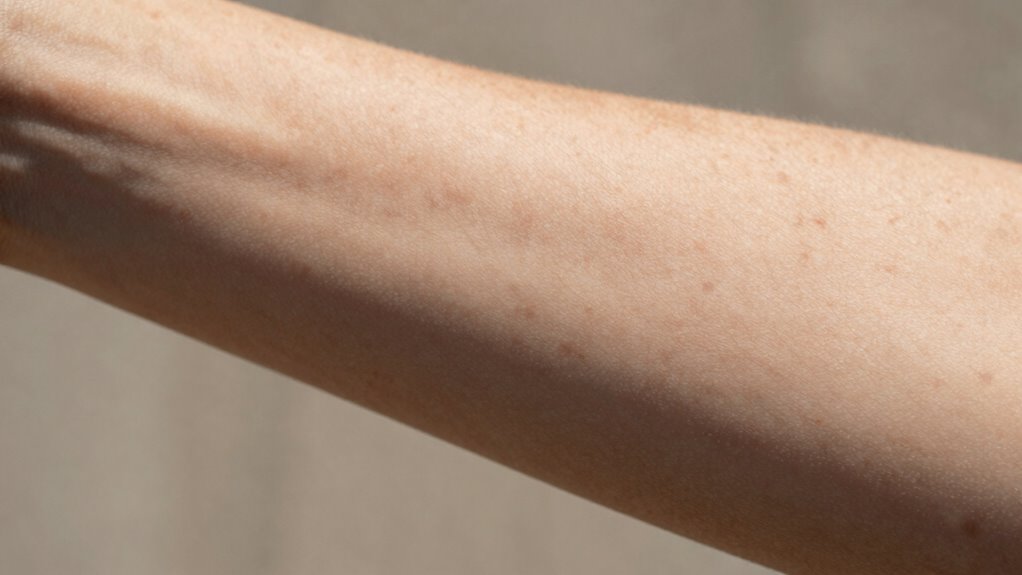

Even if you don’t get a sunburn, UV rays can still harm your skin. UV exposure penetrates deep, damaging collagen and elastin, which causes premature aging like fine lines and wrinkles. It also increases melanin production, leading to uneven skin tone, hyperpigmentation, and age spots. Over time, this damage can weaken your skin’s repair process and increase the risk of skin cancer. To protect yourself, understanding these effects is key to maintaining healthier skin in the long run.

Get beauty and skincare favorites delivered free with Prime
- Fast, free delivery on millions of items
- Prime Video, Amazon Music and more included
- Member-only deals all year
Key Takeaways
- UV rays penetrate deep into the skin, causing damage without visible sunburn.
- Cumulative UV exposure leads to premature aging, such as wrinkles and sagging.
- Free radicals generated by UV damage break down collagen and elastin proteins.
- Skin continuously repairs UV damage, but long-term exposure can overwhelm this process.
- Even without a burn, UV exposure increases risks of hyperpigmentation and skin cancer.
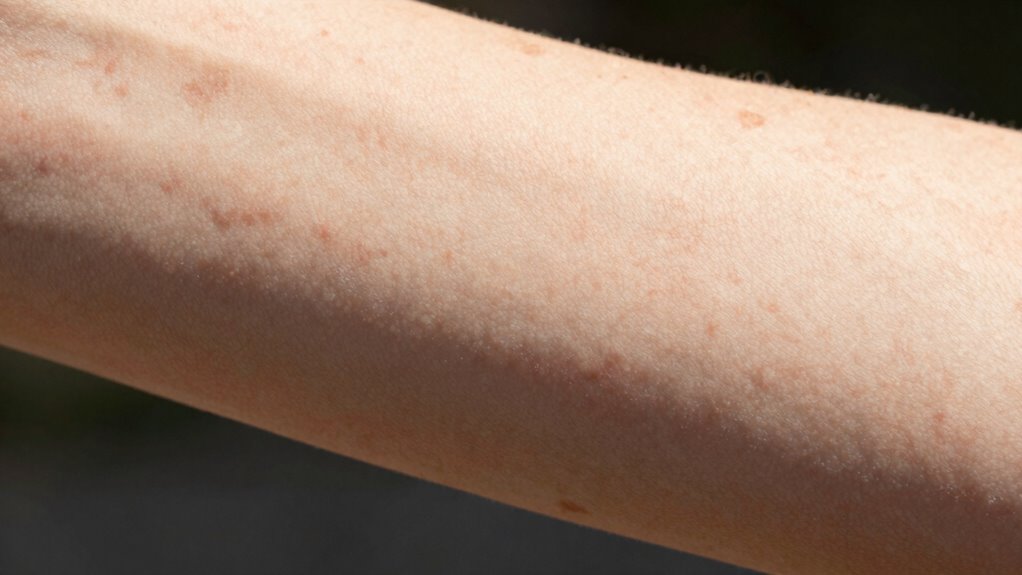
While you might think that only a painful sunburn indicates dangerous UV exposure, your skin can suffer subtle damage even without burning. UV rays penetrate your skin deep below the surface, triggering processes that contribute to premature aging and long-term damage. One of the primary effects is accelerated skin aging, which manifests as fine lines, wrinkles, and loss of elasticity. These changes happen gradually, often without your immediate awareness, but they’re the result of cumulative UV exposure over time. When UV rays hit your skin, they generate free radicals, unstable molecules that damage collagen and elastin fibers—key proteins responsible for your skin’s firmness and smoothness. Without intervention, these proteins break down faster, leading to sagging skin and wrinkles that develop long before visible signs of aging become obvious.
In addition to skin aging, UV exposure influences melanin production, your skin’s natural defense mechanism. Melanin is the pigment responsible for your skin color, and it acts as a sort of internal sunscreen by absorbing UV radiation. When your skin detects UV rays, it ramps up melanin production, resulting in a tan. While a tan might seem like a sign of healthy skin, it’s actually a response to damage. Increased melanin production is your body’s way of protecting deeper layers from further UV harm, but it also indicates that your skin has been exposed to harmful rays. Over time, repeated UV exposure causes uneven melanin distribution, leading to hyperpigmentation, age spots, and uneven skin tone. This uneven pigmentation not only affects your appearance but also signals ongoing skin stress.
Even without burning, your skin is constantly working to repair UV-induced damage. This process involves increased cell turnover and repair of DNA damage, which, when overwhelmed, can lead to mutations and skin cancer. The subtle, cumulative effects of UV exposure may not be immediately apparent, but they set the stage for long-term skin issues. Protecting your skin from UV rays—by wearing broad-spectrum sunscreen, seeking shade, and wearing protective clothing—helps slow down these damaging processes. Recognizing that skin aging and changes in melanin production are signs of ongoing UV damage encourages you to adopt daily sun safety habits. These precautions not only preserve your skin’s youthful appearance but also considerably reduce your risk of serious skin conditions later in life.
broad spectrum sunscreen for face
As an affiliate, we earn on qualifying purchases.
As an affiliate, we earn on qualifying purchases.
Frequently Asked Questions
Can UV Exposure Cause Skin Aging Without a Burn?
Yes, UV exposure can cause skin aging without a burn. UV penetration damages your skin’s collagen and elastin, leading to wrinkles, fine lines, and sagging over time. Even if you don’t get a burn, your skin’s resilience diminishes with repeated exposure, accelerating the aging process. Protect your skin daily with sunscreen and protective clothing to minimize damage and maintain your skin’s youthful appearance.
How Does UV Exposure Impact Skin Pigmentation Long-Term?
UV exposure causes long-term pigmentation changes by increasing melanin production, which results in darker spots or uneven skin tone. In fact, studies show that over time, continuous UV exposure can lead to permanent hyperpigmentation, making your skin look aged and uneven. You might notice that your skin becomes more pigmented in areas exposed often, emphasizing the importance of sun protection. Managing UV exposure helps prevent these lasting pigmentation issues.
Are There Hidden Signs of UV Damage Besides Burns?
Yes, there are hidden signs of UV damage besides burns. You might notice hidden sunspots or age spots appearing over time, even if your skin looks fine initially. Invisible damage occurs deep within your skin layers, causing premature aging and reducing elasticity. You won’t see these effects right away, but they accumulate silently, highlighting the importance of protecting your skin regularly from UV rays to prevent long-term harm.
Can UV Rays Harm Skin Even Indoors Near Windows?
Sure, indoor exposure to UV rays is like inviting a sneaky burglar into your home—unseen but still dangerous. Even near windows, UV rays can harm your skin, so don’t rely solely on window protection. UV damage happens gradually, sneaking through glass, and accumulates over time. So, whether you’re basking in sunlight or just sitting nearby, remember that indoor UV exposure can still cause skin harm.
What Are the Best Protective Measures Against UV Without Burning?
To protect yourself from UV rays without risking a burn, regularly apply broad-spectrum sunscreen with at least SPF 30, even on cloudy days. Wear protective clothing like long sleeves, wide-brimmed hats, and UV-blocking sunglasses. Seek shade whenever possible, especially during peak sunlight hours. These measures help minimize UV damage, reducing risks of premature aging and skin cancer, while allowing you to enjoy outdoor activities safely.
Conclusion
Even without a burn, UV exposure quietly chips away at your skin’s health, much like a slow leak that goes unnoticed until it causes real damage. Think of each sunlit day as tiny drops of water eroding a stone; over time, your skin’s resilience weakens. Protect yourself now—wear sunscreen, seek shade, and cover up. Because, just like a leak, the damage may not be immediate, but it’s inevitable if left unchecked.
Halloween Picks
halloween
As an affiliate, we earn on qualifying purchases.