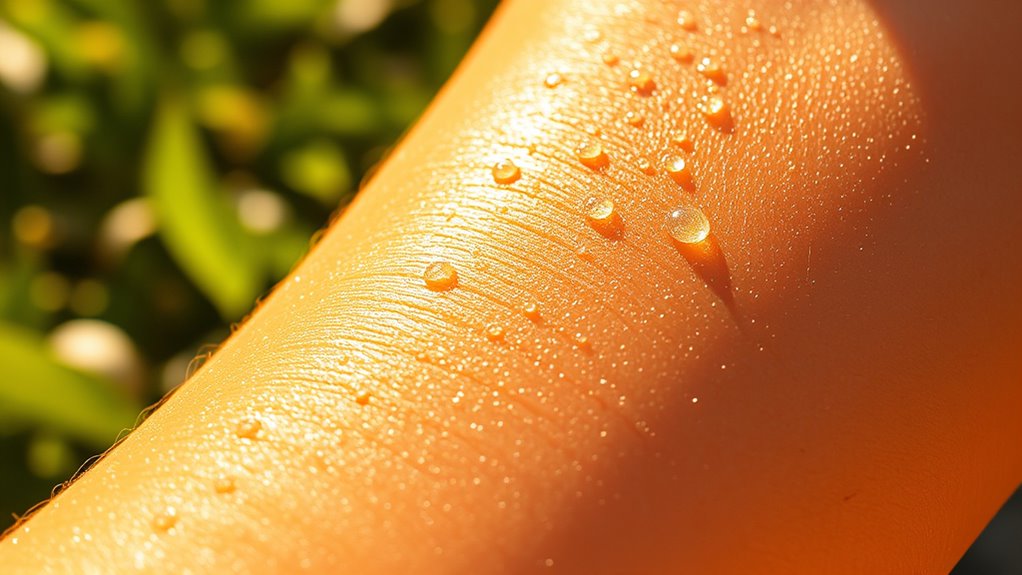

Prolonged or excessive sun exposure can disrupt your skin’s microbiome, reducing its diversity and balance. UV rays can damage beneficial microbes while allowing more resilient, sometimes harmful, ones to dominate. This imbalance can weaken your skin’s defenses and cause irritation or infections. However, moderate sunlight might support a healthier microbial community. To understand how to protect your skin’s microbiome while enjoying the sun, explore further tips on maintaining skin health.
Key Takeaways
- Moderate sunlight may promote a resilient, balanced skin microbiome, supporting overall skin health and microbial diversity.
- Excessive UV exposure can damage skin microbes, decrease diversity, and increase vulnerability to infections and inflammation.
- UV radiation causes direct microbial damage and alters skin conditions like pH and moisture, indirectly impacting microbial communities.
- Protecting skin from overexposure with sunscreen helps maintain microbial diversity and prevents microbiome imbalance.
- Maintaining balanced sun exposure supports a healthy microbiome, enhancing skin barrier function and resistance to environmental stressors.
Sunlight exposure plays a crucial role in shaping your skin’s microbiome, the diverse community of microorganisms that live on your skin. When you step outside and bask in the sun, you’re not just benefiting from the warmth and vitamin D production—you’re also influencing the tiny organisms that inhabit your skin’s surface. One key factor here is UV radiation effects. Ultraviolet rays from the sun can directly impact the microbial residents, sometimes reducing their numbers or altering their composition. The intensity and duration of sun exposure can lead to significant microbial diversity changes, meaning that the variety and balance of microorganisms on your skin may shift depending on how much sunlight you get.
UV radiation can damage some microbes while promoting others. For example, certain bacteria and fungi are more sensitive to UV rays, and prolonged exposure can decrease their presence. Conversely, some resilient microbes thrive under sunlit conditions, potentially dominating the microbiome. These changes can influence your skin’s overall health, as a diverse microbiome usually helps protect against pathogens, maintain pH balance, and support barrier function. When the microbial diversity decreases, your skin might become more susceptible to irritation, infections, or inflammatory conditions. On the other hand, controlled and moderate sun exposure might encourage a more resilient and balanced microbiome by encouraging the growth of beneficial microbes that can withstand UV stress.
It’s also worth noting that UV radiation doesn’t just affect microorganisms directly. It influences your skin’s environment—altering factors like moisture, pH, and immune response—which indirectly impacts microbial diversity changes. For example, UV exposure can reduce skin inflammation or help eliminate harmful bacteria, fostering an environment where beneficial microbes can flourish. However, excessive sun exposure can damage skin cells and impair the immune defenses that normally keep your microbiome healthy, leading to a less diverse microbial community. Additionally, growing research suggests that moderate sunlight can support the proliferation of beneficial microbes, contributing to a healthier skin ecosystem.
Understanding these effects helps you realize why moderation is key. While some sunlight can be beneficial by supporting a healthy, diverse microbiome, too much can disturb this delicate ecosystem. Protecting your skin from overexposure by using sunscreen or limiting direct sun time can help maintain microbial diversity and overall skin health. By striking the right balance, you support a thriving microbiome that protects and nurtures your skin, keeping it resilient against environmental stressors and pathogens.
Top picks for "skin microbiome sunlight"
Open Amazon search results for this keyword.
As an affiliate, we earn on qualifying purchases.
Frequently Asked Questions
How Does Sunscreen Affect Skin Microbiome Diversity?
Sunscreen can impact your skin microbiome diversity by affecting its resilience. Some ingredients, like chemical filters, may disrupt microbial balance, reducing diversity, while mineral sunscreens tend to be gentler. When choosing sunscreen, consider products that support microbiome resilience to maintain healthy skin. Regular use of suitable sunscreens helps protect your skin from UV damage without compromising the delicate microbial ecosystem, promoting overall skin health.
Can Sunlight Exposure Improve Skin Microbiome Health?
Ever wonder if sunlight could boost your skin’s health? It can, by aiding vitamin synthesis and supporting microbial balance. Sunlight encourages the production of vitamin D, which plays a essential role in immune function and skin barrier integrity. Proper sunlight exposure helps maintain a diverse and resilient skin microbiome, reducing the risk of imbalance and irritation. Just remember, moderation is key—too much sun can harm your skin.
Does Skin Microbiome Influence Individual Sun Sensitivity?
Your skin microbiome influences your sun sensitivity through microbial resilience and sunlight modulation. A balanced microbiome helps protect your skin by strengthening barrier functions and reducing inflammation, which can lower your risk of sun damage. Conversely, disrupted microbiomes may make your skin more vulnerable to UV rays. Maintaining a healthy microbiome supports your skin’s ability to adapt to sunlight exposure, ultimately influencing how sensitive your skin feels and reacts to the sun.
Are There Specific Microbes That Thrive With Sun Exposure?
Some microbes thrive with sun exposure, showing remarkable microbial resilience and sunlight adaptation. You might find that certain bacteria like *Staphylococcus epidermidis* and *Propionibacterium acnes* flourish in sunlit areas, transforming your skin into a lively microbial city. These microbes adapt quickly, thriving under UV rays, and contribute to your skin’s health. Think of them as tiny superheroes, resilient and perfectly adapted to the sun’s powerful influence on your skin.
How Long Should One Safely Expose Skin to Sunlight?
You should aim for about 10-15 minutes of sunlight exposure daily, depending on your skin type and location. This helps with Vitamin D synthesis and supports your skin barrier function. Avoid prolonged exposure to prevent skin damage and reduce the risk of skin cancer. Remember, consistency is key, but always protect your skin with sunscreen or clothing after your initial safe exposure to maintain overall skin health.
Conclusion
You might be surprised to learn that just 15 minutes of daily sunlight exposure can boost your skin’s microbiome diversity, strengthening your skin’s natural defenses. This simple habit not only improves your mood but also promotes healthier skin by supporting beneficial bacteria. Remember, balancing sun exposure is key—too much can harm your skin, but just enough can enhance your microbiome. So, embrace the sunlight wisely and give your skin the microbial boost it needs.