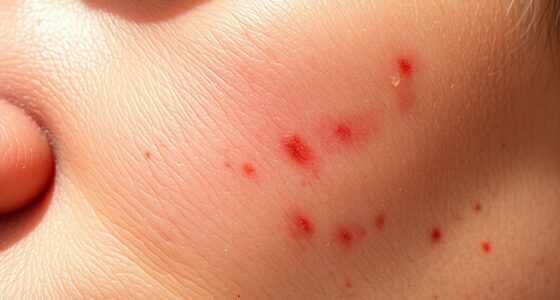
After sun exposure, your skin begins repairing itself by regenerating collagen, which helps restore elasticity and strength. Increased blood flow delivers essential nutrients and oxygen to damaged cells, aiding the healing process. Your skin also produces antioxidants to neutralize free radicals caused by UV rays, reducing oxidative stress. Over time, these natural repair mechanisms restore your skin’s health, but protecting it with proper care is crucial. Keep going to discover more ways your skin fights back and heals.

Get beauty and skincare favorites delivered free with Prime
- Fast, free delivery on millions of items
- Prime Video, Amazon Music and more included
- Member-only deals all year
Key Takeaways
- Skin initiates natural repair processes to reverse UV-induced cellular damage and restore skin integrity.
- Vitamin D synthesis triggered by UV rays supports immune function and signals repair mechanisms.
- Collagen regeneration replaces damaged fibers, restoring skin elasticity and reducing signs of aging.
- Increased blood flow delivers nutrients and oxygen, facilitating cellular repair and skin regeneration.
- Antioxidants neutralize free radicals, minimizing oxidative stress and protecting skin during the healing process.

When your skin is exposed to the sun, it sustains damage at the cellular level, prompting a natural repair process. This damage primarily results from ultraviolet (UV) rays, which can harm skin cells, break down collagen, and cause oxidative stress. Fortunately, your body has an impressive ability to mend itself, starting with mechanisms that stimulate Vitamin D synthesis and collagen regeneration. These processes are vital for maintaining healthy, resilient skin.
Sun exposure damages skin cells but triggers natural repair processes, including Vitamin D production and collagen regeneration for healthier skin.
As UV rays penetrate the skin, they trigger the production of Vitamin D, a crucial nutrient for overall health. This synthesis occurs in your skin’s cells when exposed to sunlight, helping your body absorb calcium, strengthen bones, and support immune function. But while Vitamin D production is a beneficial response to sun exposure, it also signals your skin to begin repairing the damage. Your skin’s cells activate repair pathways that work to replace and restore damaged DNA, ensuring that the skin continues to function properly.
In addition to Vitamin D synthesis, collagen regeneration plays a key role in healing after sun damage. Collagen is the structural protein that keeps your skin firm, elastic, and smooth. UV rays, however, can break down existing collagen fibers, leading to wrinkles and sagging over time. To counteract this, your body ramps up collagen production, aiming to replace what’s lost. This regeneration process is crucial for restoring skin’s strength and elasticity, especially after sunburns or prolonged sun exposure. You might notice that over time, your skin’s ability to regenerate collagen diminishes, which is why protecting your skin from excessive UV rays becomes imperative.
Your skin’s repair process also involves increased blood flow to the affected areas, bringing vital nutrients and oxygen needed for cellular repair. Skin cells work tirelessly to replace damaged ones, and new cells are generated more rapidly to restore the skin’s barrier. Antioxidants, whether produced naturally or applied topically, support this process by neutralizing free radicals caused by UV exposure, reducing oxidative stress, and promoting healthier skin.
In essence, after sun exposure, your skin initiates a multifaceted repair process that involves producing Vitamin D, regenerating collagen, and renewing damaged cells. These mechanisms work in concert to restore your skin’s integrity, but they’re not foolproof. Continuous overexposure can overwhelm these natural defenses, emphasizing the importance of sun protection measures like sunscreen and proper skincare. By understanding how your skin repairs itself, you can better appreciate the importance of caring for it before and after sun exposure, ensuring it remains healthy and resilient for years to come.
Products Worth Considering

BowFlex Results Series SelectTech Adjustable Dumbbells, Pair

Garmin Venu 4 GPS Smartwatch, 45 mm, Slate with Black Silicone Band

Fitbit Charge 6 Fitness Tracker Bundle – Black/Obsidian
As an affiliate, we earn on qualifying purchases.
Frequently Asked Questions
How Long Does It Take for Sun-Damaged Skin to Heal Completely?
It can take anywhere from a few days to several weeks for sun-damaged skin to heal completely, depending on the severity. To speed up skin regeneration, you should use sunburn remedies like aloe vera, moisturizers, and stay hydrated. Avoid further sun exposure and give your skin time to repair itself. With proper care, you’ll notice improvements as your skin naturally regenerates, but patience is key for full recovery.
Can Certain Foods Speed up Skin Repair After Sun Exposure?
Ever wondered if your diet can boost skin regeneration after sun damage? Yes, certain foods, often called superfoods, are packed with antioxidants and nutrients that support healing. Berries, nuts, and leafy greens provide vitamins C and E, which fight free radicals and promote repair. Incorporating these into your meals can accelerate your skin’s natural healing process, helping you recover faster and maintain a healthier, more resilient complexion.
Are There Specific Skincare Products That Enhance the Healing Process?
Yes, you can find skincare products that enhance healing after sun exposure. Look for ones with healing ingredients like aloe vera, chamomile, and vitamin E, which soothe and repair damaged skin. Using products with broad-spectrum sun protection is essential to prevent further harm. Apply these consistently to support your skin’s healing process, reduce inflammation, and restore your skin’s natural barrier, helping you recover faster and more comfortably.
Does Repeated Sun Damage Lead to Permanent Skin Changes?
Repeated sun damage can cause permanent skin changes, including loss of skin elasticity and premature aging signs like wrinkles and dark spots. Sun exposure breaks down collagen and elastin fibers, making your skin less firm over time. While some damage is irreversible, protecting your skin from further sun exposure and using targeted skincare can improve its appearance and slow additional damage. Regular sun protection is key to maintaining healthier, more elastic skin.
What Are the Signs That Skin Is Healing Properly?
When your skin is healing properly, you’ll notice reduced redness and less sensitivity, indicating effective sunburn relief. You might see new skin cell renewal, with smoother, more even-toned patches replacing damaged areas. Your skin may feel softer and less inflamed over time. These signs show your body’s natural repair process is working, restoring your skin’s health and resilience after sun exposure. Keep protecting your skin to support ongoing healing.
Conclusion
Think of your skin as a wise gardener, tending to a delicate flower after a storm. With patience and care, it mends the damage caused by the sun’s harsh rays, nourishing new growth and restoring its vibrant bloom. Just as a gardener knows that healing takes time, your skin needs gentle support and protection to bounce back. Trust in this natural process—your skin’s resilience is a proof to its incredible ability to heal and flourish again.