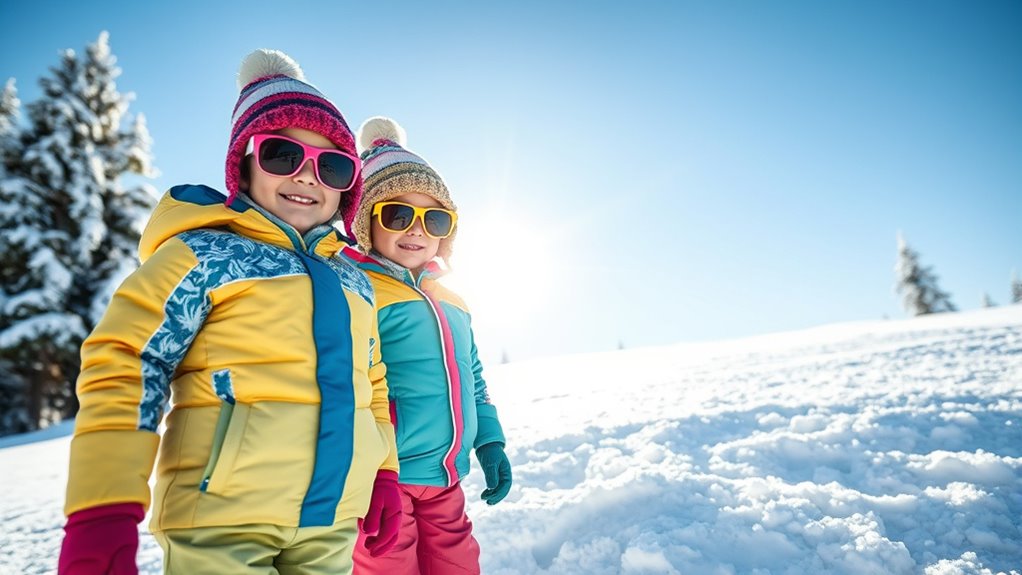
When kids hit the slopes or ice during winter, protect their skin and eyes from harmful UV rays by choosing UV-protective goggles and clothing with high UPF ratings. Remember, snow reflects UV rays, increasing exposure even on cloudy days. Apply broad-spectrum sunscreen, especially to exposed areas like ears and neck, and keep them covered with hats and gear. Staying vigilant with these tips ensures your kids stay safe—keep exploring to learn more about this essential topic.
Key Takeaways
- Always have kids wear UV-protective goggles to shield eyes from UV rays reflecting off snow and ice.
- Dress children in UPF-rated clothing, including long sleeves and pants, to protect skin from UV exposure.
- Apply broad-spectrum sunscreen on exposed areas like face, ears, and neck before outdoor activities.
- Schedule outdoor activities outside peak sun hours (10 a.m. to 2 p.m.) for added UV safety.
- Ensure children wear hats and neck gaiters to cover sensitive skin and reduce overall UV exposure.

Winter sports may keep kids active and excited, but the sun’s rays can still cause damage despite the cold. When your kids hit the slopes or skate outdoors, it’s easy to overlook the importance of sun protection. The sun’s ultraviolet (UV) rays can reflect off snow and ice, intensifying exposure and increasing the risk of sunburn, eye damage, and long-term skin issues. That’s why it’s essential to take proactive steps to shield your children from the sun, even on overcast days or when temperatures drop.
One key item to include in your child’s winter gear is a good pair of ski goggles. Not only do they protect against wind, snow, and debris, but they also shield the eyes from harmful UV rays. Look for goggles with UV protection labels, as standard lenses often don’t block UV rays effectively. Proper fit is also *vital*; goggles that sit snugly on the face prevent UV rays from sneaking in around the edges. Bright sunlight reflecting off snow can cause snow blindness and eye strain, so don’t underestimate the importance of eye protection. Encourage your kids to wear their goggles consistently, especially during peak sun hours, which are typically between 10 a.m. and 2 p.m.
In addition to goggles, UV clothing provides an effective barrier against harmful rays. These garments are specially designed with fabrics that block UV radiation, offering an extra layer of defense for exposed skin. Long-sleeved shirts, pants, and neck gaiters made from UV-protective materials are excellent choices. They help prevent sunburns and reduce the risk of long-term skin damage. When choosing UV clothing, look for items with a high ultraviolet protection factor (UPF) rating — the higher the UPF, the better the protection. Keep in mind that even if your child wears a hat, it may not fully shield sensitive areas like the ears, neck, and face, so UV clothing complements other sun safety strategies effectively. According to benefits of sun protection, using proper protective gear can significantly reduce the risk of skin cancer and other sun-related health issues later in life.
Frequently Asked Questions
How Often Should Kids Reapply Sunscreen During Winter Sports?
You should reapply sunscreen frequently during winter sports, ideally every two hours, to guarantee continuous protection. Even if it’s cloudy, UV rays can still harm your child’s skin. Keep in mind that sunscreen reapplication is essential after sweating or wiping their face. Make sure to use a broad-spectrum sunscreen suited for kids, and don’t forget to apply it generously before heading outdoors and reapply as needed during their winter sports activities.
Are Traditional Sunscreens Effective on Snowy, Reflective Surfaces?
Think of reflective snow like a mirror shining sunlight right back at you, turning the ground into a giant reflector. Traditional sunscreens can still be effective, but their efficacy might be diminished on reflective snow due to increased UV exposure. To keep your kids protected, choose broad-spectrum sunscreens with high SPF, and reapply frequently, especially after sweating or wiping their face. This way, you stay one step ahead of those sneaky rays bouncing back.
What Specific SPF Level Is Recommended for Children in Winter Conditions?
For winter sun protection, you should aim for an SPF of at least 30 for children. SPF recommendations emphasize broad-spectrum coverage to protect against UVA and UVB rays, which are still strong even in cold weather. Since snow reflects sunlight, it’s vital to apply sunscreen generously and reapply frequently. Keep kids covered with hats, sunglasses, and protective clothing to guarantee thorough winter sun protection.
How Can Parents Protect Kids’ Lips From Sunburn While Skiing?
To protect your child’s lips from sunburn while skiing, make certain they use a lip balm with SPF protection. Lip balm protection is essential because lips are delicate and easily burned, especially with reflective sun safety concerns. Reapply frequently, especially after eating or drinking. Keep in mind that reflective snow increases UV exposure, so consistent lip balm use helps shield their lips from harmful rays and keeps them comfortable on the slopes.
Are Special Goggles or Glasses Necessary for UV Protection During Winter Sports?
You can’t judge a book by its cover, so don’t skip on UV protection when choosing winter goggles or glasses. Special winter goggles with UV protection are a must-have to shield your child’s eyes from harmful rays and glare. Regular sunglasses might not stay put or offer enough coverage. Investing in quality winter goggles guarantees your kid stays safe, comfortable, and protected while enjoying the snow.
Conclusion
Remember, even on cloudy winter days, UV rays can harm your kids’ skin. It’s a common myth that winter sun isn’t harsh, but studies show UV exposure remains high at high altitudes and snowy surfaces reflect sunlight, increasing risks. Protect your children with broad-spectrum sunscreen, proper clothing, and sunglasses. Staying vigilant isn’t just a good idea—it’s backed by science. Keep their skin safe and healthy, so they can enjoy winter sports without worry.