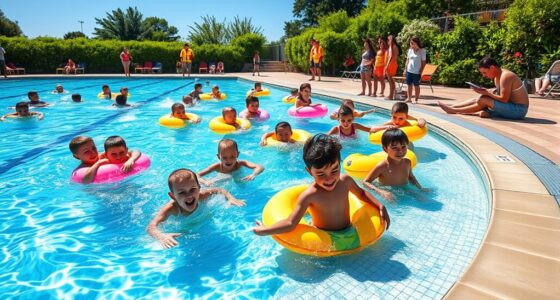
To keep kids safe at the pool, make certain they wear broad-spectrum SPF 30+ sunscreen, reapplying every two hours or after swimming. Encourage protective clothing, wide-brimmed hats, and UV sunglasses, especially during peak sun hours from 10 a.m. to 4 p.m. Remember to take regular breaks in shaded areas and keep everyone well-hydrated. Combining these sun safety tips with swimming lessons helps your children enjoy pool time without worry—discover more ways to protect them effectively.
Open a free Amazon Business account
Business pricing, bulk buying and tax-exempt orders.
As an affiliate, we earn on qualifying purchases.
Key Takeaways
- Always supervise children in water and stay within designated swim areas to prevent accidents.
- Apply broad-spectrum SPF 30+ sunscreen generously and reapply every two hours, especially after swimming.
- Encourage wearing protective clothing, hats, and UV sunglasses during outdoor swimming sessions.
- Take regular breaks in shaded areas during peak sun hours (10 a.m. – 4 p.m.) to minimize sun exposure.
- Ensure kids stay hydrated and incorporate shade and sun safety measures for a safer swimming experience.

Taking swimming lessons can be a fun way to stay active and learn new skills, but it also increases your exposure to the sun. As you and your kids spend time at the pool, it’s crucial to prioritize water safety and protect your skin from harmful UV rays. One of the most important steps is making sure your children understand water safety rules, such as never swimming alone, staying within designated areas, and avoiding rough play. Teaching kids these safety habits not only prevents accidents but also helps them feel confident and secure in the water.
Alongside water safety, sunscreen application is essential. Before heading out to the pool, make sure your kids apply a broad-spectrum sunscreen with at least SPF 30. Remember to cover all exposed skin thoroughly, including ears, the back of the neck, and feet. Reapply every two hours, or more often if they’re swimming or sweating heavily. Water can wash away sunscreen quickly, so don’t skip this step—it’s your best defense against sunburn. You might also consider using water-resistant sunscreens to ensure continuous protection during swimming lessons.
Apply broad-spectrum SPF 30+ sunscreen and reapply every two hours during swimming.
While the sun feels warm and inviting, prolonged exposure can lead to painful sunburns that increase the risk of skin damage later in life. To further shield your children, encourage them to wear protective clothing such as rash guards or swim shirts, which provide an additional barrier against UV rays. Hats with wide brims and UV-protective sunglasses are also good options for protecting their face and eyes when they’re out of the water.
Remind your kids to take breaks in the shade whenever possible, especially during peak sun hours from 10 a.m. to 4 p.m. When they rest in the shade, it reduces their overall sun exposure and lowers the chance of getting sunburned. Staying hydrated is equally important, so encourage them to drink plenty of water throughout their swimming session.
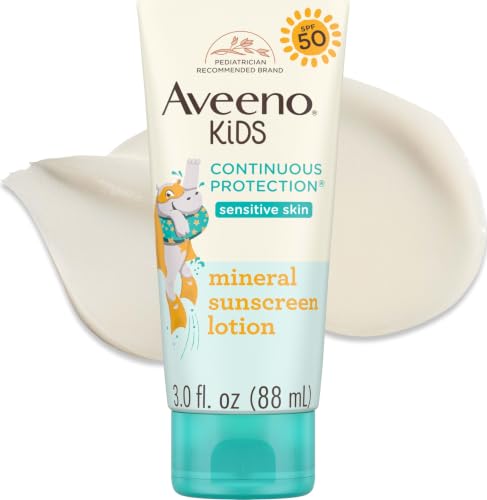
Aveeno Kids Sunscreen Lotion, Broad Spectrum, SPF 50, 3 fl. oz
- Broad Spectrum Protection: SPF 50 for UVA and UVB rays
- Kid Friendly Formula: Gentle on sensitive skin
- Easy Application: Locks in moisture without stinging
As an affiliate, we earn on qualifying purchases.
As an affiliate, we earn on qualifying purchases.
Frequently Asked Questions
How Can I Tell if My Child Is Experiencing Heatstroke?
You want to know if your child has heatstroke, so watch for signs of dehydration and heat exhaustion symptoms. Look for symptoms like heavy sweating, weakness, dizziness, headache, and nausea. If your child has a flushed face, rapid heartbeat, or is confused, these could be signs of heatstroke. Act quickly—move them to a cooler place, hydrate, and seek medical help immediately to prevent serious complications.
What Are the Best Types of Sunscreen for Kids?
When choosing sunscreen for your kids, look for options with waterproof formulas to stay effective in water or sweating. Decide between mineral and chemical sunscreens; mineral ones contain zinc oxide or titanium dioxide, providing physical protection and often being gentler on sensitive skin. Chemical sunscreens absorb UV rays but may cause irritation. Pick a broad-spectrum, SPF 30 or higher, and reapply generously every two hours for the best protection.
How Often Should Kids Reapply Sunscreen During Swimming?
You should reapply sunscreen frequently during swimming to maintain effective protection. Typically, reapply every two hours, but more often if your kid is swimming or sweating a lot. Remember, poolside sun safety means reapplying sunscreen immediately after swimming or towel drying. Using a waterproof sunscreen helps guarantee continuous coverage, so your child stays protected while enjoying the pool. Keeping up with sunscreen reapplication is essential to prevent sunburns and skin damage.
Are There Any Signs of Water Allergies or Sensitivities?
Like a detective searching for clues, you should watch for signs of water allergies or sensitivities. Poolside allergies often show up as red, itchy rashes or swelling, while skin sensitivity may cause dryness or irritation after swimming. Keep an eye out for persistent symptoms that don’t improve, and consult a doctor if you notice unusual reactions. Being vigilant helps protect your child’s skin from uncomfortable or allergic reactions.
How Can I Keep My Child’s Hair Protected From Sun Damage?
To protect your child’s hair from sun damage, you should prioritize sun protection by applying a kid-friendly, broad-spectrum sunscreen on their scalp and parting. Encourage wearing a wide-brimmed hat or a swim cap during outdoor activities to shield hair and scalp. Rinse hair after swimming to remove chlorine and salt, which can cause damage. Regular deep conditioning treatments also help maintain hair health and prevent sun-induced dryness.
Conclusion
By staying vigilant about sun protection and teaching kids proper swimming safety, you can make every pool day enjoyable and safe. Remember, a quick application of sunscreen and watching over little swimmers can prevent painful sunburns and accidents. Isn’t it worth the effort to guarantee your child’s summer memories are filled with fun, not discomfort? With a little planning, you’ll create a safe environment where your kids can splash, learn, and soak up the sun without worry.
Baby shower & registry season Picks
baby registry must-haves
As an affiliate, we earn on qualifying purchases.