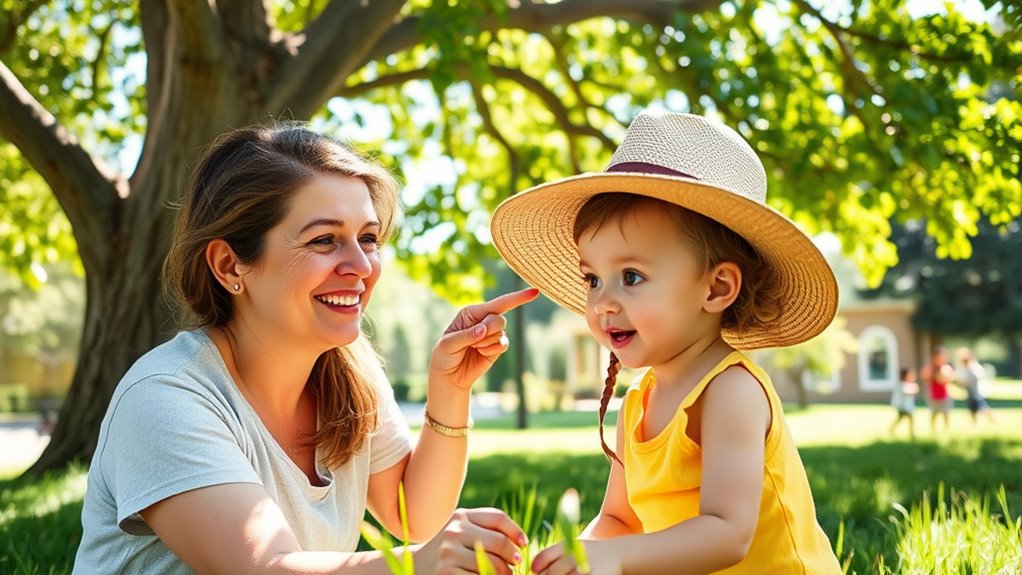

When talking to your child about sun dangers, keep it simple and positive. Explain that the sun gives us energy and vitamin D but can also harm their skin if they’re out too long without protection. Encourage healthy habits like wearing hats, sunglasses, and applying sunscreen. Make it fun and relatable, so they feel empowered to stay safe while enjoying outdoor play. Keep exploring these tips to help your child build lifelong sun-safe habits.
Key Takeaways
- Use simple, relatable language to explain UV rays and their impact on skin health.
- Emphasize fun, protective habits like wearing hats, sunglasses, and applying sunscreen.
- Model good sun safety behaviors yourself to encourage children to imitate them.
- Teach children to seek shade during peak sun hours and avoid prolonged outdoor exposure.
- Reinforce that sun safety is a daily routine that helps prevent skin damage and skin cancer later.

Have you ever wondered how the sun can affect your skin? Teaching your child about skin cancer risks isn’t just about warning them—it’s about empowering them to make smart choices outdoors. When you talk about sun safety, you’re helping your kid understand how UV protection can keep their skin healthy now and in the future. Kids often love playing outside, especially during summer, but their delicate skin needs extra care. Explaining the importance of wearing protective clothing, applying broad-spectrum sunscreen, and seeking shade during peak hours becomes a essential part of their daily routine. Kids respond well when they understand that the sun’s rays, while necessary for vitamin D, can also cause damage if they’re not careful.
Start by making the conversation simple and relatable. Explain that the sun’s rays are powerful, and too much exposure can harm their skin. You can compare UV rays to invisible beams that, over time, can cause skin to change and sometimes lead to skin cancer later in life. Emphasize that practicing good sun safety isn’t about avoiding fun—it’s about protecting their skin so they can enjoy playing outside without worry. Teach them that wearing hats, sunglasses, and light, long-sleeved shirts creates a physical barrier against UV rays. Reinforce that sunscreen isn’t just for beach days—it’s something they should wear daily, especially during outdoor activities. Use fun and engaging language to make these habits seem like superpowers that keep their skin safe.
It’s also important to set an example. Kids tend to imitate what they see, so if you practice UV protection yourself, they’ll be more likely to follow your lead. Make applying sunscreen a family routine, and choose products that are gentle and suitable for kids’ sensitive skin. Talk about the importance of avoiding peak sun hours between 10 a.m. and 4 p.m., when UV rays are strongest. Explain that seeking shade under trees or umbrellas is a smart way to stay protected without missing out on outdoor fun. Reinforce that sun safety is something they can control, and that it’s part of being responsible for their health. Additionally, understanding the role of color temperature adjustments can help ensure their outdoor gear and clothing are suitable for different sunlight conditions, further enhancing their protection.

Aveeno Kids Continuous Protection Zinc Oxide Mineral Sunscreen Lotion for Children's Sensitive Skin with Broad Spectrum SPF 50, Tear-Free, Sweat- & Water-Resistant, Non-Greasy, 3 fl. oz
3-fluid ounce travel-size tube of Aveeno Kids Continuous Protection Sensitive Skin Sunscreen Lotion with broad spectrum SPF 50…
As an affiliate, we earn on qualifying purchases.
As an affiliate, we earn on qualifying purchases.
Frequently Asked Questions
How Can I Tell if My Child Has a Sunburn?
To tell if your child has a sunburn, look for child sunburn symptoms like redness, warmth, and tenderness on their skin. Check the severity of the sunburn by observing if it’s mild redness or blistering and peeling, which indicates more serious damage. Keep an eye out for signs of discomfort or pain. If you notice these symptoms, it’s best to keep your child cool, hydrated, and protected from further sun exposure.
What Are the Signs of Skin Damage in Kids?
You’ll notice signs of skin damage in kids like sun damage or skin discoloration, which often appear as uneven pigmentation, redness, or dark spots. Watch for peeling, blistering, or tenderness after sun exposure. These changes indicate the skin has been harmed by UV rays. It’s important to protect their skin with sunscreen, protective clothing, and shade, and to regularly check for any unusual spots or discoloration that might need medical attention.
When Should I See a Doctor About a Skin Spot?
Think of a skin spot like a ticking time bomb—you should see a doctor if it changes shape, color, or size quickly, or if it itches or bleeds. Early melanoma often looks different from surrounding skin. Schedule a skin biopsy promptly if you notice these signs, as catching it early can be lifesaving. Don’t wait—consult a healthcare professional to get a proper diagnosis and peace of mind.
Are Tanning Beds Safe for Children?
Tanning beds are not safe for children because of the significant tanning bed risks. Exposure to UV radiation from tanning beds increases skin cancer chances and damages young skin. As a parent, prioritize child safety education by explaining these dangers clearly. Encourage outdoor activities with proper sun protection instead of tanning beds. Protect your child’s health now by avoiding tanning beds and teaching them about safe sun habits.
How Can I Protect My Child’s Skin During Outdoor Activities?
Think of your child’s skin as a delicate garden that needs shielding from harsh sun rays. You can protect it by choosing protective clothing like hats and long sleeves, acting as a barrier against harmful UV rays. Don’t forget to apply sunscreen generously and regularly, creating an invisible shield. These simple steps turn outdoor play into a safe adventure, ensuring your child’s skin stays healthy and protected under the sun’s watchful gaze.

Toddler Baby Sun Hat Kids Summer Beach Essentials Adjustable Beach Hats with Bucket Wide Brim for Boys Girls Age 0-14 Years
PREMIUM MATERIAL – Soft, quick-drying, breathable baby sun hat keeps baby cool and comfortable during the hot outdoor….
As an affiliate, we earn on qualifying purchases.
As an affiliate, we earn on qualifying purchases.
Conclusion
By teaching your kids about sun dangers, you’re planting seeds of awareness that grow into lifelong habits. Think of sun safety as a shield that protects their bright future, allowing their confidence to shine without fear. The more you talk openly, the stronger their understanding becomes—like a sturdy tree with deep roots. Remember, your guidance today helps them navigate tomorrow’s sunny days with confidence and care, ensuring their bright future stays safe and radiant.

RIVBOS Kids Sunglasses Polarized UV Protection Flexible Rubber Glasses Shades with Strap for Boys Girls RBK037-Pink,Black Polarized Lens
SUPER CUTE AND COLORFUL DESIGN- Our sunglasses provide various color & styles assortment for parents to choose. Both…
As an affiliate, we earn on qualifying purchases.
As an affiliate, we earn on qualifying purchases.

Boys UPF 50+ Swim Shirt Long Sleeve, 1 or 2 Pack UV Sun Protection Rash Guard, Youth Kids SPF Water Shirts for Beach Surf
UPF 50+ Sun Protection: The kids sun shirts has UPF 50+ SPF protection, effectively preventing UV rays from…
As an affiliate, we earn on qualifying purchases.
As an affiliate, we earn on qualifying purchases.