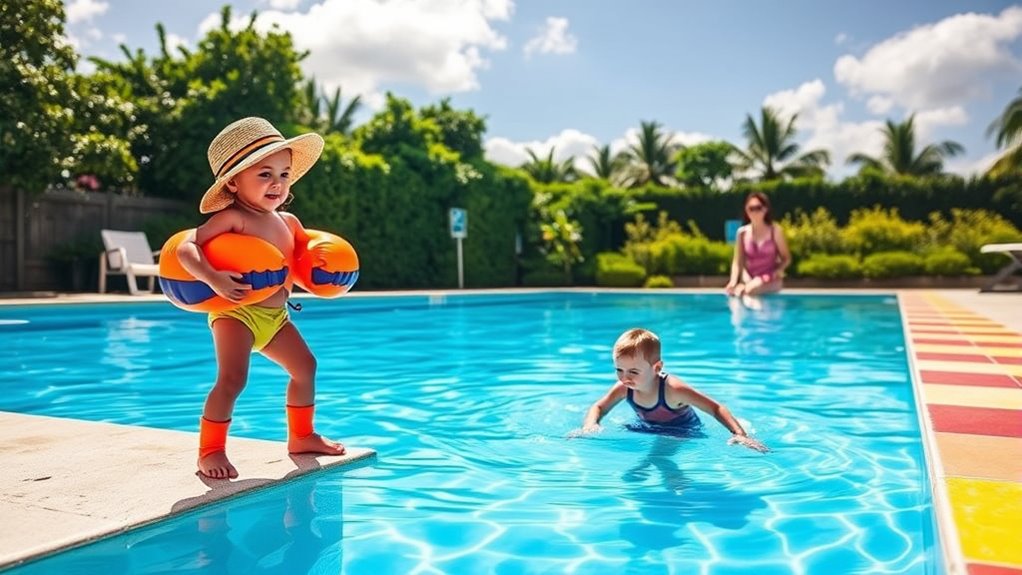

To keep children safe poolside, always supervise them closely and never leave them unattended. Use appropriate flotation devices and make sure they fit properly, but don’t rely on them alone—constant supervision is key. Install barriers like fences and secure gates, and set clear rules such as no running or diving. Regularly check safety equipment and review safety procedures with your children. Keep exploring for more tips to make water safety even more effective.
Key Takeaways
- Always supervise children closely when they are near or in the pool, without distractions.
- Enforce rules such as no running, no diving in shallow areas, and staying within arm’s reach.
- Use age-appropriate floatation devices alongside constant supervision for added safety.
- Install physical barriers like fences and pool covers to prevent unsupervised access.
- Regularly review water safety practices and ensure safety equipment is accessible and well-maintained.
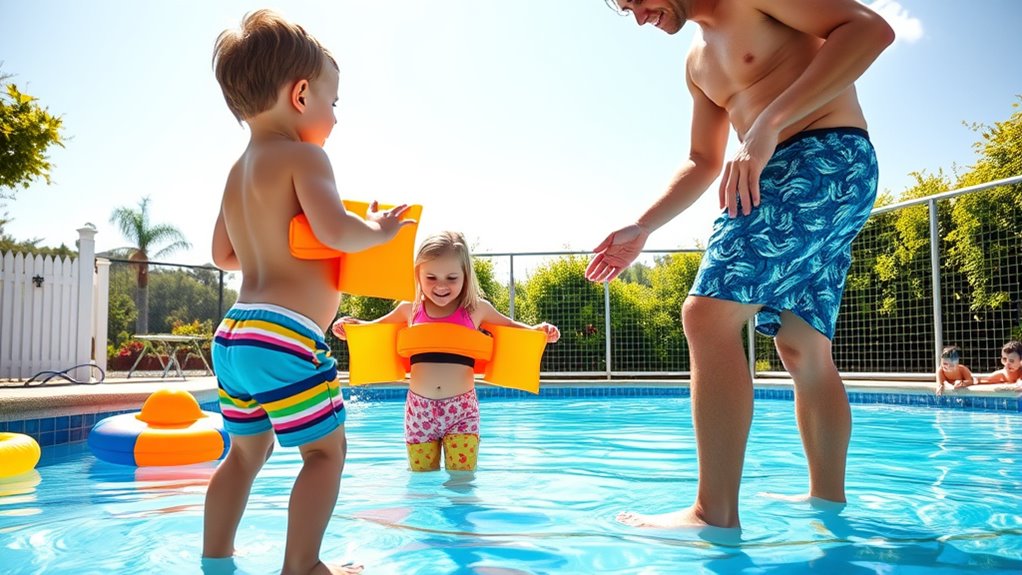
When children are around the pool, safety should always be a top priority. You want to make sure they enjoy the water without risking accidents or injuries. One of the most effective ways to do this is by enrolling them in swimming lessons. These lessons teach kids essential skills, like floating, treading water, and proper breathing techniques, which can make a huge difference if they accidentally fall in. Swimming lessons build their confidence and help them understand how to handle themselves in the water, reducing panic during unexpected situations. Even if your child is a confident swimmer, formal instruction reinforces safety practices and guarantees they know what to do in emergencies.
In addition to lessons, using floatation devices can provide an extra layer of protection. Floaties, life jackets, or arm floats are crucial for younger children or those still learning to swim. They act as a safety net, helping children stay afloat and preventing accidental submersion. Remember, floatation devices are not substitutes for supervision—they’re tools to aid safety when combined with close monitoring. Always choose age-appropriate and Coast Guard-approved devices, ensuring they fit properly and are in good condition before use. Never rely solely on floatation devices to keep a child safe; they should be part of a broader safety strategy. Incorporating water safety awareness into your routine can further improve your child’s safety near the pool.
Supervision is key. Never leave children unattended near the pool, even if they’re wearing floatation devices or have completed swimming lessons. Constant, attentive supervision ensures you can respond quickly if anything goes wrong. Establish clear rules with your kids, such as no running around the pool, no diving in shallow areas, and always staying within arm’s reach of a responsible adult. These rules help prevent common accidents, like slips or head injuries.
It’s also wise to set up physical barriers around the pool, such as a fence with a self-locking gate. This prevents unsupervised access, especially when you’re not around. Cover the pool when it’s not in use to eliminate tempting access points. Regularly check that all safety equipment, including floatation devices and rescue gear, is in good condition and accessible in case of emergency.

Sportstuff Child Type III Life Jacket | US Coast Guard Approved | Open Sides with 3 Body Belts & Buckles | Quick Dry Fabric, Secure Fit, Comfortable | Stars & Stripes
US Coast Guard Approved: This personal flotation device meets USCG requirements. Less bulky design for use when quick…
As an affiliate, we earn on qualifying purchases.
As an affiliate, we earn on qualifying purchases.
Frequently Asked Questions
What Should I Do if My Child Accidentally Falls Into the Pool?
If your child falls into the pool, stay calm and act quickly. Use supervision strategies like keeping your eyes on them at all times near water. Grab them immediately, supporting their head and body, and remove them from the water. Call emergency response if needed, especially if they’re unresponsive or showing signs of distress. Remember, staying alert and prepared helps prevent accidents and guarantees swift action when necessary.
How Can I Teach Children to Recognize Pool Hazards?
You might think young kids are too young to grasp pool hazards, but through consistent pool safety education, you can effectively teach their hazard recognition skills. Use simple language and real-life examples to help them identify dangers like slippery surfaces or shallow areas. Regularly supervise and reinforce these lessons, so they develop awareness and stay safe around the pool. This proactive approach builds their confidence and safety habits early on.
Are Pool Alarms Effective for Child Safety?
Pool alarms are effective as child safety devices because they alert you immediately if someone enters the water unexpectedly. Their efficacy depends on proper installation and regular maintenance. You should view pool alarms as an added layer of safety rather than the sole solution. Using them alongside constant supervision and other safety measures gives you the best chance to prevent accidents and keep children safe around the pool.
What Are the Signs of Drowning in Children?
If you notice a child struggling to keep their head above water, they may show signs of drowning—such as panicked movements, lack of coordinated breathing, or silent distress. In a rescue, focus on safe rescue techniques to prevent injury. Recognizing these signs early is vital for drowning prevention; quick action can save lives. Always stay alert and supervise children around water to guarantee their safety.
How Often Should Pool Safety Equipment Be Checked?
You should check your pool safety equipment weekly to guarantee it’s in good condition. Regular pool maintenance includes inspecting safety devices like life rings, reaching poles, and alarms for any damage or wear. Conduct safety inspections after storms, heavy use, or if equipment shows signs of deterioration. Keeping safety equipment in top shape helps prevent accidents and ensures quick, effective response in emergencies, giving you peace of mind around children.

20 Inch Pool Safety Life Preserver Throw Ring Buoy- Swim Foam Rings for Swimming Pool Wall Decoration with 98.4FT Water Floating Lifesaving Rope
【Swim Foam Throw Ring Buoy Size】- Inner Diameter: 27cm / 10.6inch, Outer diameter: 50cm / 20 inch. Bearing…
As an affiliate, we earn on qualifying purchases.
As an affiliate, we earn on qualifying purchases.
Conclusion
By staying vigilant and practicing safe poolside habits, you can keep your children safe and sound. Remember, safety is a team effort, and it’s better to be safe than sorry. Never let your guard down, even for a moment, because accidents can happen in the blink of an eye. With your watchful eye and these simple precautions, you’ll be able to enjoy the sunshine together without any worries—like a lighthouse guiding ships safely home.

Pool Fence DIY by Life Saver Self-Closing Gate Kit, Black (Pack of 1)
Easy-to-install, do-it-yourself gate kit for use with the Pool Fence DIY safety system; helps keep kids safe from…
As an affiliate, we earn on qualifying purchases.
As an affiliate, we earn on qualifying purchases.

Swim Float Kids Back Belt: Pool Safe Dual-Lock Buckle 140lbs Pull-Tested – Zero Slip-Off Risk Trainer Bubble – 4-Layer Adjustable Buoyancy for Swimmers 3-12 Yrs
SAFETY TRUST CUSTOM DUAL BUCKLES CPSIA COMPLIANCE SWIM FLOAT: Kids Floaties For Pool Safety Buckles Are Designed To…
As an affiliate, we earn on qualifying purchases.
As an affiliate, we earn on qualifying purchases.