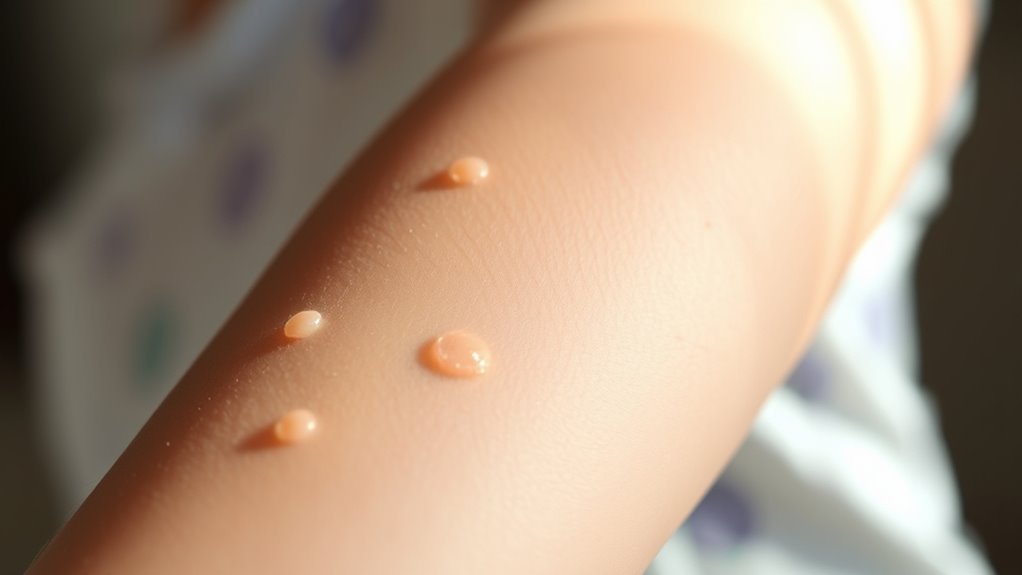

You should see a dermatologist if you notice your child’s moles change in size, shape, or color, or if they develop irregular borders or multiple hues. Watch for moles that start to bleed, itch, or become sore, or if new moles appear suddenly. Regular checks are key, especially if your child has a family history of skin cancer or lots of moles. Staying vigilant helps protect your child’s skin health — keep going to learn more about spotting concerns early.
Key Takeaways
- Seek professional evaluation if a mole shows asymmetry, irregular borders, multiple colors, or size over 6mm.
- Consult a dermatologist promptly if a mole suddenly appears, changes, or exhibits symptoms like bleeding or itching.
- Regular skin checks are recommended, especially for children with many moles or a family history of skin cancer.
- Monitor for moles that evolve in shape, color, or texture over time, and get them examined early.
- Always see a dermatologist if you’re concerned about any mole or skin change, regardless of age or risk factors.
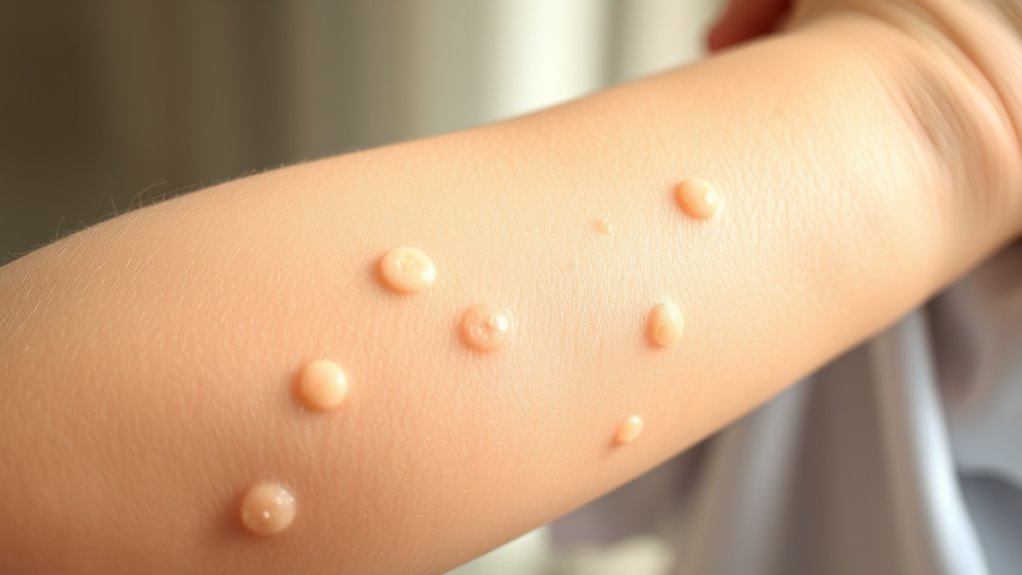
Keeping an eye on your child’s moles is essential because changes can sometimes signal health concerns. While most moles are harmless, monitoring them closely helps you catch potential issues early. One of the key factors influencing mole development is sun protection. Excessive sun exposure, especially during childhood, increases the risk of abnormal mole changes and the development of melanoma later in life. Applying broad-spectrum sunscreen regularly, encouraging your child to wear protective clothing, and avoiding peak sun hours can considerably reduce this risk. It’s also important to teach your child about the importance of sun safety, so they develop healthy habits early on.
Genetic factors also play a crucial role in your child’s mole development. If there’s a family history of skin cancer or atypical moles, you need to be extra vigilant. Some children are born with or develop moles that are more prone to changes because of inherited traits. Knowing your family’s medical history helps you understand your child’s risk level and guides how closely you should monitor their skin. Even if there’s no family history, any unusual mole warrants attention, especially if it appears suddenly or changes over time.
When observing your child’s moles, pay attention to specific signs that might indicate a need to see a dermatologist. Look for asymmetry, irregular borders, multiple colors, large size, or moles that are evolving or changing shape. If a mole looks different from others on your child’s skin, it’s worth a professional check. Changes in color, shape, size, or texture should never be ignored, especially if they occur over a short period. Sometimes, a mole may bleed, itch, or become sore, which can also be warning signs.
Scheduling regular skin checks with your child’s dermatologist is a proactive way to stay ahead of potential issues. These visits are particularly important if your child has many moles, a history of sunburns, or a family history of skin cancer. During these appointments, the dermatologist can evaluate any suspicious moles and may perform dermoscopic examinations for a more detailed look. Remember, early detection of skin concerns enhances treatment success, so don’t hesitate to seek professional advice if you notice concerning changes.
Ultimately, your vigilance, combined with sun protection and awareness of genetic factors, plays a critical role in safeguarding your child’s skin health. Monitoring moles isn’t just about keeping an eye on appearances; it’s about proactively managing your child’s long-term well-being. When in doubt, consulting a dermatologist ensures that you’re taking the right steps to protect your child’s health now and in the future. Additionally, understanding the influence of genetics can help tailor your monitoring approach to your child’s specific risk factors.
Top picks for "dermatologist monitor child"
Open Amazon search results for this keyword.
As an affiliate, we earn on qualifying purchases.
Frequently Asked Questions
How Often Should I Schedule Skin Check-Ups for My Child?
You should schedule skin check-ups for your child at least once a year, especially if they have many moles or a history of sun exposure. Encourage regular skin self-exams at home, looking for any changes in moles or new spots. Always practice sun protection by applying sunscreen and wearing protective clothing. If you notice anything concerning during a self-exam, see a dermatologist promptly to guarantee your child’s skin stays healthy.
Can Moles Change Color or Size Without Being Dangerous?
You might worry that changing mole color or size signals danger, but some variation is typical, especially during growth spurts or hormonal changes. However, significant or rapid changes in mole color or size should raise concern. Keep an eye on your child’s moles, and if you notice asymmetry, irregular borders, or multiple color changes, it’s best to consult a dermatologist to verify everything’s okay and rule out any risks.
Are There Specific Moles That Are More Concerning Than Others?
Certain moles are more concerning than others, especially if you notice changes in mole color or shape. Look for irregular or multiple colors, asymmetrical shape, or uneven edges. Moles that are larger than a pencil eraser or suddenly change in size, color, or shape should raise red flags. If you see these signs, it’s best to consult a dermatologist promptly to guarantee your child’s skin health.
What Home Remedies Can I Use to Monitor Moles Effectively?
To monitor your child’s moles effectively at home, start with DIY tracking by regularly noting any changes in size, shape, or color. Use visual documentation like photos to compare over time, ensuring you capture clear images from multiple angles. Check the moles monthly, paying attention to asymmetry, irregular borders, or new growth. This proactive approach helps you spot worrisome changes early and decide when to consult a dermatologist.
When Is the Best Time to Consult a Dermatologist for Moles?
Ever wonder when it’s time to see a dermatologist about your child’s moles? You should consult a specialist if you notice changes in size, shape, or color, or if a mole becomes painful or itchy. Regular monitoring includes applying sunscreen to protect skin, but if a mole looks suspicious, mole removal might be necessary. Don’t wait—early detection can make a big difference in treatment and peace of mind.
Conclusion
Keeping an eye on your child’s moles is like being a vigilant gardener, nurturing their health and catching problems early. Regularly check for changes in size, shape, or color, and don’t hesitate to see a dermatologist if something looks unusual. Early detection is key—think of it as catching a tiny spark before it turns into a wildfire. By staying attentive, you help safeguard your child’s skin and ensure their health stays on the right track.