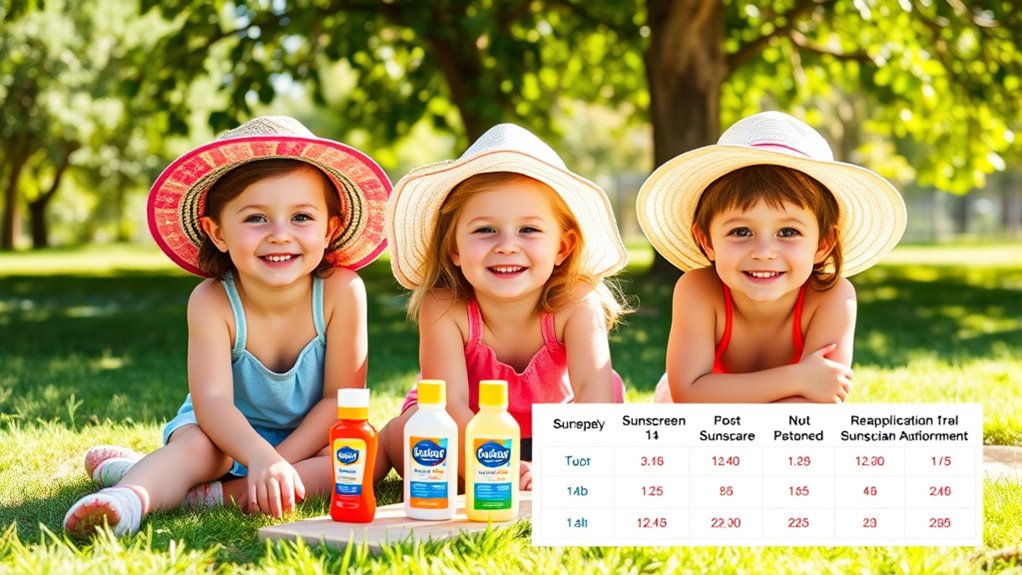

To protect your children from the sun, reapply sunscreen every two hours outdoors, more often if they’re swimming, sweating, or towel-drying. Use water-resistant formulas and follow the manufacturer’s reapplication guidelines, especially after water exposure. Apply at least 15 minutes before sun exposure and verify all exposed skin is covered with about an ounce of sunscreen. Keep in mind peak UV hours from 10 a.m. to 4 p.m., and if you keep these tips in mind, you’ll stay ahead of sun safety for your kids.

Get beauty and skincare favorites delivered free — and shop member deals
- Fast, free delivery on millions of items
- Access to Prime Big Deal Days deals on October 6–7
- Prime Video, Amazon Music and more included
Key Takeaways
- Reapply sunscreen every 2 hours outdoors, more often if swimming, sweating, or during active play.
- Apply sunscreen at least 15 minutes before sun exposure for optimal protection.
- Use approximately one ounce per reapplication to ensure full coverage of all exposed skin.
- Reapply immediately after water exposure, towel drying, or if activity level increases.
- Increase reapplication frequency during peak UV hours (10 a.m. – 4 p.m.) and high UV index days.

Protecting your child’s skin from sun damage requires more than just applying sunscreen once. Sun safety involves a proactive approach, especially when it comes to reapplication timing. Sunscreen provides a protective barrier that helps block harmful UV rays, but it doesn’t last forever. Depending on your child’s activity level, outdoor time, and the type of sunscreen you use, reapplying is essential to maintain effective coverage. Knowing when and how often to reapply can make a significant difference in preventing sunburns and long-term skin damage.
Reapply sunscreen regularly to protect your child’s skin from sun damage and UV rays.
The general rule for sun safety is to reapply sunscreen every two hours when your child is outdoors. However, this timing can vary based on several factors. If your child is swimming, sweating, or toweling off, the sunscreen’s effectiveness can diminish much faster. Water-resistant sunscreens help, but even they need to be reapplied more frequently—typically after 40 to 80 minutes of water exposure. If your child has been playing actively, it’s wise to make a habit of reapplying sunscreen more often, at least every hour, to guarantee continuous protection.
Another key aspect of reapplication timing is understanding the importance of applying sunscreen before heading outside. You should put it on at least 15 minutes before sun exposure so it has time to bind to the skin properly. This initial application is vital for establishing a protective barrier. After that, keeping track of the clock and your child’s activities will help you stay on top of reapplication. For instance, if your child is at the beach or playing sports, mark your watch or set reminders to reapply at regular intervals, especially during peak sun hours between 10 a.m. and 4 p.m.
Don’t forget that reapplication isn’t just about the clock—it’s also about the amount of sunscreen used. Many parents underestimate how much to apply, which can compromise sun safety. A good rule of thumb is to use about one ounce (a shot glass full) for each reapplication to guarantee thorough coverage of all exposed skin. Pay special attention to areas that are often overlooked, like ears, the back of the neck, and the tops of feet. Additionally, sunscreen efficacy can decrease over time due to environmental factors, making consistent reapplication even more important.
children's water-resistant sunscreen
As an affiliate, we earn on qualifying purchases.
As an affiliate, we earn on qualifying purchases.
Frequently Asked Questions
How Do I Choose the Best Sunscreen for My Child?
You should choose a broad-spectrum, SPF 30 or higher sunscreen formulated for pediatric skin protection, ensuring it’s gentle and free from harmful chemicals. Look for water-resistant options for active kids. When applying, follow proper sunscreen application tips: generously cover all skin, especially often-missed spots like ears and around the neck, and reapply every two hours or after swimming or sweating. This keeps your child protected and safe in the sun.
What Ingredients Should I Avoid in Children’s Sunscreens?
You should avoid sunscreens with chemical concerns like oxybenzone, parabens, and retinyl palmitate, as they may cause skin irritation or hormonal disruptions. Always check ingredient safety, favoring mineral-based options with zinc oxide or titanium dioxide. These ingredients provide effective sun protection without the risks associated with certain chemicals. By reading labels carefully, you guarantee your child’s skin stays safe and protected from potential harmful effects.
Can Children Wear Sunscreen During Water Activities?
Imagine your child splashing and laughing in the pool—yes, they can wear sunscreen during water activities. Choose waterproof formulas with water-resistant benefits, so the protection stays even when they’re wet. These formulas are designed to cling to their skin longer, offering reliable coverage. Just remember to reapply after swimming or sweating heavily, ensuring their skin stays protected while they enjoy every splash and wave.
How Often Should I Reapply Sunscreen if My Child Is Sweating?
If your child is sweating, you should reapply sunscreen every two hours using sweat-resistant formulas. These formulas are designed to maintain UV protection duration despite sweating, so your child’s skin stays protected. Be sure to reapply promptly after water activities or heavy sweating to make certain of continuous coverage. Regular reapplication helps prevent sunburn and skin damage, keeping your child safe while enjoying outdoor fun.
Are There Natural or Organic Sunscreens Suitable for Kids?
Yes, there are natural and organic sunscreens suitable for kids. Some products feature natural ingredients and hold organic certification, ensuring they’re free from harmful chemicals. While some parents worry about effectiveness, many organic options offer broad-spectrum protection and are gentle on sensitive skin. Always check labels for organic certification and ingredient lists to find safe, effective sunscreens that align with your preference for natural ingredients.
Conclusion
Remember, prevention is better than cure. Reapplying sunscreen every two hours, especially after swimming or sweating, keeps your child’s skin protected. Keep a schedule, stay vigilant, and don’t forget to reapply even on cloudy days. As the saying goes, “A stitch in time saves nine.” By sticking to this routine, you ensure your little one stays safe in the sun and enjoys outdoor fun without worry.
Fall Picks
fall essentials
As an affiliate, we earn on qualifying purchases.