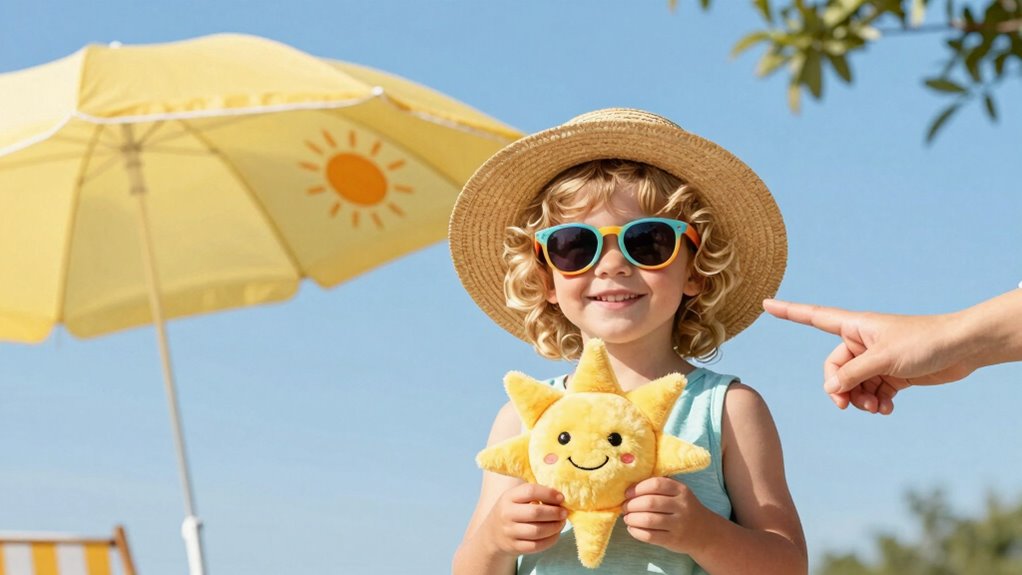

To explain sunburn risk to children simply, tell them the sun’s rays are like a powerful, invisible flashlight from the sky that can hurt their skin if they stay outside too long without protection. Emphasize that protecting skin is about more than staying cool or looking tan — it helps keep skin healthy now and later. Use fun ideas like superhero shields, special hats, or sunglasses to make safety exciting. If you keep exploring, you’ll learn more ways to keep them safe.

Get beauty and skincare favorites delivered free with Prime
- Fast, free delivery on millions of items
- Prime Video, Amazon Music and more included
- Member-only deals all year
Key Takeaways
- Sun’s rays are like a bright, hot flashlight that can hurt your skin if you stay outside too long.
- Sunburn makes your skin red, sore, and sensitive, and can cause problems later like wrinkles or skin cancer.
- Wearing a hat, sunglasses, and special clothes acts like a superhero shield to protect your skin.
- Staying in the shade and playing outside during cooler times keeps your skin safe from harm.
- Protecting your skin now helps keep it healthy and happy for a long time.
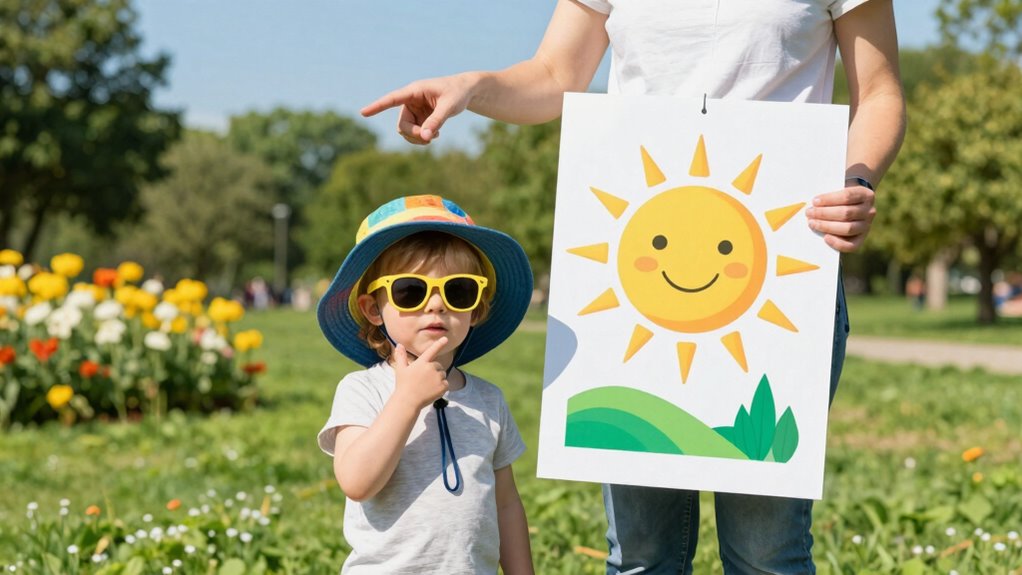
Explaining sunburn risk to children can be challenging, but keeping it simple helps them understand why protecting their skin matters. Kids often don’t realize that too much sun can hurt them, so your goal is to make it clear without overwhelming them with details. You might say that the sun’s rays are like a big, hot flashlight shining down from the sky, and if they stay outside too long without protection, their skin can get hurt. This helps them understand that sun protection isn’t just about staying cool or looking tan—it’s about keeping their skin safe from harm.
Sun protection keeps kids safe from hurtful sun rays and skin damage.
You should emphasize that skin damage from the sun isn’t always obvious right away. Sometimes, they might not feel uncomfortable at first, but their skin can still be harmed. Explain that this damage is what causes sunburns, which make their skin red, sore, and sensitive. If they get repeated sunburns over time, it can lead to more serious problems like wrinkles or even skin cancer later in life. By framing it this way, children start to see that protecting their skin now is a way to stay healthy in the future.
To keep it engaging and memorable, tell them that sun protection is like wearing a superhero suit. Special clothes, hats, and sunglasses act like a shield against the sun’s rays. Encourage them to think of sunscreen as a magic lotion that forms a barrier on their skin, blocking the harmful rays from causing skin damage. Make it fun by letting them pick out their favorite hat or sunscreen with a cool design, so they feel involved in their own protection.
Remind them that staying in the shade, especially during peak sun hours, is another way to prevent skin damage. Kids often want to be outside playing, so explain that finding a shady spot isn’t just about staying cool—it’s about staying safe. When they understand that the sun can hurt their skin, they’re more likely to listen and follow your advice about sun protection.
Additionally, teaching children about the importance of automated testing can help them understand that just like their skin needs protection, their activities need to be checked regularly to stay safe and effective. When they see that consistent care makes a difference, they’re more likely to adopt good habits. Remember that preventive measures play a big role in avoiding sun damage, and instilling this understanding early encourages responsible behavior. Finally, keep the message simple and positive. Instead of making it seem like a punishment, focus on how good it feels to stay safe and healthy. When children understand that their actions now can prevent pain and skin problems later, they’re more motivated to take sun protection seriously. By making the explanation clear and relatable, you help them develop habits that keep their skin healthy for years to come.
children's sunscreen with fun packaging
As an affiliate, we earn on qualifying purchases.
As an affiliate, we earn on qualifying purchases.
Frequently Asked Questions
Can Children Get Sunburned on Cloudy Days?
Yes, children can get sunburned on cloudy days. Clouds don’t block all UV rays, so UV awareness is essential year-round. To protect them, use cloud protection strategies like applying broad-spectrum sunscreen and encouraging wearing hats and sunglasses. Remind kids that UV rays can reach their skin even when it’s cloudy, so staying aware and taking precautions helps prevent sunburns and keeps their skin safe.
How Long Does It Take for a Sunburn to Appear?
A sunburn can show up within a few hours, usually between 2 to 6 hours after sun exposure. You’ll notice sunburn symptoms like redness, pain, and warmth on the skin. To prevent this, apply broad-spectrum sunscreen, wear protective clothing, and seek shade. Reminding children about prevention tips helps them understand the importance of protecting their skin, reducing the risk of painful sunburn symptoms and long-term skin damage.
Are Certain Skin Tones More Prone to Sunburn?
Certain skin tones tend to be less prone to sunburn, thanks to increased melanin, which offers natural protection. You should be aware that lighter skin tones typically have higher burn susceptibility, making them more vulnerable to sun damage. Skin tone awareness helps you understand that darker skin may resist burns longer, but it doesn’t eliminate risk. Always emphasize sun safety, regardless of skin tone, to protect from harmful UV rays.
What Are the Long-Term Effects of Sunburn?
Sunburn can cause long-term effects like sun damage and skin aging. When you get sunburned, UV rays harm your skin cells, increasing your risk of skin cancer later in life. It also speeds up aging, leading to wrinkles and dark spots. Protect your skin now by wearing sunscreen, seeking shade, and covering up. Taking these steps helps prevent lasting damage and keeps your skin healthier over time.
How Often Should Children Wear Sunscreen?
You should have children wear sunscreen every day, rain or shine, as if their skin depends on it—because it does! For effective sun protection, apply a broad-spectrum sunscreen with at least SPF 30 15 minutes before outdoor play, and reapply every two hours. Remember, consistent sunscreen use helps prevent skin damage and keeps their skin healthy and safe from harmful UV rays.
Conclusion
Remember, telling kids about sunburn risks helps them stay safe. Did you know that just 15 minutes of unprotected sun can cause a burn? Kids often forget how quickly the sun can hurt their skin, so remind them to wear sunscreen and seek shade. By keeping it simple and fun, you teach them healthy habits that last a lifetime. Protecting them now means fewer sunburns and healthier skin in the future.
Columbus Day / Indigenous Peoples' Day Picks
long weekend sales
As an affiliate, we earn on qualifying purchases.