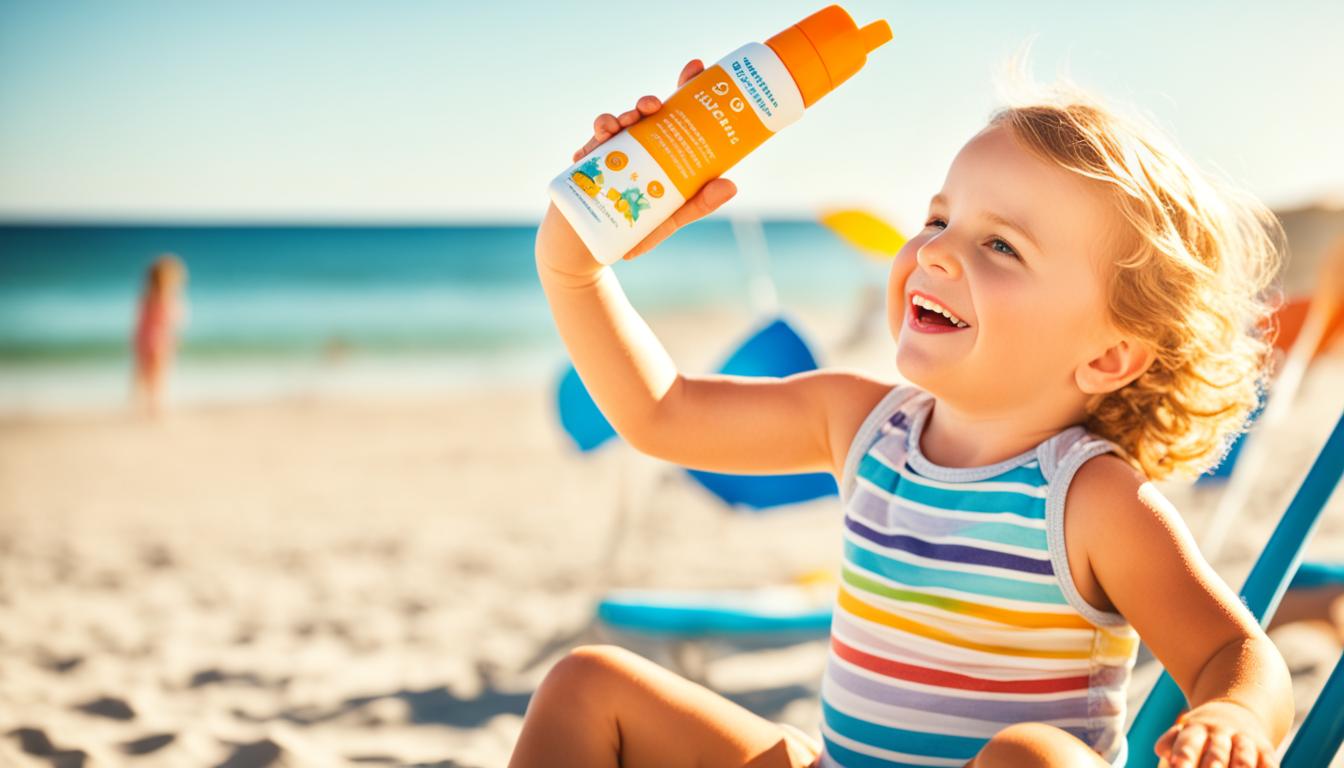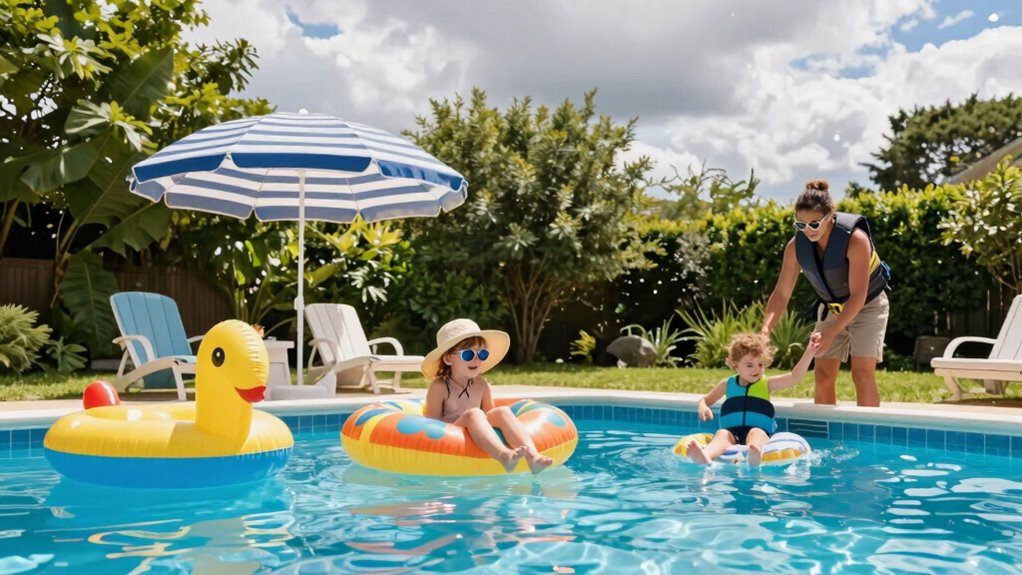

Even on cloudy pool days, you need to stay vigilant to protect children from UV rays. Apply broad-spectrum, water-resistant sunscreen with SPF 30 and reapply often, especially if they’re swimming or sweating. Keep kids in sight and within arm’s reach, using flotation devices or designated zones for safety. Think about shading options like umbrellas or trees, and schedule regular breaks. Staying alert to weather changes helps prevent surprises, and if you’d like more tips, there’s always more to consider.

Get beauty and skincare favorites delivered free — and shop member deals
- Fast, free delivery on millions of items
- Access to Prime Big Deal Days deals on October 6–7
- Prime Video, Amazon Music and more included
Key Takeaways
- Apply broad-spectrum, water-resistant sunscreen with SPF 30, reapplying every two hours or after swimming or sweating.
- Maintain constant adult supervision and keep children within arm’s reach at all times.
- Use protective clothing, hats, sunglasses, and natural shade options like umbrellas or trees.
- Educate children about hidden UV risks and enforce safety rules and boundaries.
- Schedule regular breaks from water activities and monitor weather conditions for safety.
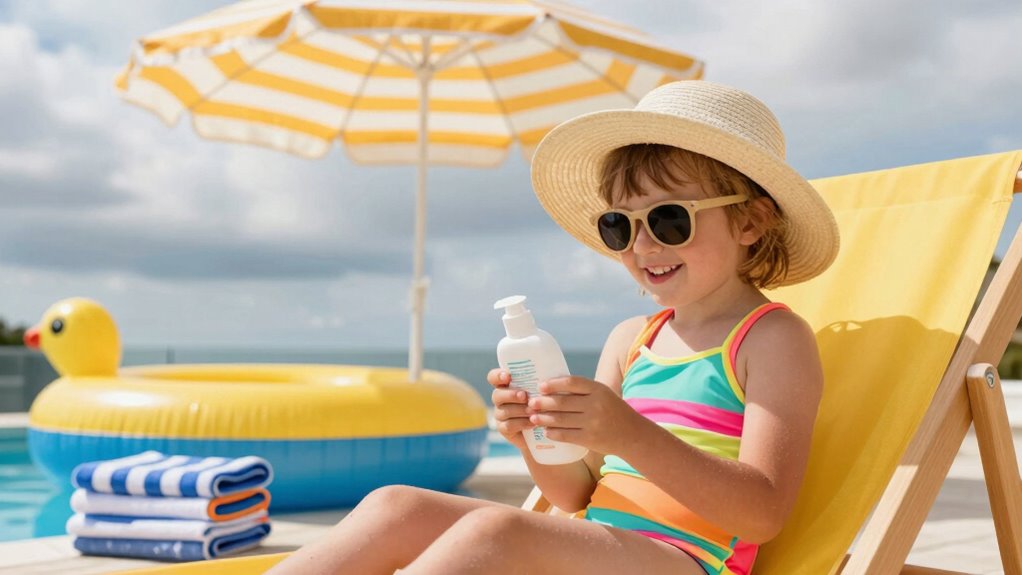
Even on cloudy pool days, it’s essential to prioritize your children’s safety. Many parents assume that clouds shield their kids from the sun’s harmful rays, but UV radiation can penetrate through overcast skies, increasing the risk of sunburn and long-term skin damage. To protect your children, you need to implement effective sun protection strategies, even when the sun isn’t shining brightly. Applying a broad-spectrum, water-resistant sunscreen with at least SPF 30 is a must. Reapply every two hours, or more often if your kids are swimming or sweating. Encourage your children to wear protective clothing like rash guards, hats, and sunglasses, which can block UV rays and add an extra layer of defense. Remember, UV rays can reflect off the water’s surface, amplifying exposure, so don’t skip these precautions just because the weather seems less sunny.
Supervision strategies are equally critical during cloudy days. It’s easy to become complacent when the sky is overcast, but your vigilance should remain unwavering. Constantly watch your children when they’re in or near the water. Assign a designated adult to supervise, avoiding distractions like phones or conversations, so you’re fully attentive. Keep children within arm’s reach, especially if they are young or inexperienced swimmers. Establish clear rules about swimming boundaries and ensure they understand the importance of following them. Use visual cues, such as designated swimming zones or floatation devices, to help children stay within safe areas. If your pool has a safety cover or fencing, double-check that it’s secure before allowing children to play nearby. Additionally, understanding UV penetration can help you better appreciate the importance of protection, even on cloudy days. Being aware of how reflected UV rays can increase exposure is vital for maintaining your child’s safety. Also, considering natural shading options like umbrellas or trees can provide additional protection from indirect UV exposure. Staying informed about UV reflection can help you take more effective measures to shield your children from hidden risks.
Research supports that 16PF provides a more nuanced view of personality traits, which can be useful in understanding how children might respond to different safety measures and supervision strategies. Remember that cloudy days can give a false sense of security, so your supervision strategies should be even more diligent. Kids tend to underestimate or forget about the hazards, so proactive monitoring is necessary. Incorporate regular breaks from water activities to prevent fatigue, which can compromise safety. Keep an eye on weather updates, as changing conditions might bring sudden sunlight or storms. By combining vigilant supervision strategies with proper sun protection measures, you create a safer environment for your children to enjoy the pool, regardless of the weather. Staying alert and prepared ensures that your kids have fun while staying protected from potential sun damage and water-related accidents.
broad-spectrum water-resistant sunscreen SPF 30
As an affiliate, we earn on qualifying purchases.
As an affiliate, we earn on qualifying purchases.
Frequently Asked Questions
Can UV Rays Penetrate Through Cloudy Skies?
Yes, UV rays can penetrate through cloud cover, so UV penetration still occurs even on cloudy days. You should be aware that cloud cover doesn’t fully block harmful UV rays, which can lead to skin damage. As a parent, you need to make certain children wear waterproof, broad-spectrum sunscreen, protective clothing, and UV-protective sunglasses. Keep an eye on the weather and reapply sunscreen regularly to keep kids safe around the pool, no matter the weather.
Are Pool Covers Necessary on Overcast Days?
Yes, pool covers are necessary on overcast days because they offer essential safety equipment, preventing children from accidentally falling in. Pool cover advantages include maintaining cleanliness, reducing evaporation, and providing a physical barrier. Even on cloudy days, the risk of unsupervised access remains, so using a pool cover helps keep kids safe and gives you peace of mind, ensuring your pool area stays secure and well-maintained.
How Often Should I Reapply Sunscreen on Cloudy Days?
On cloudy days, you should reapply sunscreen every two hours, even if you don’t see the sun. For example, imagine your kid playing outside for a few hours; UV rays can still penetrate clouds. To guarantee proper UV protection tips, reapply sunscreen promptly after swimming or sweating. Regular sunscreen reapplication helps maintain protection, so make it part of your outdoor routine to keep everyone safe.
Do Cloudier Days Affect Pool Water Temperature?
Yes, cloudier days can affect pool water temperature slightly, but factors like pool insulation and water circulation play bigger roles. Clouds block some sunlight, reducing heat absorption, but good insulation helps retain warmth, and active water circulation distributes heat evenly. If you want to maintain a comfortable temperature, optimize pool insulation and guarantee proper water circulation. This combination keeps the water warmer and more enjoyable, even on cloudy days.
Is It Safe for Children to Swim in Partially Shaded Pools?
You can safely let children swim in partially shaded pools, but make certain shade structures don’t block airflow or heat dissipation. For example, a family installed a shade canopy over their pool, maintaining proper water circulation and filtration. Regularly check water quality, as shaded areas may trap debris, and make certain the water filtration system is working efficiently. These steps help protect children and keep the pool safe and clean.
Conclusion
Remember, even on cloudy days, your child’s skin can still be harmed by harmful UV rays—think of it as the unseen villain lurking behind those clouds. Keep them protected with waterproof sunscreen, proper clothing, and supervision. Don’t let the weather fool you; a day at the pool can turn sour without the right precautions. Stay vigilant, and you’ll make sure your little explorer stays safe, just like a trusty knight guarding their castle—minus the dragon, of course.
Fall Picks
fall essentials
As an affiliate, we earn on qualifying purchases.