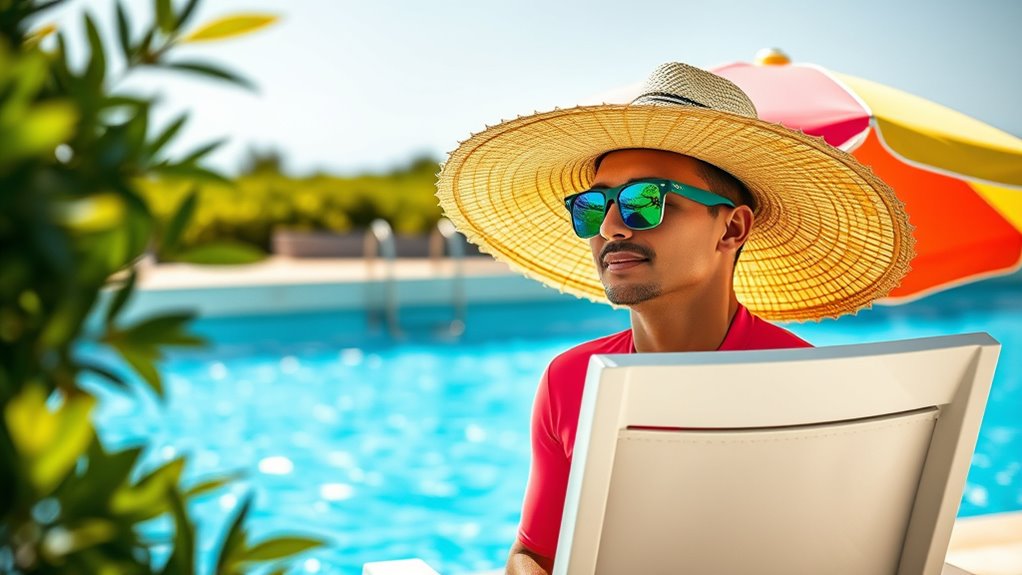

To avoid sunburn during pool days, you should wear protective clothing like long-sleeved rash guards and wide-brimmed hats, which block harmful rays while keeping you cool. Apply a broad-spectrum, water-resistant sunscreen generously and reapply every two hours, especially after swimming or sweating. Seek shade whenever possible and stay vigilant about sun exposure, making these habits part of your routine. If you keep these strategies in mind, you’ll learn more about staying safe under the sun.
Key Takeaways
- Wear UV-protective clothing, including long sleeves, hats, and sunglasses, to create a physical barrier against sun rays.
- Apply broad-spectrum sunscreen generously before outdoor duty and reapply every two hours or after swimming or sweating.
- Take breaks in shaded areas during peak sun hours (10 a.m. – 4 p.m.) to minimize UV exposure.
- Use protective gear consistently and stay vigilant about sun safety throughout the shift.
- Combine multiple strategies—clothing, sunscreen, shade—for comprehensive protection against sunburn.

When you’re spending a day at the beach or pool, sunburn can quickly ruin your fun and pose health risks. That’s why professional lifeguards always have a few tricks up their sleeves to stay protected in the sun. One of their main strategies is wearing protective clothing. They often choose lightweight, long-sleeved shirts or rash guards made from UV-protective fabric. These clothes act as a physical barrier, shielding their skin from harmful rays while still allowing breathability. Hats with wide brims are another essential piece—they cover their face, neck, and ears, which are common spots for sunburn. Sunglasses with UV protection also help safeguard their eyes and reduce glare, keeping them alert and comfortable during long hours outside.
But protective clothing isn’t enough on its own. Sunscreen application plays an imperative role in their sun safety routine. Lifeguards are diligent about applying broad-spectrum sunscreen with a high SPF before they even step outside. They make sure to cover all exposed skin, including often-overlooked areas like behind the ears, the back of the neck, and the tops of their feet. Reapplication is just as important as the initial application, so they typically reapply every two hours or after swimming, sweating, or towel drying. Using a generous amount and spreading it evenly ensures maximum coverage and protection. Many lifeguards prefer water-resistant formulas because they stay effective even after sweating or getting wet.
Additionally, they understand that UV exposure can be cumulative over time, so they take extra precautions during extended hours outdoors. They also pay close attention to the timing of their sun exposure. They try to avoid peak hours, usually between 10 a.m. and 4 p.m., when the sun’s rays are the strongest. If they’re required to be outside during these times, they rely heavily on their protective clothing and sunscreen to minimize UV damage. Staying in shaded areas whenever possible is another tactic they use to reduce direct sun exposure. When they’re on duty, they’re constantly vigilant, not just watching swimmers but also making sure they’re protected from harmful rays.
Frequently Asked Questions
What SPF Level Do Most Lifeguards Recommend?
For ideal sun protection, most lifeguards recommend using an SPF of at least 30, following sunscreen guidelines. This level blocks about 97% of UVB rays, helping you avoid sunburn during long days outdoors. Remember to reapply every two hours, especially after swimming or sweating. Stick with broad-spectrum sunscreens to shield your skin from UVA and UVB rays, ensuring you stay safe and comfortable in the sun.
How Often Should I Reapply Sunscreen During Pool Days?
You should reapply sunscreen every two hours during pool days to maintain ideal protection. Keep in mind that sunscreen durability varies based on factors like sweating, water exposure, and towel drying, which can wear off the protective layer faster. To stay safe, reapplication timing is key—especially after swimming or excessive sweating. Make it a habit to reapply regularly, ensuring your skin stays protected throughout your time in the sun.
Are There Any Clothing Materials Better for Sun Protection?
Imagine you’re in the year 3024, and your clothing keeps you safe from the sun like magic! Sun protective fabrics, like tightly woven nylon or polyester, outperform natural materials in blocking UV rays. When comparing clothing material, choose those with UPF ratings for the best sun protection. These fabrics are designed to shield your skin, making them a smart choice over regular cotton or linen for pool days.
Can Sunscreen Prevent All Types of Sun Damage?
Sunscreen offers good UV protection, but it can’t prevent all types of sun damage. It helps reduce your risk of sunburn and skin repair issues, yet some UV rays can still penetrate. To maximize protection, combine sunscreen with protective clothing and seek shade. Remember, no sunscreen is foolproof, so taking extra precautions guards your skin better against long-term damage and premature aging.
What Are Some Signs of Sunstroke to Watch For?
You should watch for signs of sunstroke, especially if you experience heat exhaustion or dehydration symptoms. Look for confusion, dizziness, or a racing heartbeat. You might also notice nausea, headache, or hot, dry skin. If you or someone else shows these signs, it’s essential to cool down, hydrate, and seek medical help immediately. Recognizing these symptoms early can prevent serious health issues from sunstroke.
Conclusion
Just like a seasoned lifeguard who always keeps an eye on the water, you should stay vigilant about your skin. I once saw a lifeguard peel off his sunscreen like armor after a long shift, only to regret it with a bright red face the next day. Remember, sunscreen is your shield against the sun’s relentless rays—wear it generously, reapply often, and enjoy your pool days without the burn. Protect your skin, and it’ll thank you later.