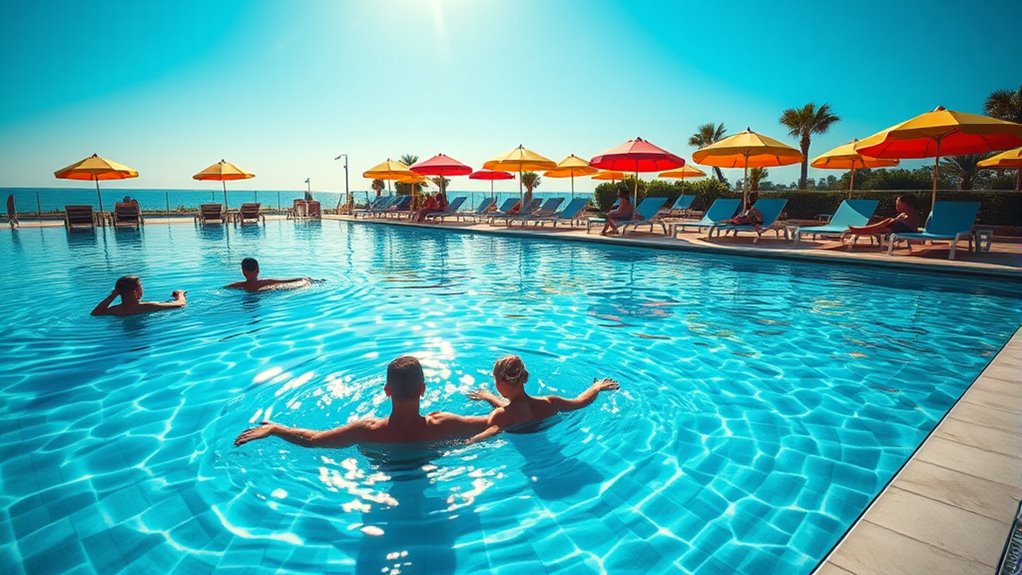

To tan safely at the pool, focus on early mornings and late afternoons when the UV index is lower. Avoid peak hours between 10 a.m. and 4 p.m., when UV rays are strongest and increase the risk of skin damage. Using sunscreen and limiting exposure during high UV times helps protect your skin. Want to discover more about optimizing your pool tanning sessions? Keep exploring for essential tips.
Key Takeaways
- The best times to tan at the pool are early morning or late afternoon when UV levels are lower.
- Avoid tanning during peak UV hours between 10 a.m. and 4 p.m. to reduce skin damage risk.
- Applying broad-spectrum SPF 30+ sunscreen and reapplying regularly enhances safety during sunbathing.
- Short, gradual sessions outside peak hours help build a tan while minimizing harm.
- Midday sun exposure increases the risk of sunburn and skin damage, so it’s best to limit or avoid tanning then.
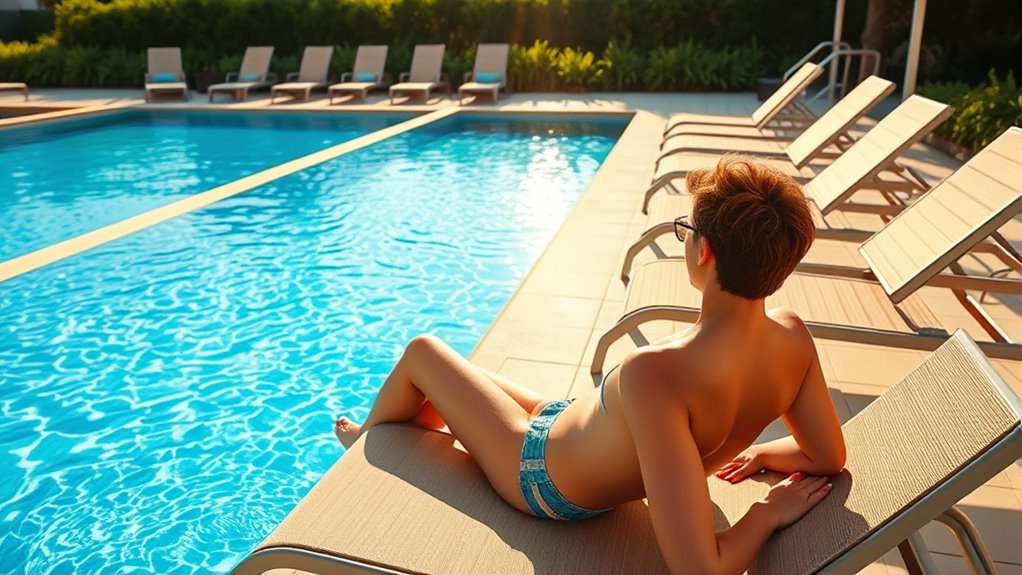
Have you ever wondered when the best time to tan by the pool is? If so, you’re not alone. Knowing the ideal time for tanning can help you achieve that golden glow while minimizing skin damage. The key factors to consider are sunscreen application and UV index fluctuations throughout the day. It’s tempting to lounge in the sun whenever you get the chance, but timing your sunbathing sessions wisely makes a big difference in protecting your skin and maximizing your tan.
First, consider how the sun’s position affects UV exposure. The UV index, which measures the strength of ultraviolet radiation, fluctuates during the day. Typically, it peaks between 10 a.m. and 4 p.m., with the highest levels around noon. During these hours, UV rays are at their most intense, meaning your risk of sunburn and skin damage increases if you don’t take proper precautions. That’s why experts recommend being cautious around midday, even if you want to get a quick tan. Instead, plan your tanning sessions during the early morning or late afternoon when the UV index is lower. This way, you can still enjoy the sun and gradually build your tan without exposing your skin to the most harmful rays.
Sunscreen application plays a vital role in safe tanning. Applying a broad-spectrum sunscreen with at least SPF 30 at least 15 minutes before you head out ensures your skin starts protected. Reapply every two hours, or more frequently if you’re swimming or sweating. Keep in mind that sunscreen doesn’t block all UV rays, especially if it’s not applied properly or if it’s expired. Combining sunscreen with timing your sunbathing during lower UV periods offers the best protection. You’ll avoid unnecessary skin damage while still getting some color. Remember, the goal isn’t to stay in the sun all day but to tan gradually and safely. Additionally, understanding how UV index fluctuations are affected by weather conditions and other factors can help you better plan your tanning sessions for maximum safety.
Frequently Asked Questions
How Does Water Temperature Affect Tanning Effectiveness?
Water temperature plays a key role in your tanning efficiency. When the water is warm, your skin absorbs more UV rays, helping you tan faster and more evenly. Conversely, cold water can reduce your skin’s exposure to UV, slowing down tanning. So, swimming in warmer water enhances your tan because warmth keeps your skin relaxed and receptive to UV absorption, making your tanning sessions more effective and enjoyable.
Can Pool Chemicals Impact Skin Safety During Tanning?
Pool chemicals can definitely impact your skin safety during tanning. If the chemical levels aren’t balanced, you risk skin irritation and sensitivity, which can make tanning uncomfortable or even harmful. Always check pool chemical safety before sunbathing, and avoid prolonged exposure if you notice redness or itching. Protect your skin by showering after swimming and using moisturizer to reduce irritation caused by improper chemical levels.
What Are the Long-Term Skin Effects of Pool Tanning?
Picture your skin basking in the sun’s glow, but prolonged pool tanning can lead to long-term effects. You might notice skin aging faster, with wrinkles and sun spots, and your melanoma risk increases. Over time, UV exposure damages your skin’s DNA, accelerating aging and raising health concerns. Protect your skin by limiting tanning sessions, using sunscreen, and avoiding excessive exposure to keep your skin youthful and safe.
Is It Better to Tan Solo or With Friends at the Pool?
When deciding whether to tan solo or with friends at the pool, consider your comfort and goals. Solo tanning lets you focus on your skin and avoid distractions, making it easier to monitor exposure and apply sunscreen. Group tanning can be fun and motivating, but it might lead to longer sun exposure or less attention to skin health. Ultimately, choose what helps you tan safely and enjoy your time.
How Do Cloud Cover and Weather Influence Pool Tanning?
Cloud cover and weather patterns are like the puppeteers behind your sun-kissed dreams. When clouds drift by, they block UV rays, making your tan fade faster or slow down entirely. Overcast days can still give you a subtle glow, but direct sunlight is your best ally for tanning. Keep an eye on weather forecasts, because a clear sky’s your golden ticket, while stormy weather’s a quick exit.
Conclusion
So, whether you’re aiming for a golden glow or just want to enjoy the sun safely, timing is key. For example, imagine Sarah who tanned early in the morning and saw faster, more even results without harsh sunburns. By choosing the right times—like mid-morning or late afternoon—you can maximize your tan while protecting your skin. Remember, smarter timing makes your pool days more enjoyable and healthier, so plan accordingly and soak up the sun safely!