
Many believe SPF 100 offers considerably better protection than SPF 50, but in reality, the difference is minimal—about 1% more UVB blocking. Both protect against UV rays effectively if applied correctly and reapplied regularly. Proper application and other sun safety habits matter more for skin protection than just choosing a higher SPF. To understand why the marginal benefit isn’t as big as you think, keep exploring the facts behind SPF and sun safety.
Key Takeaways
- SPF 50 blocks about 98% of UVB rays, while SPF 100 blocks around 99%, offering only a marginal difference.
- Proper application and reapplication are more important than choosing a higher SPF for effective protection.
- Both SPF 50 and SPF 100 are effective if used correctly; higher SPF provides minimal additional UVB protection.
- SPF mainly measures UVB protection; UVA protection depends on the broad-spectrum formulation, regardless of SPF number.
- Combining sunscreen with sun safety habits like seeking shade and protective clothing enhances overall skin protection.

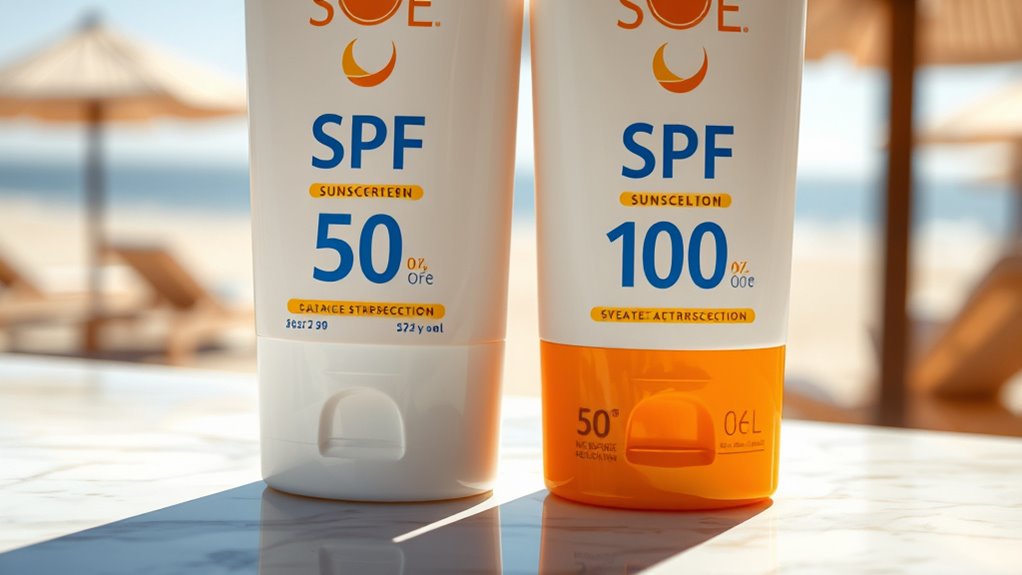
Many people assume that SPF 100 provides markedly greater protection than SPF 50, but in reality, the difference is minimal. Both sunscreens block a similar percentage of UV rays, which are responsible for skin damage and aging. SPF, or Sun Protection Factor, indicates how long you can stay in the sun without burning compared to having no protection. SPF 50 blocks about 98% of UVB rays, while SPF 100 blocks approximately 99%. The difference between these two is only about 1%, meaning that for most practical purposes, wearing SPF 50 offers nearly the same level of UV protection as SPF 100.
SPF 50 and SPF 100 protect against UV rays similarly; the difference is only about 1%.
Understanding UV protection is essential if you want to prevent premature skin aging. Ultraviolet rays penetrate the skin and damage collagen and elastin fibers, leading to wrinkles, fine lines, age spots, and loss of skin elasticity. Higher SPF sunscreens might seem like a better choice, but they don’t necessarily provide considerably more protection against these aging effects. Instead, the key is consistent, proper application of sunscreen, regardless of the SPF number. Applying enough sunscreen—about one ounce for the entire body—and reapplying every two hours, or more often if you’re sweating or swimming, greatly improves your UV protection.
It’s also important to recognize that SPF doesn’t protect against other harmful UV rays, like UVA, which penetrate deeper into the skin and contribute notably to skin aging and long-term damage. Broad-spectrum sunscreens, whether SPF 50 or SPF 100, shield against both UVA and UVB rays. Hence, focusing on broad-spectrum formulas and proper application is more effective than simply choosing a higher SPF. Many people think that SPF 100 is worth the extra cost or effort, but since the protection difference is marginal, it’s more practical to select a high-quality SPF 50 broad-spectrum sunscreen and use it correctly.
Additionally, proper sun safety habits**** such as seeking shade and wearing protective clothing can significantly enhance your skin protection. Ultimately, the goal is to minimize UV exposure to reduce skin aging and prevent skin cancer. While higher SPF offers a slight edge, it’s not a magic bullet. Consistency, proper application, and protection from UVA rays matter far more than the SPF number itself. By understanding that SPF 50 provides excellent UV protection and focusing on good sun safety habits, you can better protect your skin and maintain a youthful appearance. Remember, no sunscreen alone can fully prevent skin aging, but it plays a key role when combined with other sun-smart behaviors.
Frequently Asked Questions
Does SPF 100 Provide Complete Protection Against UVA and UVB Rays?
SPF 100 offers higher UV protection than SPF 50, but it doesn’t provide complete protection against UVA and UVB rays. Your skin’s sensitivity varies, so even with SPF 100, you should reapply frequently and use additional sun protection measures. No sunscreen blocks all UV rays, so it’s crucial to seek shade, wear protective clothing, and limit sun exposure for better skin safety.
How Often Should Sunscreen Be Reapplied With SPF 50 Versus SPF 100?
You should reapply sunscreen every two hours, regardless of SPF 50 or SPF 100, especially if you’re swimming or sweating. The application frequency remains the same because no sunscreen can last all day. Follow reapplication guidelines closely to maintain protection. Even higher SPF doesn’t mean you can skip reapplying; it just offers slightly more protection, so stay diligent with your sunscreen routine.
Are Higher SPF Sunscreens More Likely to Cause Skin Irritation?
Imagine your skin as a delicate garden; higher SPF sunscreens are like stronger shields. While they offer better protection, they can sometimes cause skin sensitivity, especially if your skin reacts to certain sunscreen ingredients. If you have sensitive skin, higher SPF might increase irritation risk. Always check ingredients and choose formulas suited for sensitive skin to prevent harm, much like tending your garden with gentle care.
Does SPF 100 Offer Longer-Lasting Protection Than SPF 50?
You might wonder if SPF 100 offers longer-lasting protection than SPF 50. While higher SPF sunscreens provide increased SPF longevity, the difference isn’t huge. Sunscreen durability depends on application and reapplication, not just SPF level. To maximize protection, reapply every two hours, especially after swimming or sweating. So, SPF 100 isn’t necessarily better for longer-lasting protection—consistent reapplication is key for effective sun defense.
Is SPF 100 Recommended for All Skin Types and Conditions?
Did you know that only 2% of people actually need SPF 100? For most skin types, especially sensitive skin, SPF 50 or lower works well. If you have skin sensitivity or are layering sunscreen for extra protection, SPF 100 isn’t always necessary and might cause irritation. Always choose a sunscreen suited to your skin condition, and consult a dermatologist if you’re unsure about your ideal SPF level.
Conclusion
Remember, choosing SPF isn’t a race to the top—it’s about consistent protection. SPF 100 may seem like a giant leap, but it’s more like a sprint that quickly slows down, offering only a marginal edge over SPF 50. Think of it as putting a thicker shield on, but the sun’s power still seeps through. So, focus on applying your sunscreen generously and reapplying often—because protection isn’t about the highest number, but about smart, steady defense.