
Choosing eco-friendly sunscreens helps protect your skin and the environment at the same time. Look for mineral-based formulas with zinc oxide or titanium dioxide, avoiding harmful chemicals like oxybenzone and octinoxate that damage coral reefs. Opt for biodegradable packaging to reduce plastic waste and adopt eco-conscious practices such as wearing protective clothing and applying sunscreen thoughtfully. Making these small changes can have a big positive impact—if you continue, you’ll discover more simple ways to integrate sustainability into your sun care routine.
Key Takeaways
- Choose sunscreens with mineral-based ingredients like zinc oxide and titanium dioxide to avoid harmful chemicals and protect marine life.
- Opt for biodegradable packaging made from plant-based or compostable materials to reduce plastic waste.
- Apply sunscreen thoughtfully, reapplying only as needed, and combine with protective clothing and shade to minimize chemical runoff.
- Support brands transparent about sourcing and manufacturing practices that prioritize environmental responsibility.
- Incorporate eco-friendly sun care into your lifestyle by practicing sustainable habits and using natural decor to promote overall eco-conscious living.
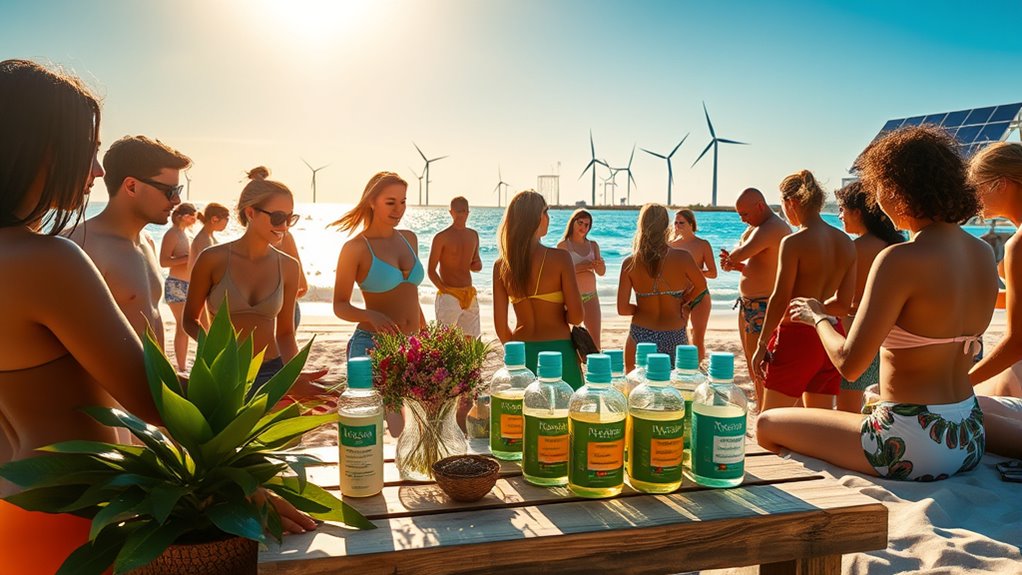
As more people become aware of environmental impacts, choosing eco-friendly sun care products has never been more crucial. Every time you slather on sunscreen, you have a chance to protect your skin and the planet at the same time. Many traditional sunscreens contain chemicals that can harm marine life and contribute to pollution. That’s why selecting products with biodegradable packaging and reef safe ingredients is a smart move. Biodegradable packaging guarantees that your sunscreen containers break down naturally, reducing plastic waste that can linger in landfills and oceans for hundreds of years. When you opt for sunscreens in packaging made from plant-based or compostable materials, you’re actively decreasing your ecological footprint. It’s a simple choice that makes a big difference.
Choosing eco-friendly sun care protects your skin and the planet with biodegradable packaging and reef-safe ingredients.
Reef safe ingredients are equally crucial in protecting our oceans. Ingredients like oxybenzone and octinoxate are known to cause coral bleaching and disrupt marine ecosystems. By choosing sunscreens formulated without these harmful chemicals, you help safeguard delicate coral reefs and marine biodiversity. Instead, look for products that feature mineral-based active ingredients such as zinc oxide or titanium dioxide. These minerals sit on the skin’s surface, providing effective sun protection without penetrating water or harming aquatic life. When you prioritize reef safe ingredients, you’re supporting a sustainable approach that respects marine ecosystems and promotes the health of our oceans. Incorporating antique-inspired decor and textured natural materials can also enhance your eco-conscious lifestyle by creating inviting, nature-inspired living spaces.
Beyond the ingredients and packaging, your overall sun care routine can embrace eco-friendly practices. Applying sunscreen thoughtfully, like avoiding excessive use and reapplying only when necessary, reduces waste and chemical runoff. Wearing protective clothing, seeking shade, and avoiding peak sun hours also lessen your reliance on chemical sunscreens. Additionally, researching brands that are transparent about their sourcing and manufacturing processes helps ensure you’re supporting companies committed to environmental responsibility.
Switching to eco-friendly sun care isn’t just a trend; it’s a responsible lifestyle choice. Every small step, from reading labels carefully to choosing biodegradable packaging, adds up to a significant positive impact. You don’t have to compromise on protection or convenience to be environmentally conscious. Many brands now offer highly effective, eco-friendly sunscreens that align with your values. By making these mindful choices, you’re not only caring for your skin but also contributing to the preservation of our planet’s most vulnerable ecosystems. It’s empowering to know that your sun protection routine can be both safe for your skin and sustainable for the Earth.
Frequently Asked Questions
Are Mineral Sunscreens Better for Sensitive Skin?
If you have sensitive skin, mineral sunscreens are often the better choice. They provide gentle protection by sitting on top of your skin rather than absorbing into it, reducing irritation. The mineral benefits include zinc oxide and titanium dioxide, which shield your skin from UV rays without harsh chemicals. You’ll likely find mineral sunscreens less likely to cause breakouts or redness, making them ideal for sensitive skin types.
How Do Reef-Safe Sunscreens Differ From Traditional Ones?
Reef-safe sunscreens differ from traditional ones mainly in reef safety. They avoid chemical filters like oxybenzone and octinoxate, which can harm coral reefs. Instead, reef-safe sunscreens use mineral ingredients like zinc oxide or titanium dioxide, providing effective sun protection without damaging marine environments. By choosing reef-safe options, you help preserve ocean ecosystems while staying protected, making them a better choice for both your skin and the planet.
Can Eco-Friendly Sunscreens Be as Effective as Chemical Ones?
Imagine you’re in the 90s, wondering if eco-friendly sunscreens are as effective as chemical ones. The good news is, they often use natural ingredients that protect your skin just as well. Plus, many eco-friendly options now boast impressive product longevity, so you don’t need to reapply as often. With advancements, you can enjoy reliable sun protection while supporting sustainability—proving eco-friendly sunscreens are a smart, effective choice.
What Are the Environmental Impacts of Sunscreen Packaging?
You might not realize it, but sunscreen packaging has a significant environmental impact. Using recyclable packaging helps reduce waste and encourages reuse, while biodegradable containers break down naturally, minimizing pollution. When you choose sunscreens with these eco-friendly options, you support sustainability efforts. Opting for brands that prioritize recyclable materials and biodegradable containers helps protect ecosystems and reduces your carbon footprint, making your sun protection environmentally responsible.
How Can I Reduce Plastic Waste When Using Sun Protection?
To reduce plastic waste when using sun protection, opt for reusable containers instead of single-use bottles. Look for sunscreens packaged in biodegradable packaging, which break down naturally and lessen environmental impact. You can also refill your containers whenever possible, avoiding unnecessary waste. Supporting brands that prioritize eco-friendly packaging helps protect the planet while keeping your skin protected. Small changes like these make a big difference over time.
Conclusion
By choosing eco-friendly sunscreens and adopting sustainable practices, you’re helping protect both your skin and the planet. Did you know that traditional sunscreens can harm over 1,000 marine species? Switching to mineral-based, reef-safe products reduces this impact. Every small effort counts—whether recycling packaging or opting for biodegradable formulas. Together, these choices make a real difference in preserving our environment for future generations, proving that enjoying the sun doesn’t have to come at nature’s expense.