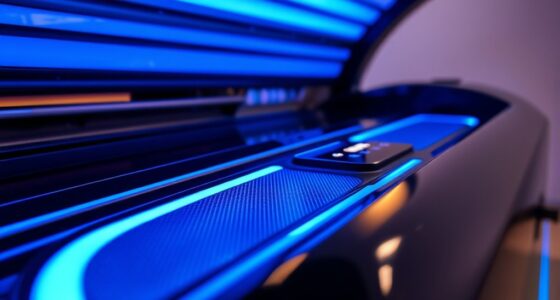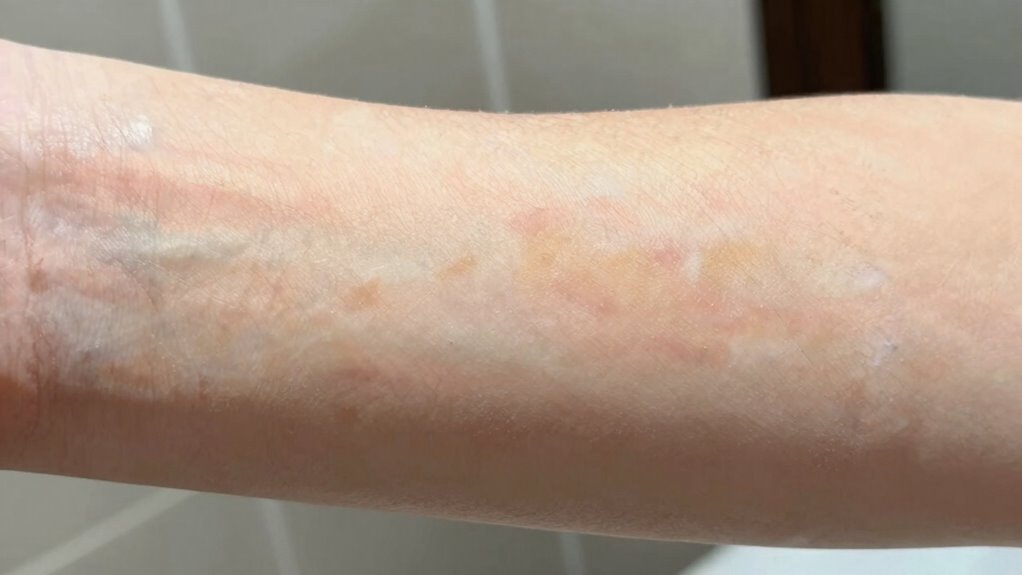

After a tanning bed session, look for skin redness or pinkness within hours, which signals irritation from overexposure. You might also feel a burning or hot sensation, along with swelling or prickling. Blisters or peeling skin days later indicate significant damage. If your skin feels tender or painful, it’s a strong sign you’ve overdone it. Continuing to care for your skin is essential; keep exploring to learn how to protect yourself effectively.
Open a free Amazon Business account
Business pricing, bulk buying and tax-exempt orders.
As an affiliate, we earn on qualifying purchases.
Key Takeaways
- Look for immediate skin redness or pinkness within hours of tanning.
- Watch for blister formation or skin peeling days after the session.
- Notice burning sensations, tenderness, or increased heat during or after tanning.
- Identify swelling, prickling, or discomfort indicating skin stress.
- Be alert to long-term signs like dryness, peeling, or increased skin sensitivity.
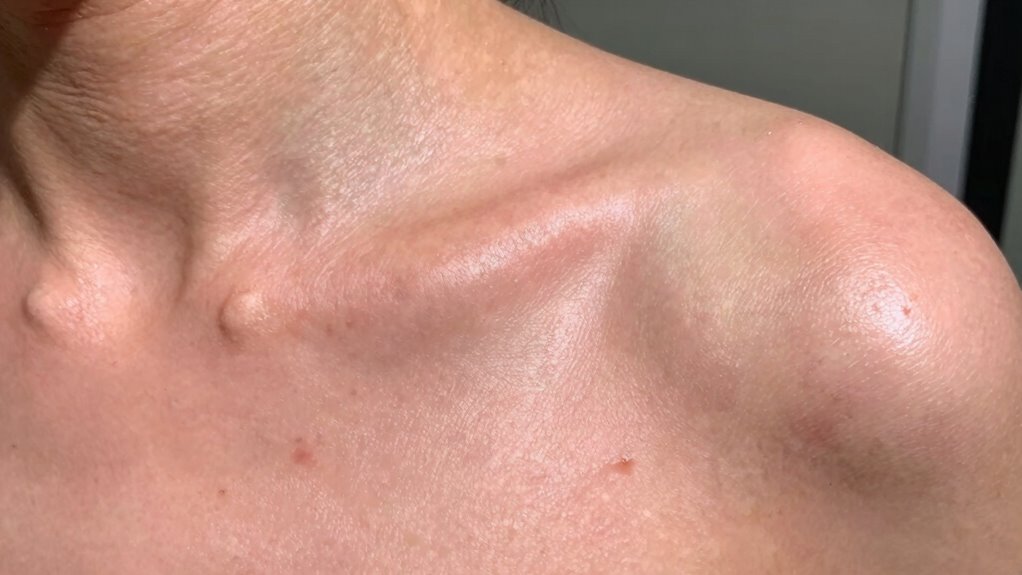
After a tanning bed session, it’s important to recognize the signs of overexposure to protect your skin and health. One of the most immediate indicators is skin redness, which often appears within hours of your session. This redness, also known as erythema, signals that your skin has been irritated by too much UV exposure. If you notice your skin turning pink or inflamed, it’s a clear sign you’ve gone beyond a safe tanning limit. Ignoring this redness can lead to more serious damage, so don’t brush it off; instead, take steps to soothe and protect your skin.
Another warning sign to watch for is blister formation. If you start seeing small blisters or fluid-filled bumps develop on your skin, you’re likely experiencing a severe reaction to overexposure. Blisters indicate that your skin’s outer layers have been damaged, and this damage can be painful and risky for long-term skin health. If blisters appear, it’s vital to avoid further UV exposure and seek proper care. Popping or scratching blisters can introduce infections, so it’s best to keep them intact and consult a healthcare professional if needed.
You should also pay attention to sensations of burning or intense heat on your skin during or after the session. A burning feeling is a clear sign that your skin has absorbed too much UV radiation. This discomfort usually accompanies redness and blistering, reinforcing the need to take immediate action. Overexposure can also lead to swelling or a prickling sensation, which signals that your skin is under stress. Additionally, overexposure to UV rays can cause skin damage, which may not be immediately visible but can have lasting effects. The risk of developing sunburn increases significantly when overexposure occurs, so prompt care is essential. It’s also helpful to understand that UV overexposure can lead to increased risk of skin cancer over time. Being aware of UV exposure effects helps you react promptly.
In addition to visible signs, overexposure can cause skin dryness, peeling, or flakiness in the days following your tanning session. If you notice your skin peeling or feeling rough and flaky, these are signs that your skin’s natural barrier has been compromised. Ignoring these symptoms can increase your risk of sunburn and long-term skin problems, including premature aging and skin cancer. Proper hydration and gentle skincare routines are essential to support skin recovery.
Being aware of these signs—skin redness, blister formation, burning sensations, swelling, and peeling—helps you react promptly. If you notice any of these symptoms, it’s vital to stop further tanning, hydrate your skin with gentle moisturizers, and protect yourself from additional UV exposure. Recognizing overexposure early can prevent more serious damage and keep your skin healthier in the long run.
after tanning skin care products
As an affiliate, we earn on qualifying purchases.
As an affiliate, we earn on qualifying purchases.
Frequently Asked Questions
Can Overexposure Cause Long-Term Skin Damage?
Overexposure can indeed cause long-term skin damage. It accelerates skin aging, leading to wrinkles and age spots, and can disrupt melanin balance, increasing the risk of uneven pigmentation and skin cancers. Repeated overexposure harms your skin’s health, making it more vulnerable to UV damage. To protect yourself, limit tanning sessions and always follow safety guidelines, ensuring you don’t compromise your skin’s long-term health and appearance.
How Soon Do Symptoms of Overexposure Typically Appear?
A stitch in time saves nine, so pay attention. Symptoms of overexposure often appear within 4 to 8 hours after tanning. You might notice skin discoloration, redness, or increased skin sensitivity, which are signs your skin’s been overexposed to UV rays. The sooner you recognize these symptoms, the better you can prevent further damage. Trust your skin’s signals—acting early can save you from longer-term problems.
Are There Any Immediate Health Risks From Tanning Bed Overexposure?
Yes, there are immediate health risks from tanning bed overexposure. You might experience skin dehydration, which causes dryness and irritation, and over time, it can lead to a Vitamin deficiency, especially of Vitamin D. Overexposure also increases your risk of burns and skin damage. If you notice redness, pain, or unusual dryness right after tanning, it’s a sign to reduce exposure and seek medical advice to prevent more serious health issues.
What’s the Difference Between a Tan and Overexposure?
A tan results from increased skin pigmentation, which is your body’s natural response to UV exposure, giving you a darker hue. Overexposure, however, risks skin damage, burns, and long-term health issues. Many tanning myths suggest that a deep tan equals safety, but that’s false—overexposure can harm your skin. Recognize the difference by how your skin feels; overexposure causes pain, redness, and peeling, unlike a healthy tan.
Can Overexposure Happen Even With Brief Tanning Sessions?
Yes, overexposure can happen even during brief tanning sessions. If you notice a UV burn or increased skin sensitivity afterward, it’s a sign you’ve overdone it. Shorter sessions don’t guarantee safety, especially if your skin reacts badly. Always listen to your body, and don’t ignore redness or pain, which indicate overexposure. Protect your skin by following recommended time limits and moisturizing afterward to minimize damage.
Conclusion
After your tanning session, keep an eye out for redness, blistering, or peeling skin—these signs point to overexposure. Remember, even a small mistake can turn into a big problem if you’re not careful. It’s better to play it safe than to learn the hard way. Think of your skin as a delicate garden; with proper care, it’ll flourish, but neglect can turn it into a lost cause. Stay vigilant and protect your skin!
Flea & tick season Picks
flea and tick prevention
As an affiliate, we earn on qualifying purchases.