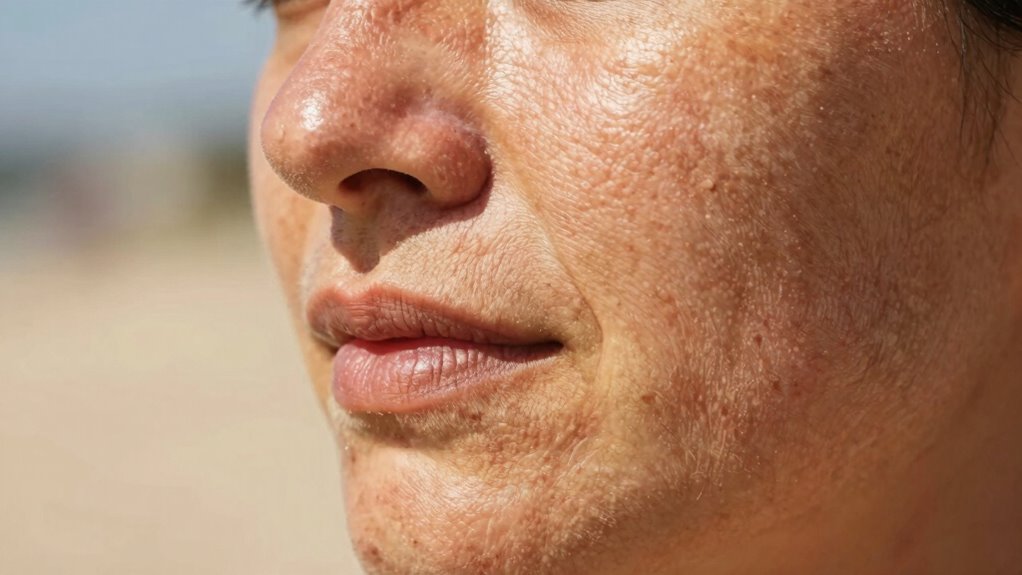
Spending more time in the sun won’t make your skin healthier; in fact, it accelerates aging and increases the risk of skin damage and cancer. While sunlight helps your body produce vitamin D, excess exposure doesn’t boost this benefit and instead harms your skin’s collagen and elastin fibers, leading to wrinkles and age spots. To protect your skin’s youthful look, learn how to balance sun exposure safely and effectively. Keep going to discover how you can enjoy the sun without risking your skin.
Key Takeaways
- Excessive sun exposure damages collagen and elastin, accelerating skin aging and causing wrinkles and age spots.
- Overexposure increases the risk of skin cancer and sunburn, outweighing the benefits of vitamin D.
- UV rays cause cellular damage that accumulates over time, leading to premature skin aging.
- Short, moderate sun exposure provides vitamin D benefits without significant skin damage.
- Protecting skin during peak UV hours helps maintain skin health and youthful appearance.
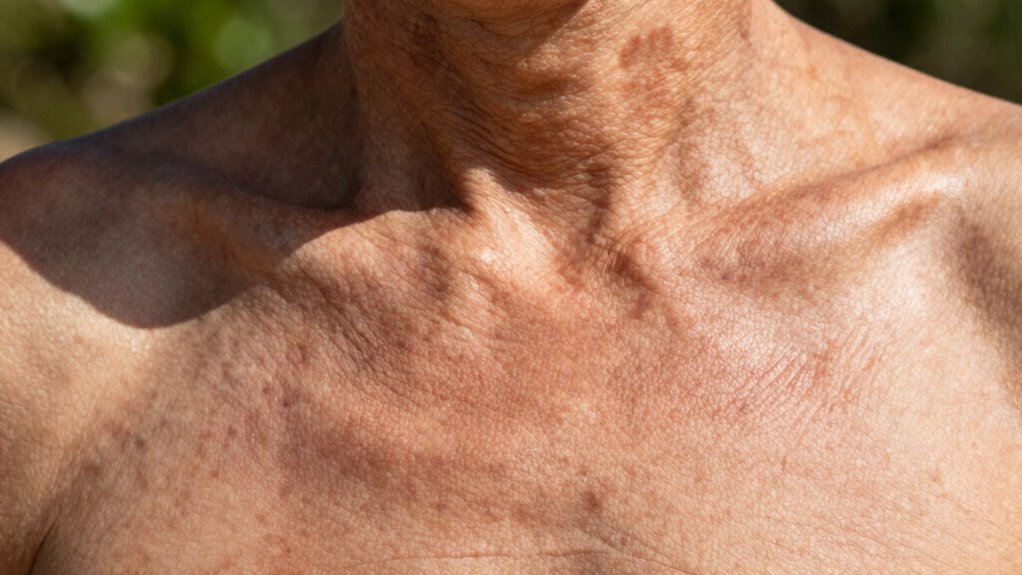
While soaking up the sun might feel good, more isn’t necessarily better when it comes to your skin. Spending time outdoors does help your body produce vitamin D, a vital nutrient that supports bone health, immune function, and overall well-being. However, excessive sun exposure doesn’t amplify these benefits without risking serious skin damage. When your skin is exposed to ultraviolet (UV) rays, your body ramps up vitamin D synthesis, but that process comes with a cost. Too much UV exposure accelerates skin aging, leading to wrinkles, fine lines, age spots, and loss of elasticity. Instead of enjoying endless hours in the sun, you should aim for a balanced approach that maximizes vitamin D production while minimizing skin harm.
Moderate sun exposure boosts vitamin D without speeding up skin aging. Balance is key for healthy skin and overall well-being.
Your skin’s response to sun exposure is complex. The more UV rays your skin absorbs, the faster it ages. UV radiation damages collagen and elastin fibers, which are essential for maintaining your skin’s firmness and smoothness. Over time, this damage accumulates, causing premature skin aging. While a little sun can encourage vitamin D synthesis, prolonged or intense exposure triggers cellular damage, increases the risk of sunburn, and raises your chances of developing skin cancer. The key is to find that sweet spot—enough sun to support vitamin D levels without crossing into harmful territory. Additionally, understanding the role of contrast ratio in visual quality can help you better appreciate the importance of balancing exposure and protection, much like managing image quality in home cinema setups.
Many people mistakenly believe that the more sun they get, the better their health, but that’s a dangerous misconception. Protecting your skin from overexposure doesn’t mean you have to avoid the sun entirely; it means being strategic. Short, regular periods of sun exposure—say, 10 to 15 minutes a day—can help your body produce sufficient vitamin D without significantly increasing skin aging risks. It’s also helpful to understand that UV index levels vary throughout the day and across seasons, so being aware of these fluctuations can help you plan safer outdoor activities. Incorporating protective clothing and seeking shade during peak hours are additional effective measures to reduce harmful UV exposure. Always wear broad-spectrum sunscreen, seek shade during peak hours, and cover up with protective clothing when staying outdoors longer. These habits help you enjoy the sun’s benefits without paying the price in skin aging or damage.
In the end, it’s about moderation. More sun doesn’t lead to better skin or health; it often results in the opposite. By understanding the balance between vitamin D synthesis and skin aging, you can make smarter choices that protect your skin’s youthful appearance and overall health. Remember, quality over quantity is the way to go—your skin will thank you for it.

La Roche-Posay Anthelios UV Pro-Sport SPF 50 Sunscreen for Face & Body, Water & Sweat Resistant with Non-Drip Formula, Invisible Broad Spectrum Sunscreen Lotion, Lightweight & Breathable, 6.7 Fl Oz
High-Endurance, Sweat & Water Resistent Sport Sunscreen for Body & Face: Specifically formulated for long lasting SPF 50…
As an affiliate, we earn on qualifying purchases.
As an affiliate, we earn on qualifying purchases.
Frequently Asked Questions
Can Sunscreen Completely Block UV Rays?
Sunscreen can’t completely block UV rays, but it provides essential UV protection. When you apply it properly, it strengthens your skin barrier and reduces UV damage. However, no sunscreen offers 100% protection, so you should also seek shade, wear protective clothing, and avoid peak sun hours. Combining these strategies helps maintain healthy skin and minimizes the risk of sun damage, even on the sunniest days.
Does Sun Exposure Improve Vitamin D Levels?
About 90% of your vitamin D synthesis comes from sun exposure, but too much sun can harm your skin. While moderate sun exposure boosts vitamin D levels, overdoing it increases skin cancer risk. Sun protection is essential to balance these effects. So, enjoying brief periods in the sun can help maintain healthy vitamin D levels without risking skin damage, just remember to protect your skin when you’re exposed for longer periods.
How Does Skin Aging Differ With Sun Exposure?
Sun exposure accelerates skin aging by causing photoaging effects, which include wrinkles, fine lines, and age spots. You damage collagen, the protein that keeps your skin firm and elastic, leading to collagen breakdown. Over time, this results in sagging and loss of youthful bounce. To protect your skin, limit sun exposure, wear protective clothing, and use broad-spectrum sunscreen. This helps preserve collagen and keeps your skin looking younger longer.
Are There Safe Times to Sunbathe?
Think of sun safety as a delicate dance; timing is everything. The safest times to sunbathe are early morning or late afternoon when the sun’s rays are milder. Avoid peak hours, usually 10 a.m. to 4 p.m., when UV exposure is strongest. Remember, many tanning myths can tempt you into danger—truth is, a healthy glow comes without risking your skin’s future health.
What Are the Early Signs of Sun Damage?
You might notice early signs of sun damage like skin discoloration and premature wrinkles. These changes happen when UV rays harm your skin’s cells, leading to uneven pigmentation and loss of elasticity. If you see dark spots or your skin starts to sag or wrinkle earlier than usual, it’s a sign you’ve exposed yourself too much to the sun. Protect your skin now to prevent further damage and maintain a youthful appearance.

Soothfeel Women's UPF 50+ Sun Protection Hoodie Jacket Lightweight Long Sleeve Sun Shirt for Women with Pocket Hiking Outdoor B-White
Sun Protection: The fabric rating UPF 50+ protects your skin from the harmful UVA/UVB rays, keeping you cool…
As an affiliate, we earn on qualifying purchases.
As an affiliate, we earn on qualifying purchases.
Conclusion
Think of your skin as a delicate garden. Just like too much sun can scorch your plants, overexposure to sunlight damages your skin’s health and beauty. Giving your skin the right balance of sunlight is like watering your garden wisely—enough to thrive, but not so much that it withers. Protect and nurture your skin with care, knowing that more sun isn’t a shortcut to better skin; it’s a risk that can leave your skin barren and worn.

Nature Made Vitamin D3 1000 IU (25 mcg), Vitamin D Supplement for Bone, Teeth, Muscle and Immune Health Support, 300 Softgels, 300 Day Supply
Immune, muscle, teeth and bone health support supplement: contains one 300 count bottle of Nature Made Vitamin D3…
As an affiliate, we earn on qualifying purchases.
As an affiliate, we earn on qualifying purchases.
after sun skin care lotion
As an affiliate, we earn on qualifying purchases.
As an affiliate, we earn on qualifying purchases.