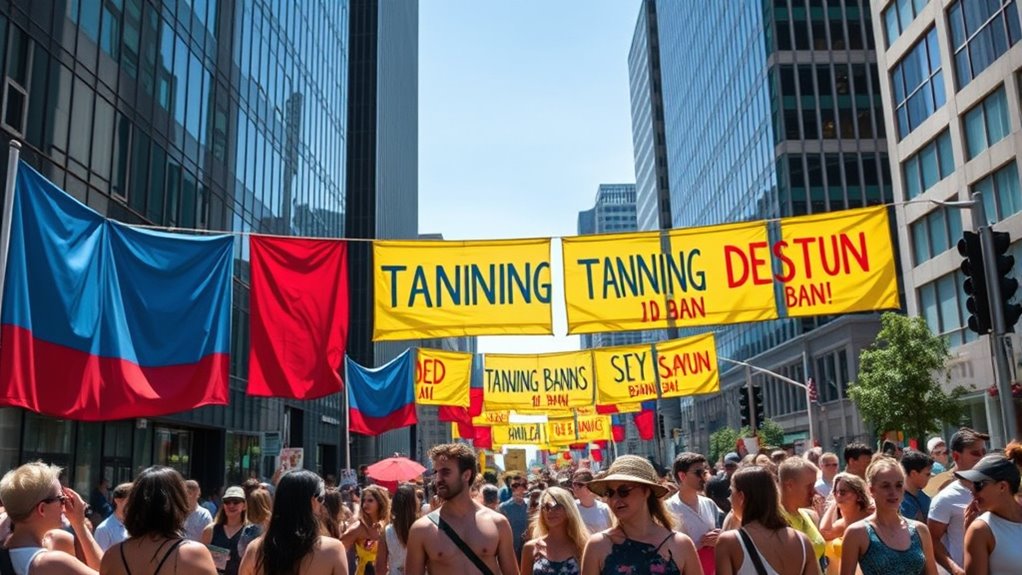

Across the globe, many countries have gradually implemented tanning bed bans and restrictions to protect public health, especially youth. For example, Australia and Brazil prohibit minors from using tanning beds altogether, while others enforce age limits and licensing rules. These policies aim to reduce skin cancer risks linked to UV exposure. As awareness grows about the dangers, more nations are adopting stricter measures. Stay with us to discover how these bans evolved over the years and what’s next.
Key Takeaways
- Several countries, including Australia and Brazil, implemented complete bans on minors using tanning beds early on.
- European nations have progressively introduced age restrictions and licensing requirements since the early 2000s.
- The U.S. has seen a patchwork of state-level regulations, with some enacting bans or restrictions from the 2000s onward.
- International awareness campaigns and scientific evidence have driven global policy shifts toward stricter tanning bed regulations.
- Recent years have seen increased calls for nationwide or global bans, emphasizing the health risks and protecting youth.
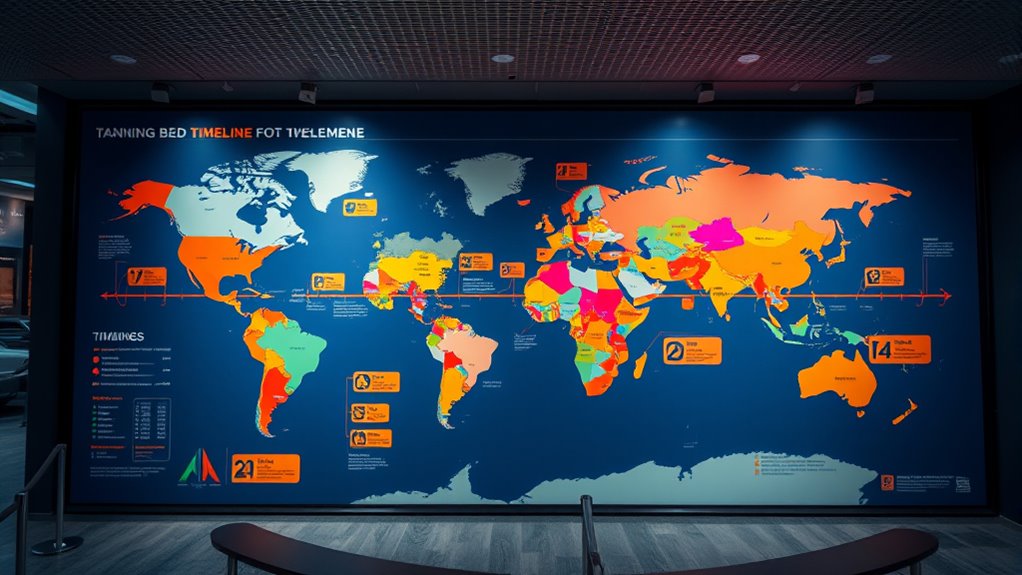
Many countries and states are implementing bans on tanning beds because of the serious health risks they pose. These policies are part of broader public health strategies aimed at reducing skin cancer rates and protecting vulnerable populations, particularly young people. Tanning beds emit ultraviolet (UV) radiation, which markedly increases the risk of melanoma and other skin cancers. Recognizing this danger, governments worldwide are enacting public health policies to limit or ban indoor tanning, especially for minors, to prioritize youth protection.
Many regions ban tanning beds to protect youth from UV-related skin cancer risks.
In many regions, the focus of these policies is on restricting access for underage users. Countries like Australia and Brazil have established strict laws that prohibit minors from using tanning beds entirely. These measures are motivated by the understanding that young skin is particularly susceptible to UV damage, and early exposure can lead to lifelong health issues. By enforcing age limits or outright bans, authorities aim to prevent young people from engaging in risky behaviors that could compromise their long-term health.
The implementation of public health policies targeting youth protection has been driven by mounting scientific evidence linking tanning bed use to increased melanoma risks. Many health agencies advocate for extensive bans, emphasizing that no safe level of UV exposure exists. These policies often come with public awareness campaigns designed to educate communities about the dangers of UV radiation and the importance of sun safety. Such initiatives seek to change social norms surrounding tanning and promote healthier behaviors, especially among impressionable youth.
Enforcement of these bans varies, but many jurisdictions have established penalties for violating tanning regulations. These can include fines for salons that allow unaccompanied minors or operate without proper licensing. Some regions have also required tanning salons to display warnings about skin cancer risks prominently. These measures serve to reinforce the importance of youth protection and demonstrate a commitment to public health.
Moreover, the rise of bike safety awareness campaigns has contributed to a broader understanding of protective health measures, paralleling efforts to reduce UV exposure risks. As public awareness grows, more nations are considering or adopting all-encompassing tanning bed bans. The trend reflects a global consensus that indoor tanning poses notable health risks that outweigh any cosmetic benefits. By enacting these bans, policymakers aim to reduce the incidence of skin cancer, protect future generations, and promote healthier lifestyle choices. Ultimately, these public health policies underscore a collective responsibility to safeguard youth from preventable harm and foster environments that prioritize long-term well-being over short-term aesthetic desires.

Coppertone Kids Sunscreen Lotion SPF 70, Water Resistant Sunscreen for Kids, 8 Fl Oz Bottle
Pediatrician Recommended: Body sunscreen lotion for kids from the #1 pediatrician recommended sunscreen brand (2)
As an affiliate, we earn on qualifying purchases.
As an affiliate, we earn on qualifying purchases.
Frequently Asked Questions
What Are the Health Risks Associated With Tanning Beds?
Using tanning beds can cause serious health risks like skin damage, including premature aging and increased skin cancer chances. You also risk eye injury if you don’t wear proper protection, as UV rays can harm your eyes and lead to cataracts. It’s best to avoid tanning beds altogether to protect your skin and eyes from these dangers. Consider safer alternatives like sunless tanning to achieve a healthy glow.
How Do Tanning Bed Bans Impact the Tanning Industry?
You might find that tanning bed bans lead to significant industry adaptation, forcing businesses to diversify services or face closures. Remarkably, some regions see up to a 30% decline in tanning salons after bans, highlighting notable economic consequences. These restrictions push the industry to innovate, but they can also cause job losses and revenue drops, making it essential for businesses to find new ways to stay afloat amid tightening regulations.
Are There Any Exemptions to Tanning Bed Bans?
Yes, there are exemptions to tanning bed bans. You might find age restrictions in place, prohibiting minors from using tanning beds altogether. Medical exemptions are also common, allowing individuals with specific health conditions to access tanning beds under medical supervision. These exemptions aim to balance public health concerns with individual needs, ensuring that certain groups are protected while others can still use tanning beds with restrictions or approvals.
How Effective Have Tanning Bed Bans Been in Reducing Skin Cancer?
You might think tanning bed bans instantly cut skin cancer rates, but their effectiveness depends on behavior change and public awareness. Evidence shows that these bans reduce indoor tanning, especially among teens, leading to fewer skin cancer cases over time. When people understand the risks and regulations are in place, they’re more likely to avoid harmful UV exposure. So, bans are effective, but only when combined with education and ongoing awareness campaigns.
What Alternative Tanning Options Are Available Post-Ban?
After bans on tanning beds, you can explore sunless alternatives like spray tanning and self-tanning lotions. These options provide a bronzed look without UV exposure, reducing your skin cancer risk. Spray tanning delivers quick, even color at salons, while self-tanners are convenient for at-home use. Both are safe and effective alternatives, helping you maintain a tan while protecting your skin’s health.

DANGER Indoor Tanning Bed UV Radiation Sign – Eye Protection Required – Skin Cancer & UV Exposure Warning – 8×12 Rust-Resistant Aluminum Salon Safety Sign by CGAP Safety
Designed to warn customers and staff of UV radiation exposure hazards associated with indoor tanning equipment and tanning…
As an affiliate, we earn on qualifying purchases.
As an affiliate, we earn on qualifying purchases.
Conclusion
As countries ban tanning beds to protect your health, as governments recognize the risks, and as awareness grows worldwide, you can be part of the change. By choosing safety over risky tanning practices, by supporting regulations over unsafe habits, and by spreading awareness over ignorance, you help create a safer future. Together, we can turn the tide against harmful tanning practices and embrace a healthier, safer lifestyle for everyone.

Sasylvia 20/50 Pcs Black Melanoma Skin Cancer Awareness Bracelets Adjustable Cord Stretch Funeral Skin Cancer Awareness Gifts for Men Women Jewelry Accessories(20 Pcs)
Skin Cancer Awareness Bracelets: contains a total of 20 melanoma cancer bracelets, are a good way to show…
As an affiliate, we earn on qualifying purchases.
As an affiliate, we earn on qualifying purchases.

European Gold Dark Star 5000X Indoor Tanning Lotion for Tanning beds, 12 fl oz
✅Dark Star 5000X Bronzing is the darkest of dark!
As an affiliate, we earn on qualifying purchases.
As an affiliate, we earn on qualifying purchases.