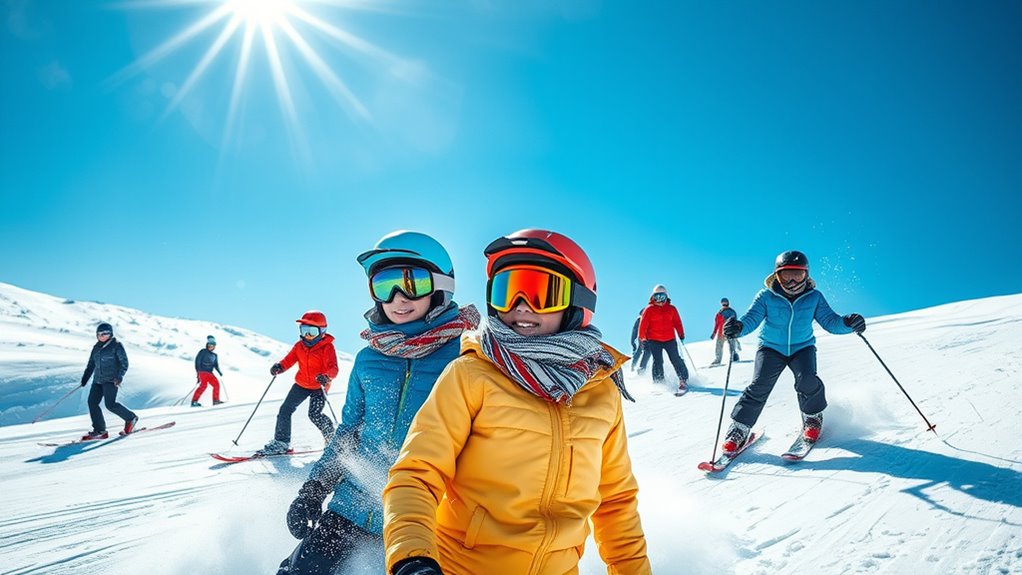

When skiing or snowboarding, make sure to apply a broad-spectrum sunscreen with SPF 30 or higher 15-30 minutes before heading out. Don’t forget to cover all exposed skin, including ears, neck, and face, and reapply frequently, especially after sweating or wiping away snow. Wear UV-protective clothing, sunglasses, and a wide-brimmed hat or helmet. Keep in mind, UV rays reflect off snow, so staying protected becomes even more vital—learn how to maximize your skin safety tips.

Get beauty and skincare favorites delivered free with Prime
- Fast, free delivery on millions of items
- Prime Video, Amazon Music and more included
- Member-only deals all year
Key Takeaways
- Apply broad-spectrum SPF 30+ sunscreen generously 15-30 minutes before exposure and reapply frequently, especially after sweating or wiping.
- Wear UV-protective clothing, including long sleeves, pants, and accessories like hats, neck gaiters, and sunglasses with UV protection.
- Protect all exposed skin, including ears and neck, by covering or applying sunscreen to prevent sunburn.
- Be extra cautious during peak UV hours between 10 a.m. and 4 p.m., and remember UV rays reflect off snow, increasing exposure.
- Use physical barriers and plan ahead to ensure comprehensive protection against UV reflection on snow-covered slopes.
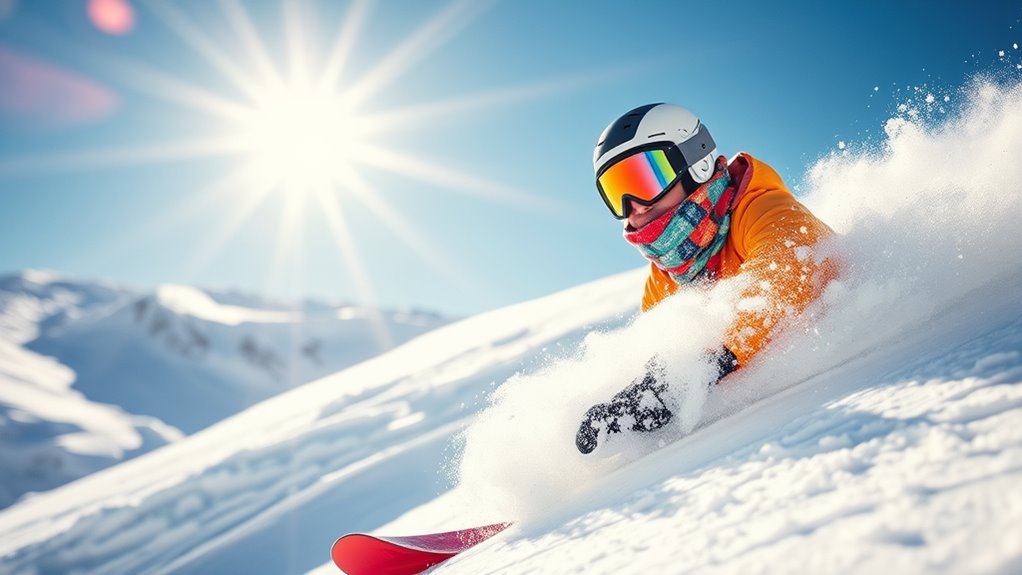
Skiing and snowboarding can expose you to intense UV rays reflected off the snow, increasing your risk of sunburn and skin damage. When you’re high up on the mountain, the sun’s rays don’t just come from above; they bounce off the snow, creating a phenomenon known as UV reflection. This reflection notably amplifies your exposure, making it easy to underestimate how much UV radiation your skin absorbs during a day on the slopes. To protect yourself, understanding the importance of skin protection becomes essential. You need to realize that regular sunscreen isn’t enough on its own; you must choose products designed for high-altitude, snow-covered environments and apply them properly.
The first step in safeguarding your skin from UV reflection is selecting a broad-spectrum sunscreen with an SPF of at least 30. These formulas shield against both UVA and UVB rays, which are responsible for skin aging and burning, respectively. Apply the sunscreen generously 15-30 minutes before heading out, ensuring every exposed area gets covered—ears, neck, face, and any other skin that might be exposed. Reapplication is equally important, especially after sweating, wiping your face, or taking breaks. Carry a small bottle or stick for quick touch-ups during the day. Remember, snow’s reflective nature means you might need to reapply more often than usual, even if the weather is overcast, as UV rays penetrate clouds.
Use a broad-spectrum SPF 30+ sunscreen, apply generously before skiing, and reapply frequently to stay protected.
In addition to sunscreen, physical barriers provide essential skin protection. Wear a wide-brimmed hat or a helmet with a brim, and consider a neck gaiter or face mask to shield your skin from direct UV exposure. Sunglasses with UV protection are indispensable for your eyes but also help prevent squinting, which can lead to wrinkles over time. Clothing is your first line of defense; opt for UV-protective gear, including long sleeves and pants, especially if you’re planning a full day on the slopes. Covering your skin reduces the surface area exposed to UV reflection, decreasing your overall risk.
Finally, stay mindful of the sun’s position. The highest UV levels occur between 10 a.m. and 4 p.m., so plan your runs accordingly or take extra precautions during these hours. Remember, even on cloudy days, UV reflection can cause sunburns, so don’t skip your skin protection routine. By combining sunscreen, protective clothing, and awareness of UV reflection, you can enjoy your time on the snow while keeping your skin safe from harmful UV radiation.
broad-spectrum sunscreen SPF 30+ for skiing
As an affiliate, we earn on qualifying purchases.
As an affiliate, we earn on qualifying purchases.
Frequently Asked Questions
How Often Should I Reapply Sunscreen on the Slopes?
You should reapply sunscreen every two hours to guarantee continuous protection, especially when you’re active outdoors. Remember, sweat and snow can wear down sunscreen application techniques, reducing effectiveness. If you’re sweating or wiping your face, reapply sooner. Also, reapplication frequency increases if you’re skiing or snowboarding all day. Use a broad-spectrum, water-resistant sunscreen and apply generously to all exposed skin for the best protection on the slopes.
Can Sunscreen Prevent Snow Blindness?
They say “an ounce of prevention is worth a pound of cure,” and that’s true for snow blindness. Sunscreen can’t fully prevent snow blindness because UV reflection from snow can cause eye damage. Wearing UV-protective goggles is essential, but applying broad-spectrum sunscreen also helps safeguard your skin from harmful rays. Combining these measures ensures your skin and eyes stay safe while enjoying your time on the slopes.
Is Waterproof Sunscreen Necessary for Snow Sports?
You might wonder if waterproof sunscreen is necessary for snow sports. Given snow reflection, your skin faces intense UV exposure, so waterproof formulas help guarantee protection even if you sweat or wipe your face. Plus, waterproof sunscreen helps maintain skin hydration by staying on longer, preventing dryness caused by cold, dry air. This way, you stay protected and comfortable while enjoying your time on the slopes.
What SPF Level Is Recommended for Winter Sports?
You might find it surprising, but for winter sports, an SPF of at least 30 is recommended for effective skin protection against intense sun exposure. When you’re on the slopes, UV rays reflect off the snow, increasing your exposure. Choosing a broad-spectrum sunscreen with this SPF helps shield your skin from harmful rays, preventing sunburn and long-term damage. Always reapply regularly to stay protected as you enjoy your winter adventure.
Are There Specific Ingredients to Avoid in Snow Sunscreen?
When choosing snow sunscreen, you should avoid certain ingredients. Chemical filters like oxybenzone and avobenzone can irritate sensitive skin and may harm coral reefs. Instead, opt for mineral blockers such as zinc oxide or titanium dioxide, which provide broad-spectrum protection and are less likely to cause irritation. These natural ingredients are ideal for winter sports because they sit on your skin’s surface, offering effective protection against snow-reflected UV rays.
Conclusion
So, slap on that sunscreen like your life depends on it—because on those icy slopes, it kind of does! Don’t let the sun’s sneaky rays turn your snow adventure into a fiery disaster. Cover every inch, reapply often, and keep that SPF on standby. With the right protection, you’ll outshine the sun, conquer the mountain, and ski or snowboard like a true winter legend. Stay protected, stay unstoppable—snow and sun won’t stand a chance!
Halloween Picks
halloween
As an affiliate, we earn on qualifying purchases.