
Shaving does not make your tan fade faster because it only removes dead skin cells and fine hairs from the surface, not the melanin that gives your skin its color. When you shave, you’re exfoliating mildly and temporarily affecting the outer layer, but your tan remains intact beneath. To keep your glow lasting longer, proper skin care and sun protection are key. Keep going to discover how you can preserve your tan even after shaving.
Listen free for 30 days with Audible
Thousands of audiobooks and originals — cancel anytime.
As an affiliate, we earn on qualifying purchases.
Key Takeaways
- Shaving only removes dead skin cells and fine hairs, not the melanin responsible for tanning.
- It temporarily affects the skin’s surface but does not accelerate melanin fading.
- Proper sun protection after shaving helps maintain tan vibrancy and prevents uneven fading.
- Shaving acts as mild exfoliation, which can actually help extend the appearance of your tan.
- Skin irritation from shaving can make the tan look uneven, but it does not cause faster fading.
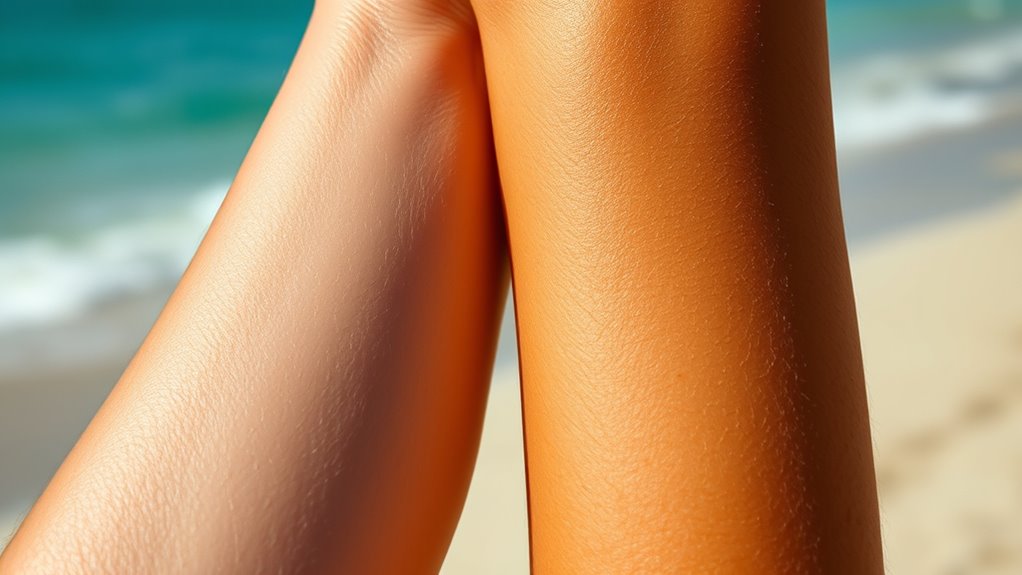
Many people believe that shaving can cause their tan to fade faster, but is there truth to this idea? The answer isn’t straightforward. Your skin’s appearance after shaving can sometimes make it seem like your tan is disappearing quicker, but the actual impact is more nuanced. Shaving doesn’t directly strip away your tan, which is fundamentally the result of melanin production in your skin. Instead, it affects the skin’s outer layer, which can influence how your tan looks over time.
One key factor to consider is sun protection. When you shave, you remove the top layer of dead skin cells along with fine hairs. This process can temporarily leave your skin more sensitive and exposed, making it more vulnerable to UV rays. Without proper sun protection, your skin can burn or shed more quickly, leading to an uneven or faded tan. So, if you’re planning to be in the sun after shaving, it’s vital to apply a broad-spectrum sunscreen. Doing so helps prevent sun damage and keeps your tan looking vibrant longer, regardless of whether you’ve shaved recently.
Another aspect to think about is skin exfoliation. Shaving acts as a form of mild exfoliation, removing dead skin cells from the surface. This can actually help your tan last longer by preventing the buildup of dull, flaky skin that can make your tan appear patchy or faded. Regular gentle exfoliation, whether through shaving or other methods, encourages new skin cell growth and can enhance the appearance of your tan. However, over-shaving or using dull blades can irritate the skin, causing redness and peeling that may temporarily make your tan look uneven. To maintain a smooth, radiant glow, you should use sharp razors and moisturize well afterward.
Additionally, proper skin care routines after shaving, such as moisturizing and soothing the skin, can help maintain an even skin tone and prevent premature fading of your tan.
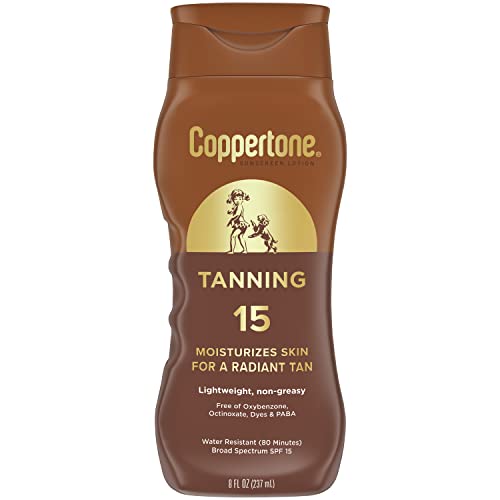
Coppertone Tanning Sunscreen Lotion SPF 8, 8 FL OZ
- Lightweight Formula: Non-greasy and easy to apply
- Moisturizes Skin: Keeps skin feeling hydrated
- Water Resistant: Effective for 80 minutes in water
As an affiliate, we earn on qualifying purchases.
As an affiliate, we earn on qualifying purchases.
Frequently Asked Questions
Can Shaving Cause Skin Irritation That Affects Tanning?
Shaving can cause skin irritation, which might impact your tan. When you shave, you remove dead skin cells, offering exfoliation benefits that can help even out your skin tone. However, if you don’t take care to prevent razor burn, you may develop redness or irritation that dulls your tan’s appearance. Proper shaving techniques, using moisturizers, and gentle exfoliation can help prevent irritation and maintain your glow longer.
Does Shaving Increase Skin Sensitivity to Sun Exposure?
When you shave, especially with dull blades or dry skin, your skin becomes more sensitive to sun exposure. Shaving can increase skin dryness and make your skin more prone to irritation from sweat, which can intensify sensitivity. This heightened sensitivity means you’re more likely to get sunburned or damage your skin if you don’t protect it properly. Always moisturize after shaving and wear sunscreen to keep your skin safe from sun harm.
Are There Specific Shaving Techniques That Preserve a Tan Longer?
Did you know that proper shaving techniques can help your tan last longer? To preserve your glow, focus on gentle, upward strokes and avoid shaving over already tanned skin. Incorporate moisturizing routines to keep your skin healthy and reduce irritation, which can cause uneven fading. Shaving frequency also matters; shaving less often minimizes skin trauma, helping your tan fade more evenly and gradually. These tips keep your skin smooth and your tan vibrant longer.
How Does Shaving Frequency Impact Skin’s Natural Glow?
Shaving frequently can impact your skin’s natural glow by removing dead skin cells and promoting exfoliation, which helps reveal brighter skin. However, over-shaving may cause irritation or dryness, affecting moisture retention. To keep your skin looking radiant, balance your shaving routine with proper skincare, including moisturizing afterward. This way, you maintain skin’s hydration and glow, while also supporting healthy exfoliation and preventing dullness.
Can Using Certain Shaving Products Prolong a Tan?
Shaving products can feel like magic wands, but they won’t extend your tan. Using certain body hair removal products or adjusting your shaving frequency won’t keep your glow longer. Instead, focus on moisturizing and sun protection to preserve your tan. Shaving too often might irritate your skin, causing your tan to fade faster. Stick to gentle products and avoid over-shaving to maintain that sun-kissed look longer.
Conclusion
So, remember, shaving is like trimming a delicate garden—cutting away the excess doesn’t uproot the roots. Your tan, a fleeting sunset, fades naturally with time and skin renewal, not your razor. Think of shaving as brushing aside the surface fog, revealing the glow beneath. Your tan’s life isn’t tied to your blades but to the sun’s gentle rhythm. Embrace your skin’s natural dance, and your glow will shine through, unshadowed by myths.
Grilling season Picks
grills
As an affiliate, we earn on qualifying purchases.