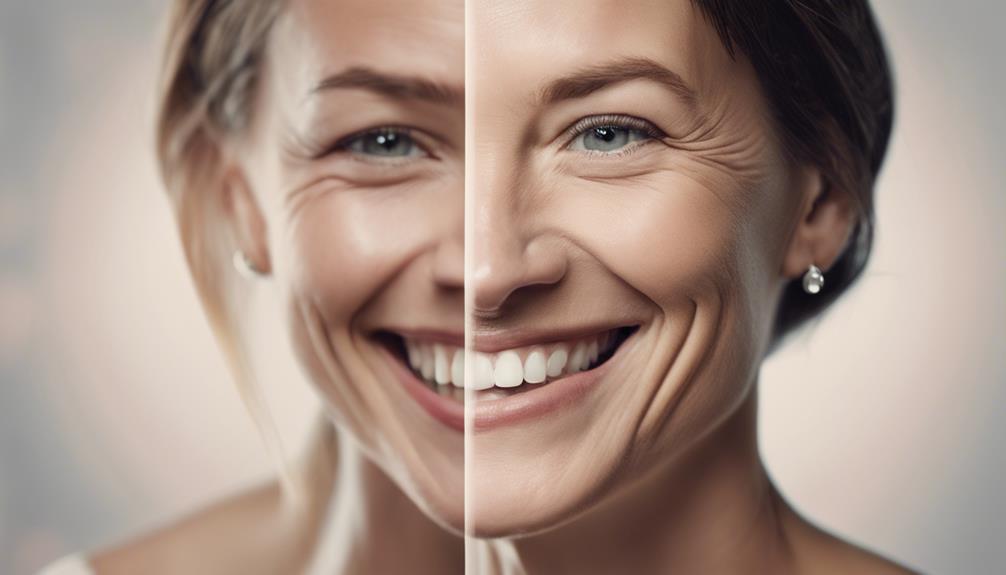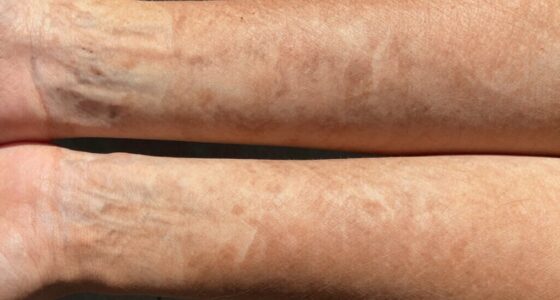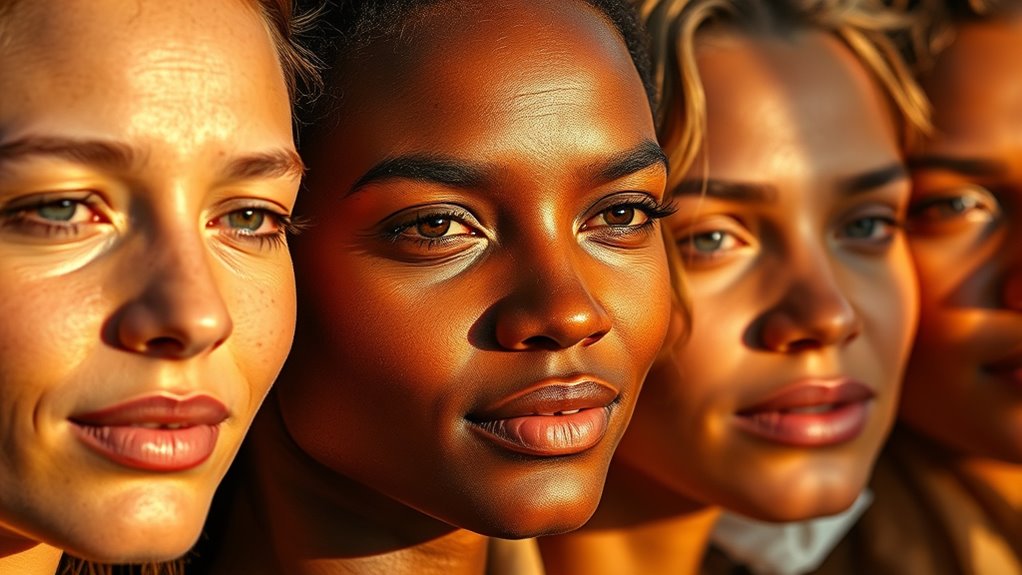

Your ability to tan or burn largely depends on your genetics and ancestral background. If your ancestors lived in sunny regions, you’re likely to have more melanin, which provides natural protection and helps you tan easily. Conversely, if your roots are from areas with less sunlight, your skin might burn more easily. Understanding your genetic traits can help you protect your skin better, so exploring your ancestry offers valuable insights into your sun response.
Open a free Amazon Business account
Business pricing, bulk buying and tax-exempt orders.
As an affiliate, we earn on qualifying purchases.
Key Takeaways
- Genetic variation influences how easily your skin tans or burns when exposed to UV rays.
- Ancestry from high sunlight regions typically results in higher melanin levels, leading to better natural protection.
- Skin’s response to sun exposure, including tanning ability, is inherited and shaped by evolutionary adaptations.
- Melanin production, a key factor in tanning, is largely determined by your genetic background.
- Understanding your genetic predispositions can guide better sun safety and tanning decisions.
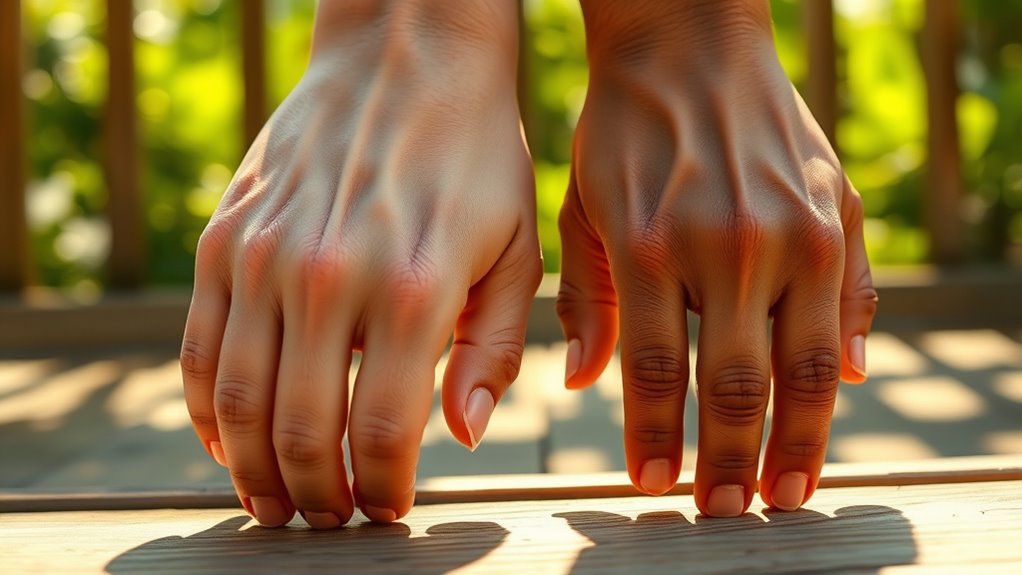
Have you ever wondered how tanning affects your DNA? Your skin’s response to the sun isn’t just a matter of personal choice or environment; it’s deeply rooted in your genetic makeup. Genetic predispositions influence how your skin reacts when exposed to UV rays, determining whether you tan easily, burn quickly, or develop other skin responses. These predispositions are inherited traits that have been passed down through generations, shaping your skin’s behavior based on your ancestral background. For example, if your ancestors came from regions with high sun exposure, your body may have evolved to produce more melanin, offering better natural protection and allowing you to tan more easily. Conversely, if your lineage hails from areas with less intense sunlight, you might be more prone to burning and less likely to develop a deep tan. These ancestral traits are nature’s way of adapting your skin to your environment over centuries, effectively embedding certain sun responses into your DNA. Additionally, recent advances in understanding genetic variation reveal that specific genes influence your skin’s ability to respond to UV exposure, further emphasizing the role of genetics in tanning on genetic variation.
Understanding this connection helps you realize that your skin’s reaction to tanning isn’t purely superficial; it’s a reflection of your evolutionary history. The amount of melanin you produce, which determines your skin’s color and its ability to tan, is largely dictated by your genetic predispositions. People with darker skin tones typically have higher melanin levels, which act as a natural sunscreen, reducing the risk of damage from UV radiation. Lighter-skinned individuals, on the other hand, often have less melanin, making them more susceptible to burns and skin damage. This genetic variation isn’t random—it’s a product of how your ancestors adapted to their environment. If your ancestors lived in sunny climates, they likely developed stronger protective traits, like increased melanin production, that are now embedded in your DNA. Your ancestral traits don’t just influence how you respond to the sun; they can also impact your long-term risk for skin issues, including premature aging and skin cancers. Knowing your background can guide you in making smarter choices about sun exposure and tanning. If you carry genetic predispositions that make you prone to burning, it’s wise to take extra precautions, like wearing sunscreen or seeking shade. Recognizing that your skin’s response is partly written in your DNA empowers you to be more mindful of how you protect yourself. So, while tanning might seem like a simple act, it’s actually a complex interplay of genetics, ancestral traits, and environmental factors—each one shaping how your body reacts and adapts to the sun’s rays.

Banana Boat Sheer Sensitive Sunscreen Lotion SPF 50, 6 Fl Oz
- Sheer Finish: Blends in with no white cast
- Lightweight & Non-Greasy: Comfortable for all-day wear
- Clinically Proven: Approved by dermatologists and pediatricians
As an affiliate, we earn on qualifying purchases.
As an affiliate, we earn on qualifying purchases.
Frequently Asked Questions
Can Genetics Predict How Quickly I Will Tan?
Genetic variation plays a key role in how quickly you tan, but it doesn’t give a precise prediction. Your skin pigmentation, influenced by your genes, determines your natural response to sun exposure. Some people tan faster and darker, while others burn or tan slowly. So, while your genetics affect your tendency to tan, environmental factors and skin care habits also influence how your skin reacts to the sun.
Do All People From the Same Ancestry React the Same?
You might wonder if people from the same ancestry react similarly to sun exposure. While ancestry influences pigmentation and genetic variation in skin, individual responses still vary due to unique genetics and lifestyle factors. So, even within the same ancestry, tanning reactions can differ. Your body’s response depends on specific genetic variations affecting melanin production, making it important to take into account both shared ancestry traits and personal genetics when predicting sun reactions.
How Does Skin Cancer Risk Relate to Tanning Ability?
Your skin cancer risk relates closely to your genetic predisposition and tanning mechanisms. If your skin responds to UV exposure by tanning easily, it might indicate a lower risk, but it doesn’t eliminate danger. Conversely, if you have a limited ability to tan and burn easily, your risk increases. Understanding your body’s tanning response helps you recognize your vulnerability and emphasizes the importance of sun protection, regardless of your tanning ability.
Are There Genetic Markers for Sun Sensitivity?
Ever wonder if your genes influence how you react to the sun? You bet they do! Genetic variations in skin pigmentation can make you more sensitive or resistant to sunburns. Scientists have identified specific genetic markers linked to sun sensitivity, helping to predict your risk of sun damage. Knowing your genetic makeup can guide you in protecting your skin better and enjoying the outdoors safely.
Can Lifestyle Change My Natural Tanning Response?
Your lifestyle can influence your tanning variability to some extent, but it doesn’t change your genetic influence on how your skin responds to the sun. Factors like sun exposure habits, skincare, and diet may improve your skin’s health and appearance, but your natural tanning response remains largely determined by genetics. So, while you can optimize your skin’s condition, your genetic makeup still plays a key role in your sun sensitivity.
Conclusion
So, while your DNA may gently whisper tales of your ancestors, it’s up to you to listen carefully. Embracing your natural response to the sun isn’t about avoiding it, but about honoring your unique story. With mindful care, you can enjoy the warmth without risking unnecessary harm. Remember, your skin’s subtle signals are like a delicate melody—tune in and treat yourself with kindness, letting your heritage guide you toward healthier, more harmonious sun experiences.
Back to school Picks
back to school
As an affiliate, we earn on qualifying purchases.